
Last updated November 17, 2026
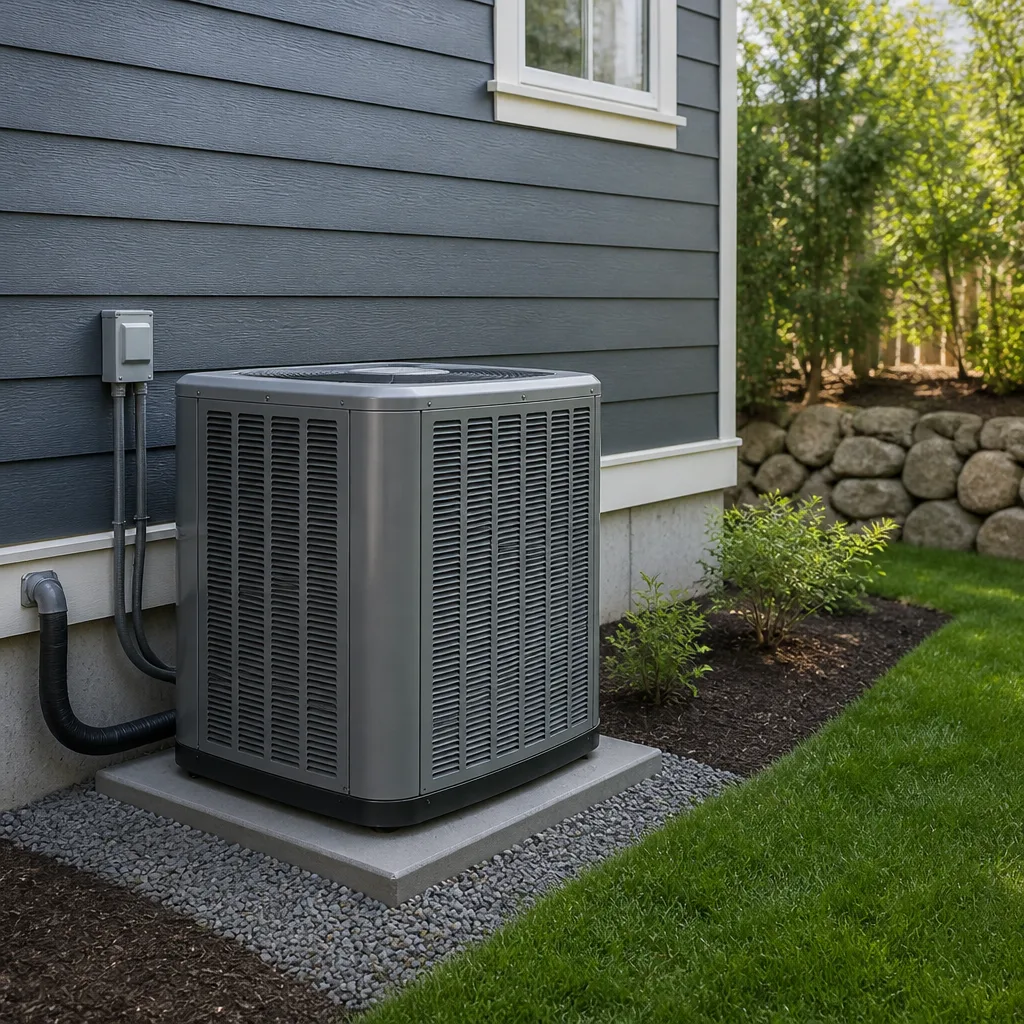 Heat pumps
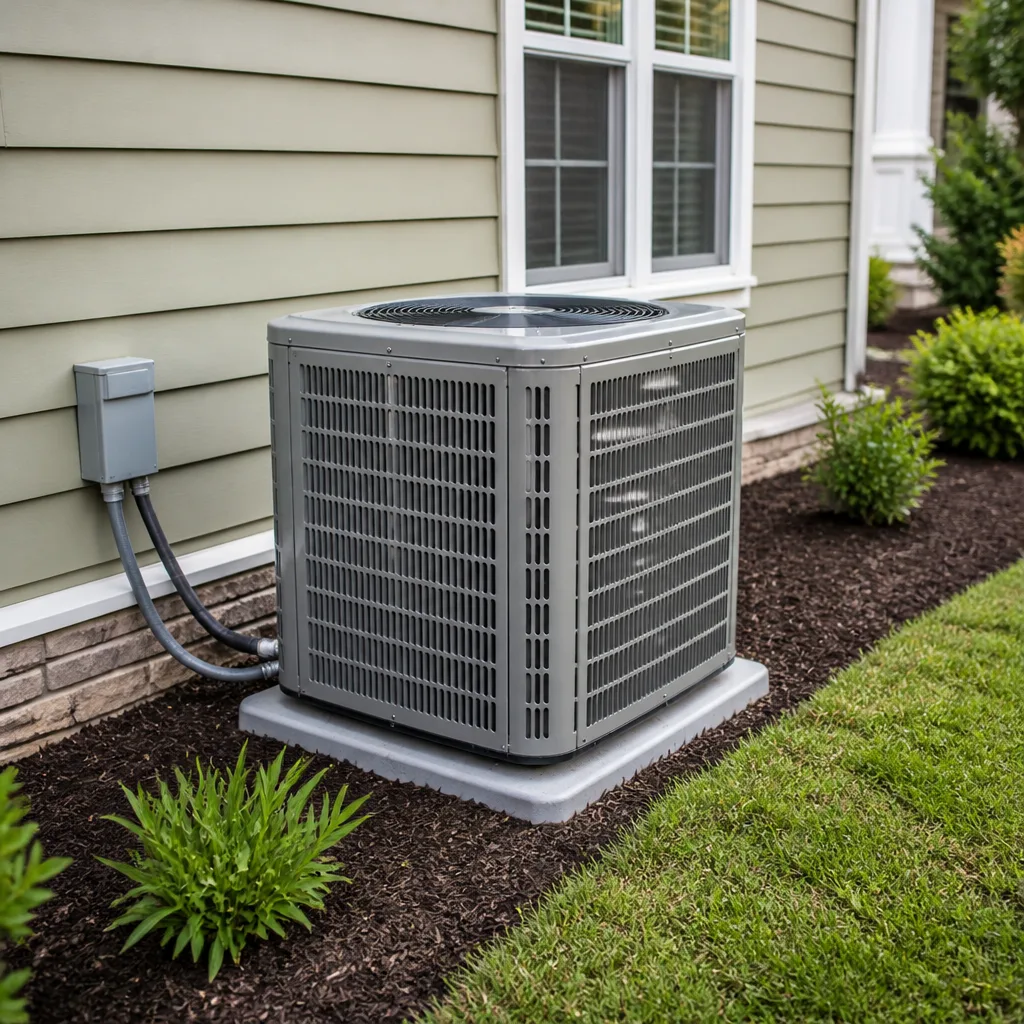 AC repair
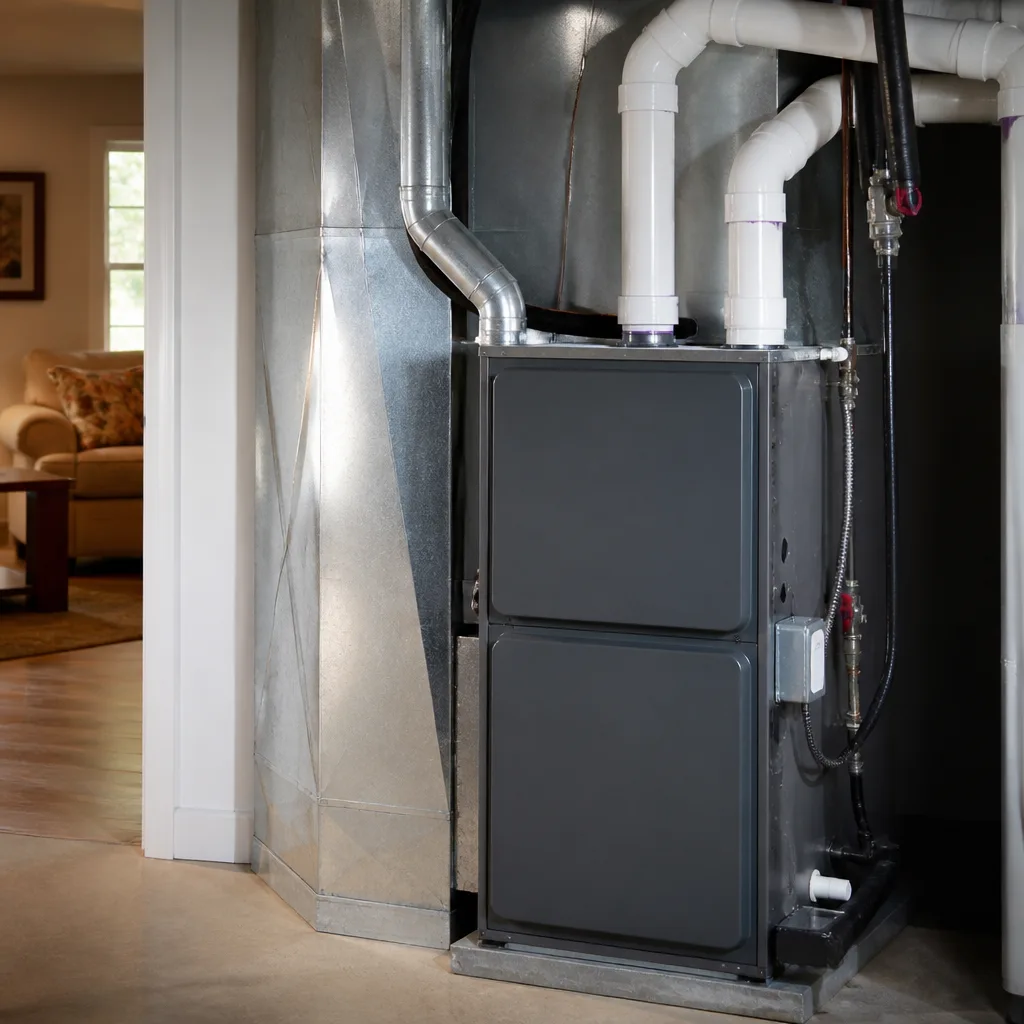 Furnace & heating
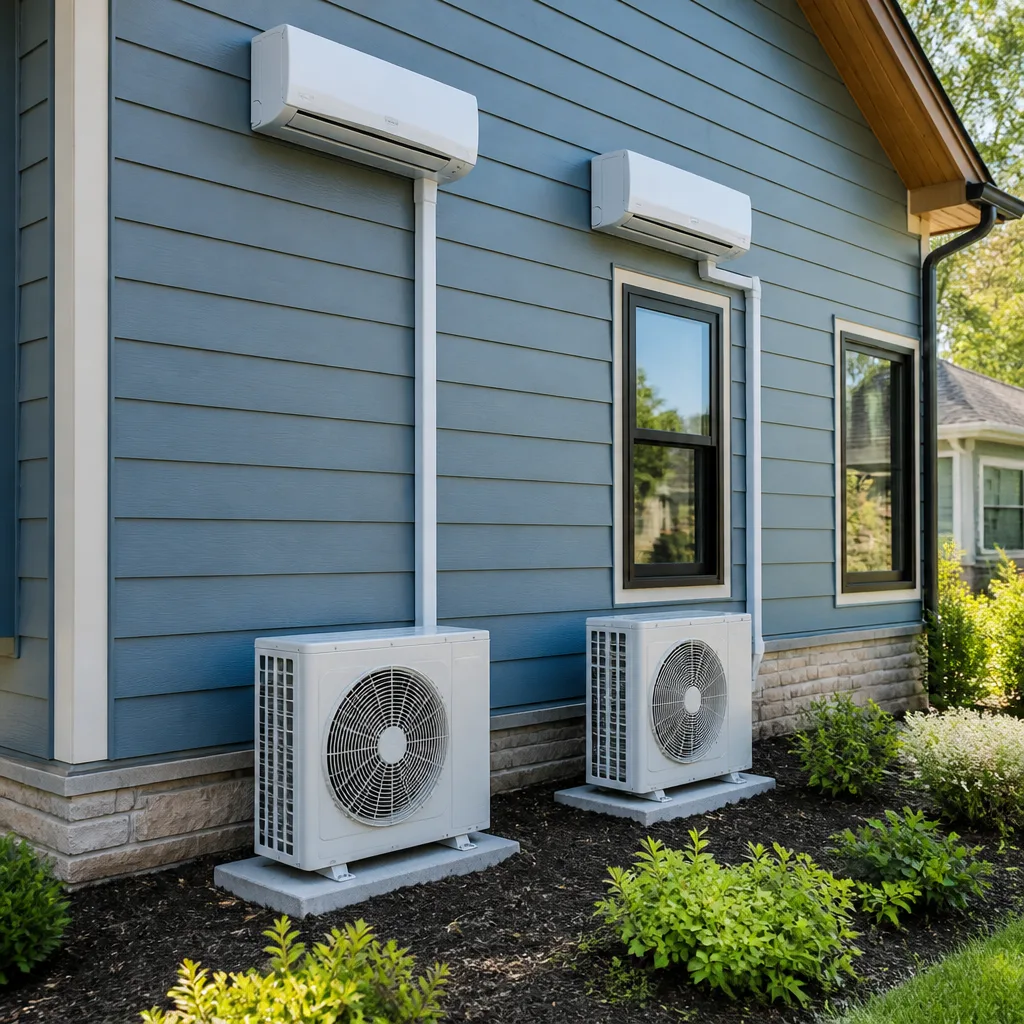 Ductless mini splits
 Carrier
 Trane
 Goodman
Seasonal tune-up and full diagnostic on your Carrier, Trane, or Goodman system - readings shown to you before any repair is proposed
Diagnosis first, numbers second - you approve the repair price before a single part goes in.
Get your free estimateDIY vs Professional Heat Pump & Mini Split: What’s Safe to Do Yourself
Most of what you read about DIY mini splits was written in Texas, Florida, or the Carolinas, where a homeowner with a vacuum pump and a Saturday to spare can sometimes get away with it. Nevada is a different story. Installing a system that involves refrigerant work without a license is illegal here, Clark County wants a permit before the lineset goes up, and the warranties on the equipment you just bought assume a licensed contractor did the work. This guide lays out exactly where the line falls in Summerlin: what you can legally and safely handle yourself, what absolutely requires a licensed professional, and how to think about the real cost comparison once permits and warranty coverage enter the picture.
Quick Answer
In Summerlin and the rest of Nevada, homeowners can legally and safely handle filter cleaning, coil rinsing, remote programming, and condensate line flushing. Anything involving refrigerant – including charging, recovery, brazing, flaring, and final connections – requires a Nevada-licensed HVAC contractor. Tightening the lineset and pressure-testing alone puts a system outside the law, and nearly every manufacturer’s warranty is voided by non-licensed installation. What looks like a $1,500 DIY savings usually becomes a $6,000 replacement when the compressor fails at year two.
Styles & brands we work with
- AC repair
- Furnace & heating
- Heat pumps
- Ductless mini splits
- Carrier
- Trane
- Goodman
Table of Contents
- What Nevada law actually permits homeowners to do
- The Clark County permit requirement, and why it matters at resale
- The jobs that are genuinely safe and legal to do yourself
- Why line set bending and flaring fails in Summerlin stucco homes
- The warranty reality that reframes the cost math
- The extreme conditions Summerlin equipment has to survive
- DIY vs professional: an honest cost comparison
- When to call a professional
What Nevada Law Actually Permits Homeowners to Do
Nevada Revised Statutes Chapter 624 (the state contractor licensing law) requires that anyone who contracts to perform work on a structure for compensation be licensed by the Nevada State Contractors Board. Read that closely, because it’s the trap a lot of homeowners fall into: the statute covers compensation. A homeowner who installs their own system is not a contractor, but a homeowner who installs a system that requires refrigerant handling bumps into a second layer – federal EPA Section 608 regulations, which restrict the sale and handling of regulated refrigerants to certified technicians. Combine NRS 624 with EPA 608 and the picture gets concrete:
- Anything touching refrigerant requires a certified technician. That includes evacuating the line set, releasing the factory charge, adding or recovering refrigerant, and diagnosing a leak. A pre-charged “DIY kit” does not get around this – it still connects to refrigerant lines that must be evacuated before the charge is released.
- Brazing, flaring, and cutting refrigerant lines require licensed work in Nevada. The flare connections are refrigerant connections. The refit plumbing matters.
- High-voltage electrical connections to the panel or disconnect require an electrician or licensed HVAC contractor. A 240-volt mini split circuit is not a homeowner DIY job in this state.
- Mechanical permit work requires a licensed contractor to pull and finalize. More on the Clark County angle below.
What you can do without any license: clean and replace filters, rinse the outdoor coil with a garden hose, program the remote or smart thermostat, flush the condensate drain, clear leaves and debris from around the outdoor unit, and keep the indoor head’s grilles and fins clean. Those tasks are covered in more detail in the section on safe DIY work.
The Clark County Permit Requirement, and Why It Matters at Resale
Clark County’s building department treats a mini split install as a mechanical permit job. That means plan review, a permit fee (typically in the $150 to $350 range depending on scope), and at least one inspection covering the electrical, the line set, and the condensate routing. The contractor pulls the permit – a homeowner cannot pull a mechanical permit in Clark County for a system that requires licensed trades.
The consequence of an unpermitted system often doesn’t show up until you list the house. Summerlin buyers, and their agents, ask for the permit history. An unpermitted mini split is a disclosure item, and it can stall or sink a sale in a market where a lot of homes trade above the $800,000 mark. Buyers walk when the mechanicals are a question mark. Even if a buyer agrees to proceed, the lender may require the system to be permitted and inspected before close.
Here’s what we’ve seen more than once in Summerlin: a homeowner installs a ductless head in a casita or a converted garage, sells the home five years later, and gets a call from the buyer’s agent asking why there’s no permit on record. The fix is either to pay for a retroactive permit and inspection (which can require opening walls) or to remove the unit. Neither is cheap.
The Jobs That Are Genuinely Safe and Legal to Do Yourself
This is the honest answer to “what can I actually do?” – a real list. We’ve never seen a homeowner void a warranty or fail a permit inspection by doing any of these tasks. We have seen plenty of systems run years longer because the homeowner handled them.
- Clean or replace indoor filters every 30 to 60 days. Summerlin’s dust load is heavy, especially in spring. A clogged filter strains the blower and pushes the compressor harder than it should work. A $12 filter is the cheapest efficiency upgrade on the market.
- Rinse the outdoor coil with a garden hose once a month in cooling season. Not a pressure washer. A gentle spray from the top down. Cottonwood fluff and desert grit build up on the fins, and a dirty coil adds 15 to 25 percent to the system’s electrical draw.
- Flush the condensate drain line once a season. Mix a cup of distilled white vinegar with a quart of warm water and pour it through the drain port. Summerlin’s dry air means condensate production is lower than you’d expect, but our monsoon weeks (July and August) push a lot of water through, and clogs that start as a slow trickle turn into water stains on drywall.
- Program the remote or smart thermostat. Setting the schedule is entirely your call. We’d suggest setbacks of 4 to 6 degrees during the workday rather than 10 or more, because a heat pump recovering from a big setback runs at full power for an hour and burns most of the savings.
- Keep the outdoor unit clear. Two feet of clearance on all sides. Trim back oleander and lantana, both of which grow fast in Summerlin yards and love to grow into the coil.
- Replace the batteries in the remote and clean the indoor head’s grille. Warm water, mild soap, dry cloth. That’s it.
None of those tasks involve refrigerant, high voltage, or a permit. Do them all. Your system will live longer and run leaner.
Why Line Set Bending and Flaring Fails Specifically in Summerlin Stucco Homes
This is the section that no YouTube tutorial filmed in a wood-frame Texas house will tell you, and it’s the biggest reason we push back on the “pre-charged DIY kit” pitch in Summerlin. Most homes here are stucco over some combination of sheathing and framing. When a line set has to run from an outdoor condenser up through a wall to an indoor head, the penetration goes through stucco. Stucco is unforgiving. It doesn’t flex. It has a scratch coat, a brown coat, and a finish coat, and once you’ve cut through it, getting a watertight, correct-looking seal on the other side requires a bit more than a tube of caulk.
Even if a careful homeowner gets the penetration right, the refrigerant connections are where the real trouble hides. Here’s what fails:
- Flare nuts over-torqued. It’s the most common single failure we find on DIY installs. The flare looks tight, holds pressure at first, and weeps slowly. Refrigerant loss is silent – you don’t see oil stains because there’s nowhere for the oil to go inside the wall – and by the time performance drops, the compressor has been running undercharged for 18 months.
- Line set kinked inside the wall. Bending copper by hand around a corner, or through a stud bay, kinks it. A kinked line set restricts flow and raises head pressure. Replacing it means opening the wall.
- Nitrogen purge skipped. Brazing without a nitrogen purge leaves oxidation inside the line. That oxidation circulates and eventually clogs the expansion valve or the accumulator.
- Vacuum pulled for 20 minutes instead of the required hour-plus. Moisture left in the line combines with refrigerant oil to form acid, which eats compressor windings. The compressor doesn’t fail in month one. It fails in year two or three, and it fails permanently.
Here’s the reality: none of those failures announce themselves on the install day. The system cools. It looks done. The mistake lives inside the wall until it’s expensive. That’s the pattern we’ve seen repeatedly in Summerlin’s custom stucco homes – the ones with casitas, guest houses, and converted spaces that draw a lot of ductless upgrades. For a fuller picture of what a proper install looks like in this climate, see our Heat Pump & Mini Split in Summerlin page.
The Warranty Reality That Reframes the Cost Math
Here’s the piece of the DIY cost comparison that gets left out of almost every comparison spreadsheet: virtually every manufacturer’s limited warranty on a heat pump or mini split requires that the installation be performed by a licensed, EPA-certified contractor. Carrier, Trane, Lennox, Goodman – all of them – write that language into the warranty terms. A non-licensed installation voids the equipment warranty. Full stop. No exceptions for “careful” or “well-intentioned.”
What that means in dollar terms:
- A typical single-zone mini split in Summerlin costs between $3,500 and $5,500 installed by a licensed contractor. That’s equipment, line set, permit, electrical, and startup.
- A DIY kit for the same system runs $1,800 to $2,800. Plus permit considerations, plus electrical, plus a licensed tech to do the final connections – and the permit holder for the electrical is going to be a licensed pro anyway.
- If the compressor fails at year two under a non-licensed install, you’re out the equipment (a replacement compressor is often 40 to 60 percent of a new system’s cost) plus the labor to swap it. That’s $2,000 to $3,500 out of pocket.
- If the same compressor fails at year two under a licensed install, it’s covered by the manufacturer’s parts warranty. You pay labor and refrigerant. That’s the entire point of the warranty.
Do the math. The DIY path saves $700 to $1,500 up front at most. It gives up a warranty that’s worth more than that the first time anything goes wrong. We’ve talked to plenty of homeowners who took the DIY route and then called us a couple of years later after the compressor fried, and the conversation is always the same: they saved less than they thought, and they spent more than they wanted.
The Extreme Conditions Summerlin Equipment Has to Survive
A mini split or heat pump install in Austin has a much different reliability envelope than one in Summerlin. Several local factors matter more than people realize:
- Design temperatures. Summerlin cooling designs are typically built around 102 to 105 degrees outdoor ambient. Equipment specified today is rated for that with headroom, but a marginal install that runs 15 percent undercharged or a partially blocked coil will fail under that load faster than in a milder climate.
- Hot-side line set runs. If the line set runs through an attic or across a sun-exposed stucco wall, the effective performance drops. Correct insulation matters more here than most installers give it credit for.
- Monsoon humidity. A dry-climate mini split is sized and specified differently than one that will see weeks of 60-percent-plus humidity. Condensate management gets real in July and August.
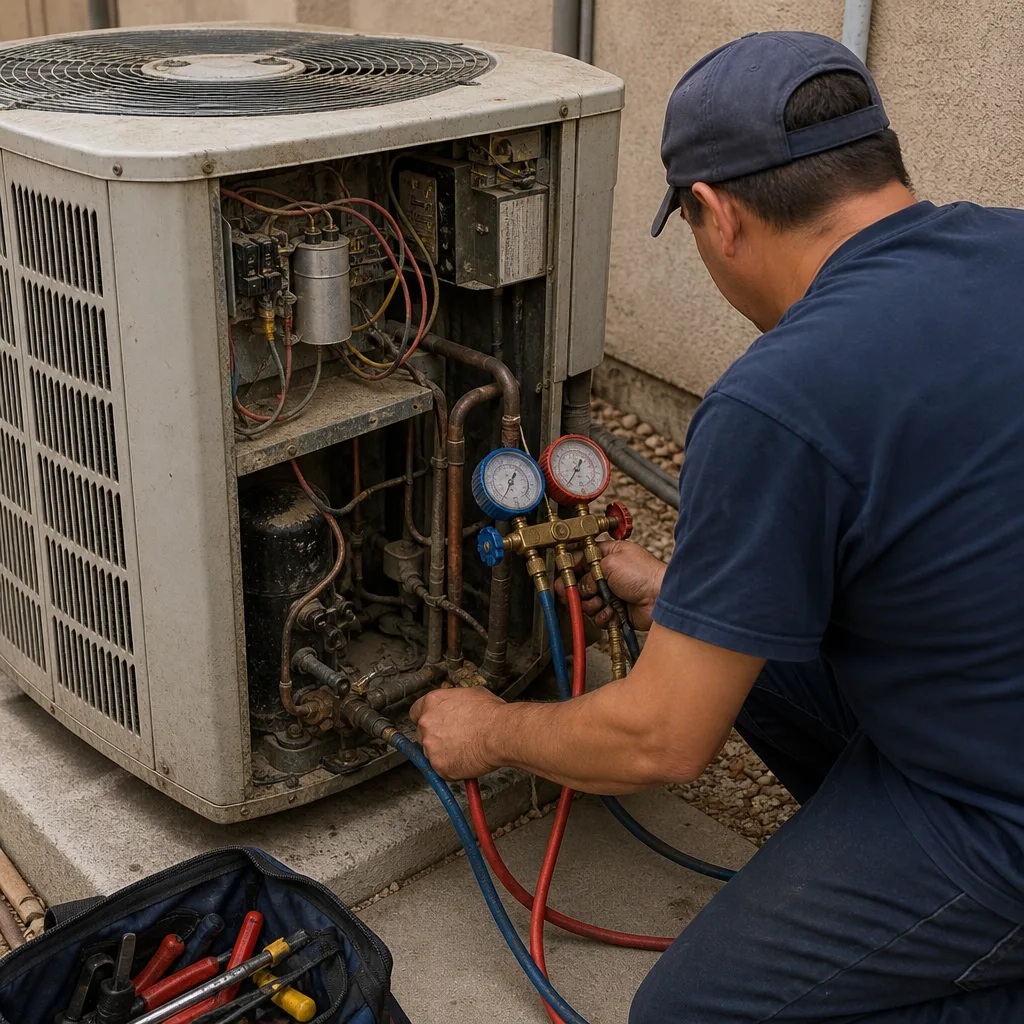
- Cold snaps. Summerlin hits the mid-20s occasionally in January and February. Heat pump performance at those temperatures depends on correct charge and correct defrost setup – both of which can only be confirmed by a licensed tech with gauges on the system.
The great Summerlin install is not dramatic. It’s a careful one. It’s a licensed contractor pulling the permit, sizing to Summerlin, purging with nitrogen, pulling a proper deep vacuum, and leak-testing before the charge is released. That’s the difference between a system that lasts fifteen years and one that limps to year eight. Our AC Repair & Installation in Summerlin page covers how that process looks on the repair side.
DIY vs Professional: An Honest Cost Comparison
We’re not going to tell you professional is always cheaper. It isn’t always. What we’ll tell you is what the real numbers look like once permits, licensed final connections, and warranty coverage are all on the table.
| Line Item | DIY Route (single-zone, Summerlin) | Professional Install (single-zone, Summerlin) |
|---|---|---|
| Equipment (pre-charged kit vs. standard unit) | $1,800 to $2,800 | $1,500 to $2,600 |
| Line set materials | $150 to $250 | Included |
| Electrical (licensed) | $400 to $800 | Included |
| Clark County permit | Not obtainable without a contractor | $150 to $350 (included) |
| Licensed final connections and startup | $300 to $500 | Included |
| Equipment warranty | Voided | Fully valid |
| Labor warranty | None | Backed in writing (90-Day Done Right Promise at Fireside) |
| Realistic total | $2,650 to $4,350 before any failure | $3,500 to $5,500 all-in, warranted |
Read that table carefully. In the best case, the DIY route saves you something like $700. In most cases, once you pay a licensed tech for the final connections and you accept the voided warranty, the DIY route costs more up front and tens of thousands in downside risk. That’s not a sales pitch – it’s just arithmetic. Fireside is trained to work on the same brands a DIY kit buyer would consider: Carrier, Trane, Lennox, and Goodman are all on our service list. We’re happy to quote a system on any of them and let you compare. If your existing system needs service before a bigger decision, our Heating & Furnace in Summerlin page covers what repairs and tune-ups look like on that side.
Common Mistakes to Avoid
- Believing “pre-charged” means no refrigerant handling. A pre-charged line set still connects to refrigerant lines that must be evacuated with a vacuum pump before the charge is released. That’s refrigerant work under EPA 608, and in Nevada it requires a licensed tech. If a YouTube video says otherwise, it was filmed in a state with different rules.
- Flaring connections by hand with a torque wrench alone. Flares on mini split lines require a specific flare tool and the manufacturer’s exact torque specification. Improperly flared connections leak slowly and silently, and the leak itself is invisible inside a stucco wall.
- Skipping the Clark County permit because “it’s just a small unit.” Every mini split install in Summerlin requires a mechanical permit. Unpermitted systems get flagged at resale, and the fix is expensive.
- Hanging the indoor head in a spot that looks clean but traps heat. Above a doorway, behind a soffit, or in a corner of a casita where the air can’t circulate – we’ve seen all three. The system runs constantly and never satisfies the setpoint.
- Running the condensate line to a spot that puddles near the foundation. Summerlin’s hardpan soil drains slowly. A bad condensate route is a slow-motion foundation problem.
- Assuming the manufacturer’s warranty will “probably” cover it. It will not. Every major brand voids the equipment warranty on a non-licensed install. That’s not a gray area.
- Buying the unit online first and then looking for someone to install it. Most licensed contractors won’t install equipment you sourced, because it puts the labor warranty and the permit liability on us for equipment we didn’t specify. It’s a real conversation we have to have.
See the difference
 Before
 After
 Before
 After
 Before
 After
When to Call a Professional
Call a licensed HVAC contractor for anything involving refrigerant, high-voltage electrical, permit work, or pressure testing. That covers brazing line sets, flaring connections, pulling a vacuum, charging, diagnosing leaks, and pulling the Clark County mechanical permit. If your current system is losing capacity, icing up on the indoor coil, or short-cycling in the Summerlin heat, that’s a refrigerant or metering issue and it requires gauges – not a screwdriver and good intentions. If you’re thinking about a new mini split install for a casita, garage conversion, or an addition to your Summerlin home, get a permit-backed, warranty-backed quote before you buy anything. Fireside Heating & Air Co. Summerlin offers free estimates in Summerlin – call (888) 325-9387. We’ll spec the right system for the space, tell you honestly whether a mini split or a ducted system is the better choice, and put the price in writing so you know exactly what you’re paying before we start.
Frequently Asked Questions
You can legally install the parts that don’t involve refrigerant, electrical, or permit work – which in practice means you can do the cosmetic and maintenance tasks, not the install. The refrigerant connections, electrical hookup, and Clark County permit all require a Nevada-licensed contractor. A homeowner install of a complete system is not legal in Nevada.
Yes. Clark County requires a mechanical permit for any mini split installation, including single-zone ductless systems. The permit covers the electrical, line set, and condensate routing, and requires an inspection. A licensed contractor pulls and finalizes the permit; a homeowner cannot pull a mechanical permit for refrigerant work. Call (888) 325-9387 if you want help understanding what the permit covers on your specific project – estimates are free.
Yes. Every major manufacturer – Carrier, Trane, Lennox, Goodman, and the rest – requires licensed, EPA-certified installation for the warranty to remain valid. A non-licensed install voids the equipment warranty entirely. That’s the single biggest hidden cost of going DIY, and it doesn’t show up until something fails.
Filters (every 30 to 60 days), outdoor coil rinsing (monthly in cooling season), condensate line flushing (seasonally), remote or thermostat programming, cleaning the indoor head grille, and clearing vegetation from around the outdoor unit. None of those involve refrigerant, high voltage, or a permit. Everything else belongs to a licensed tech.
Single-zone mini split installs in Summerlin typically run $3,500 to $5,500 installed, and full heat pump replacements run $7,500 to $12,000 depending on system size and whether ductwork is involved. That’s all-in: equipment, permit, electrical, and startup. Fireside’s quote is in writing, and the price quoted is the price paid. Call (888) 325-9387 for an exact figure on your home.
It becomes a disclosure item, and in most Summerlin sales it stalls or kills the deal until it’s resolved. Buyer’s agents ask for the permit history, and lenders may require it before close. The fix is a retroactive permit and inspection – which can require opening walls to verify the line set – or removing the unit. Neither is cheap, and neither is a conversation you want to have during escrow. Call (888) 325-9387 if you’re trying to sort out an existing unpermitted system before you list.
The Bottom Line
The DIY mini split market is real, and it has made genuine savings possible for a narrow set of tasks. But in Summerlin, Nevada law, Clark County permitting, and manufacturer warranty rules put almost all of the actual install work off limits to homeowners – and the parts you’re allowed to touch are the easy parts you could have done on any system. The honest math: DIY saves $700 to $1,500 up front in the best case, and costs you the entire equipment warranty plus a resale headache. That’s not a bet worth making. For anything beyond filters, coil rinsing, drain flushing, and programming, call a licensed contractor. Fireside Heating & Air Co. Summerlin offers a free second opinion on any written estimate, a 90-Day Done Right Promise in writing, and a phone answered by a live person around the clock.
When you’re ready for straight talk about repair versus replace on a heat pump or mini split in Summerlin, or when you need a permit-backed install quoted properly, call Fireside Heating & Air Co. Summerlin at (888) 325-9387 for a free estimate. Our technicians have up to 8 years of experience, we’re trained on nine major brands, and we stand behind every job in writing – done right, or we make it right. For a full look at our services, visit Fireside Heating & Air Co. Summerlin home.
Written by the team at Fireside Heating & Air Co. Summerlin.