
Last updated November 17, 2026
 Heat pumps
 AC repair
 Furnace & heating
 Ductless mini splits
 Carrier
 Trane
 Goodman
Seasonal tune-up and full diagnostic on your Carrier, Trane, or Goodman system - readings shown to you before any repair is proposed
Diagnosis first, numbers second - you approve the repair price before a single part goes in.
Get your free estimateHeat Pump & Mini Split Troubleshooting: Common Problems and How to Fix Them
The most common mini split service call in Summerlin during July isn’t a broken unit. It’s a unit doing exactly what it’s designed to do when ambient temperatures push past its rated operating range, and the answer is buried in appendix C of the owner’s manual. The engineers who wrote those codes worked in climates that rarely see 110°F. So the system throws a fault that looks like a failure and is actually a protective response. This guide teaches you to tell the difference before you pay for a service call you don’t need.
Quick Answer
Most mini split and heat pump “faults” in Summerlin fall into three groups: normal desert-climate protective behavior (high-ambient lockouts, defrost cycles, fan speed changes), real airflow and drainage problems you can often solve yourself, and genuine refrigerant or electrical failures that need a licensed technician. Read your error code against the high-heat list below before you call anyone. When in doubt, stop and get a professional out.
Styles & brands we work with
- AC repair
- Furnace & heating
- Heat pumps
- Ductless mini splits
- Carrier
- Trane
- Goodman
Table of Contents
- Decoding Mini Split Error Codes in Desert Heat
- Ice on the Unit: Summer vs. Winter
- One Zone Cools, Another Doesn’t
- Outdoor Unit Behaviors That Look Alarming
- The Defrost Cycle, Explained Plainly
- When to Stop and Call Immediately
- Preventing Summer Failures in Summerlin
- Common Mistakes to Avoid
Decoding Mini Split Error Codes in Desert Heat
Here’s the thing homeowners in Summerlin learn the hard way: every major brand uses its own code scheme, and none of them were written with 112°F afternoons in mind. A code that means “abnormal discharge temperature” on a Fujitsu in Osaka is doing the same thing as a “high-pressure protection” flash on a Mitsubishi in The Ridges when the ambient air is simply too hot for the system’s rated envelope.
Mini splits are rated to operate up to roughly 115°F outdoor ambient in cooling. Above that, or when the outdoor coil can’t reject heat fast enough, the compressor will throttle back or shut off to protect itself. That’s not a breakdown. That’s the system protecting a compressor that costs real money to replace.
Plain-language translation of the codes we see most often in Summerlin during summer:
- High-pressure or discharge-temperature fault (Mitsubishi, Daikin): Usually the outdoor coil is dirty, the unit is boxed in with no airflow, or it’s genuinely above rated ambient. Clean the coil and check clearances first.
- Communication error between indoor and outdoor units: A loose wire or a power interruption, not a dead unit. Reset at the breaker, wait five minutes, restore power.
- Drain or float-switch fault: Condensate is backing up. In Summerlin’s dust, drain lines clog fast. This one is often fixable at home.
- Refrigerant or low-pressure fault: A leak. Stop using the system and call. Running it low on refrigerant damages the compressor.
- Filter or airflow warning (LG): The system is telling you the indoor filter is loaded. Clean it, reset the code, done.
Our technicians have up to 8 years of experience reading these codes across brands including Bryant, American Standard, and Carrier, and the pattern holds: a full third of summer call-outs resolve with a coil cleaning and a filter change.
Ice on the Unit: Summer vs. Winter
Ice means two completely different things depending on the season. In a Summerlin July, ice on the indoor coil or refrigerant lines is almost always an airflow or refrigerant problem. In January, ice on the outdoor unit is a normal defrost cycle doing its job. Most manuals explain neither one well.
Summer ice is a red flag. When the indoor coil ices up in hot weather, restricted airflow is the usual culprit: a clogged filter, a blocked return, or a blower running slow. A low refrigerant charge causes the same symptom because the coil runs colder than it should. Turn the system off, let the ice melt, replace the filter, and try again. If it re-ices, stop. That’s a refrigerant or blower problem and it needs a licensed technician.
Winter ice on the outdoor unit is usually normal. In heating mode, the outdoor coil gets cold and frost forms. The system periodically reverses into defrost to melt it. You’ll see steam, hear a whoosh, and the fan may stop for a few minutes. That’s the cycle working.
The distinction matters in Summerlin because winter mornings here can drop into the thirties while afternoons return to the seventies. Systems cycle in and out of defrost more often than in a steady cold climate, and homeowners notice the ice and worry. A defrost that completes and clears is normal. Ice that builds for hours without clearing, or a unit stuck in defrost, needs a call.
One Zone Cools, Another Doesn’t
In a multi-zone Summerlin home, a single zone that won’t cool is almost never a refrigerant problem. If the refrigerant charge were off, every zone would struggle. A single dead zone points to something local: the indoor head, its wiring, or its drain.
Work through this sequence before you call:
- Check the zone’s filter. A loaded filter on one head chokes that head only. Clean or replace it.
- Confirm the indoor unit has power. Each head has its own breaker or disconnect. A tripped breaker kills one zone and leaves the rest running.
- Check the drain pan and float switch. If the float switch trips on a clogged drain, the head shuts down to prevent a water leak. That’s one zone down, others fine.
- Look for a fault code flashing on the indoor unit. Communication faults between one head and the outdoor unit are common and usually a wire issue.
- Verify the remote isn’t locked to the wrong mode or a schedule that keeps the zone off.
If all of that checks out and the zone still won’t cool, the problem is in the head or its valve, and that’s a job for a technician. In our experience across Summerlin neighborhoods like The Trails and Red Rock Country Club, the single-zone issue is a drain float or a filter better than nine times out of ten.
Outdoor Unit Behaviors That Look Alarming
The outdoor unit does things in desert heat that look like failures and aren’t. Knowing these saves you a service call and a lot of worry.
Compressor cycling on and off. In extreme heat, the compressor will cycle to protect itself when head pressure climbs past its limit. Short cycling that resolves as the afternoon cools is normal protective behavior. Constant cycling in mild weather is not, and it needs a look.
Fan speed changing. Many modern units vary outdoor fan speed to manage heat rejection. A fan that speeds up and slows down in high ambient is doing its job. A fan that stops entirely while the compressor runs is a problem.
Condensate drainage. The indoor unit pulls a surprising amount of moisture out of Summerlin’s monsoon-season air. Heavy drainage on a humid day is normal. Water pooling around the outdoor unit or dripping from the indoor head is not; that points to a clogged or disconnected drain line.
Steam and odd noises in defrost. Covered below, but the short version: steam and a whoosh during a winter defrost are normal.
If you’re unsure whether what you’re hearing is normal, a quick call settles it. We answer the phone around the clock, and we’d rather tell you it’s fine than have you worry through a 108°F afternoon.
The Defrost Cycle, Explained Plainly
A heat pump moves heat, and in winter it pulls heat from outdoor air into your home. That makes the outdoor coil colder than the air around it, and moisture in the air frosts onto it. The defrost cycle melts that frost so the system keeps working.
During defrost, the system briefly runs in reverse. You may see:
- Steam rising off the outdoor unit
- A whoosh or a click as valves shift
- The outdoor fan stopping for a few minutes
- Water dripping or a small puddle under the unit
All of that is normal, and most manuals barely mention it. What isn’t normal: a unit that stays in defrost for more than ten or fifteen minutes, ice that keeps building without a clear, or the indoor unit blowing cold air for a long stretch in heating mode. Those point to a sensor or reversing-valve problem. This is one of the areas where experienced eyes matter, and it’s a big part of why we handle Heat Pump & Mini Split in Summerlin the way we do.
When to Stop and Call Immediately
Some faults are safe to poke at. Some aren’t. Three conditions mean put the tools down and call a licensed technician now.
- You smell refrigerant or hear a steady hiss. Refrigerant isn’t something to troubleshoot. Turn the system off, ventilate the area, and call. A technician has to recover and recharge the system with a license and the right equipment.
- The breaker trips repeatedly, or you see burnt wiring or smell burning plastic. Never reset a breaker more than once on a system that keeps tripping. That’s an electrical fault, and electricity in a heat pump is not a homeowner project.
- The compressor runs but nothing cools, and the outdoor unit is hot to the touch. This can point to a failed compressor or a dead capacitor. Stop and call before it gets worse.
When you call, tell the technician the brand, the model number, the exact error code, what you were doing when it started, and what you’ve already checked. That head start saves time and often money. And remember the safety line here: refrigerant lines, electrical panels, and compressor circuits are genuinely dangerous. “How it works” is worth understanding. “How to fix it yourself” is not something we’ll walk you through.
For the repair side, our AC Repair & Installation in Summerlin team handles these calls across the valley, and if heating is the issue, Heating & Furnace in Summerlin covers that ground too.
Preventing Summer Failures in Summerlin
Almost every fault above is cheaper to prevent than to fix. Summerlin’s dust and heat are hard on systems, and a little routine care goes a long way.
- Clean the indoor filters monthly in summer. In dusty stretches, every two weeks.
- Keep the outdoor unit clear. Two feet of clearance on all sides, and rinse the coil gently a few times a season.
- Flush the condensate drain before monsoon season. A cup of vinegar down the line clears buildup.
- Book a seasonal tune-up. Our Fireside Heating & Air Co. Summerlin home page outlines what a tune-up covers, currently $89, with a written report of what we actually found.
We don’t pay technicians on what they sell, so a tune-up report tells you the truth: what’s fine, what’s wearing, what to watch. That’s the point. If your system is older and the repairs are stacking up, straight talk about repair versus replace saves you from spending good money after bad.
Common Mistakes to Avoid
- Resetting the breaker over and over. A system that keeps tripping has an electrical fault. Resetting it repeatedly can turn a small repair into a big one.
- Adding refrigerant yourself. Refrigerant is regulated and dangerous. Topping it off without finding the leak just delays the failure and can damage the compressor.
- Ignoring summer ice. Ice on the indoor coil in July always means airflow or refrigerant trouble. Letting it run iced up strains the compressor.
- Reading the code and assuming the worst. In Summerlin heat, a high-pressure fault is often just a dirty coil or an above-rated afternoon. Clean first, panic later.
- Blocking the outdoor unit to “protect” it from the sun. Shade is fine but never box the unit in. It needs airflow to reject heat, and blocking it causes the exact faults you’re trying to prevent.
- Slamming a zone’s thermostat to 60°F to cool faster. That doesn’t cool faster. It runs the system flat out and can trip a protective fault on a hot day.
- Hiring the cheapest bid without a written price. A square deal means the price quoted is the price paid. Get it in writing.
See the difference
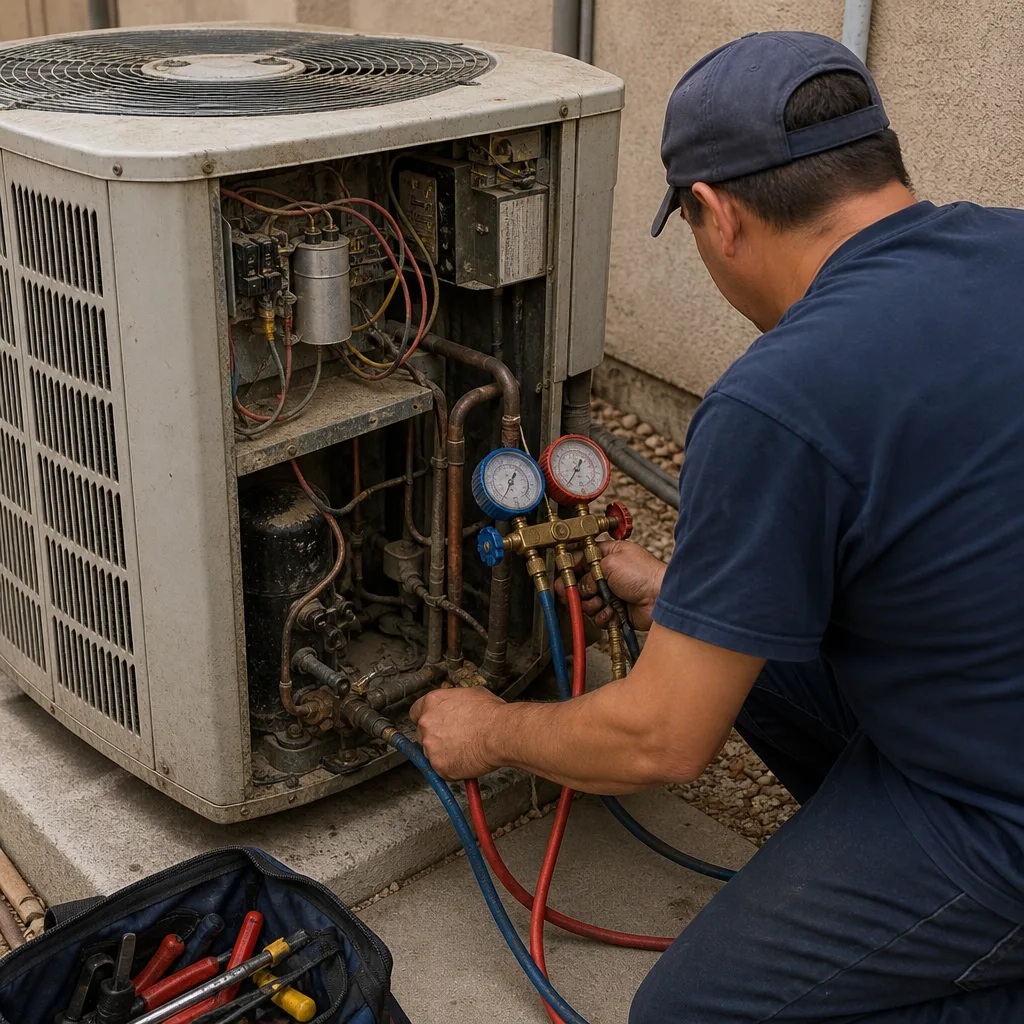 Before
 After
 Before
 After
 Before
 After
When to Call a Professional
Call a professional when you smell refrigerant, when a breaker keeps tripping, when ice returns after a filter change, when one zone stays dead after you’ve checked its power and drain, or when a defrost won’t clear. Those are the cases where the fix requires a license, gauges, and a compressor you can’t afford to gamble with. If you’re simply not sure whether what you’re seeing is normal desert behavior or a real fault, that’s a fair reason to call too. We’d rather answer a question than have you sit on a problem through a 110°F week.
Fireside Heating & Air Co. Summerlin offers free estimates in Summerlin. Call (888) 325-9387, and a live person answers, day or night.
Frequently Asked Questions
It’s usually the system protecting its compressor from high outdoor temperatures or high head pressure. Above roughly 115°F ambient, many units throttle or shut down by design. If it happens in mild weather or after a coil cleaning, it’s a real fault and needs a technician. Call (888) 325-9387 for an exact diagnosis; estimates are free.
Yes, frost and ice on the outdoor unit during a winter defrost cycle is normal. The system melts the frost and returns to heating. Ice that builds for hours without clearing, or a unit stuck in defrost, is not normal and should be checked.
Almost never. A refrigerant problem would affect every zone. A single dead zone usually means a clogged filter, a tripped breaker on that head, a float-switch trip, or a communication fault. Check those first before paying for a refrigerant diagnosis.
Some codes, yes. Filter warnings, drain faults, and communication errors after a power blip often clear with a filter change, a drain flush, or a clean reset at the breaker. Refrigerant and electrical faults need a licensed technician. Never keep resetting a tripping breaker.
It depends on the fault. Filter and drain issues are minor; refrigerant leaks, compressors, and reversing valves run much higher. Because we quote upfront, you’ll know the price before we start, and the price quoted is the price paid. Call (888) 325-9387 for a free estimate.
Yes. We offer a free second opinion on any written estimate. If another company told you the system needs replacing, bring us the paperwork and we’ll give you a straight answer. Call (888) 325-9387.
The Bottom Line
Most mini split and heat pump faults in Summerlin aren’t breakdowns. They’re the system responding to desert heat, a dirty filter, a clogged drain, or a single zone’s loose connection. Read the code against the high-heat list, clean what’s cleanable, and know the three conditions where you stop and call: refrigerant smell, repeated breaker trips, and a compressor running with no cooling. Everything you can’t safely fix, a licensed technician can, and a little seasonal maintenance prevents most of it. When you’re ready, call (888) 325-9387 for a free estimate. We answer around the clock, we quote upfront, and every job is backed by our 90-Day Done Right Promise. Done right, or we make it right.
Written by the team at Fireside Heating & Air Co. Summerlin.