
Last updated November 17, 2026
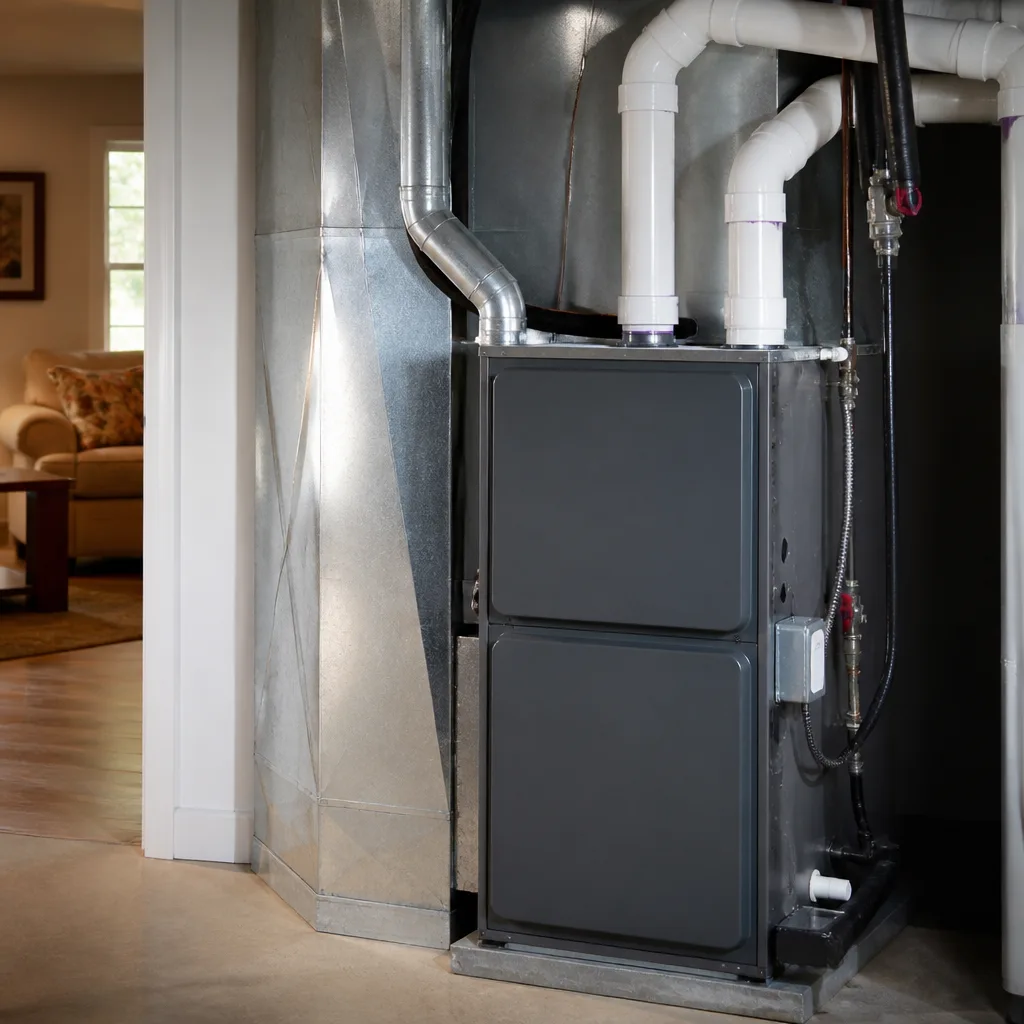 Furnace & heating
 AC repair
 Heat pumps
 Ductless mini splits
 Carrier
 Trane
 Goodman
Seasonal tune-up and full diagnostic on your Carrier, Trane, or Goodman system - readings shown to you before any repair is proposed
Diagnosis first, numbers second - you approve the repair price before a single part goes in.
Get your free estimateDIY vs Professional Heating & Furnace: What’s Safe to Do Yourself
A bad DIY air conditioning repair usually results in a warmer house or a voided warranty. A bad DIY furnace repair can result in carbon monoxide poisoning. That’s not a reason to be afraid of your furnace; it’s a reason to understand exactly where the safe line is, because it’s drawn differently than it is for cooling equipment. This guide walks through what Summerlin homeowners can legally and safely handle themselves, what Nevada law requires a licensed contractor for, and the handful of furnace problems that can go silently wrong before anything ever smells wrong.
Quick Answer
You can safely replace furnace filters, reset a furnace after a lockout, clear a clogged condensate line on a high-efficiency unit, and clean a flame sensor. You should not touch gas piping, gas valve connections, the heat exchanger, or combustion air adjustments; Nevada law requires a licensed contractor for gas line work and furnace modifications, and those are exactly the areas where a mistake creates carbon monoxide risk rather than just an uncomfortable house.
Styles & brands we work with
- AC repair
- Furnace & heating
- Heat pumps
- Ductless mini splits
- Carrier
- Trane
- Goodman
Table of Contents
- Why Furnace DIY Is a Different Category of Risk
- What Nevada Law Says About Furnace and Gas Work
- The Furnace Tasks That Are Genuinely Homeowner-Appropriate
- Cleaning a Flame Sensor: The Highest-Value DIY Task
- Where DIY Furnace Work Quietly Creates CO Risk
- How to Verify Your CO Detectors Before Heating Season
- Summerlin’s Climate and Why Furnace Care Still Matters Here
Why Furnace DIY Is a Different Category of Risk
Air conditioning failures are loud. The house gets warm, the compressor makes a noise, or the breaker trips. You know something is wrong within an hour. Furnace failures are often quiet. A cracked heat exchanger can bleed carbon monoxide into the ductwork with no noise, no smell, and no visible sign for weeks. That’s the whole reason this line is drawn differently than it is for cooling.
The equipment itself is also more regulated. A gas furnace has a combustion path, a flue or vent path, a gas train, and a safety chain of sensors that all have to work together. Three things determine whether a repair is a homeowner task or a professional task:
- Does the repair involve gas? Anything downstream of the shutoff valve is professional territory in Nevada.
- Does the repair affect combustion or airflow? Changes to airflow change how hot the heat exchanger runs, and that’s where silent damage starts.
- Does the repair touch a safety switch? Flame sensors, rollout switches, limit switches, and pressure switches exist to prevent fire and CO. If you guess at them, you’ve disabled a safety device.
In our experience across Summerlin, the furnace repairs that go badly wrong are almost never the ones where someone tried to fix something. They’re the ones where someone adjusted something to make the noise stop, and the furnace kept running in a condition it wasn’t designed for.
What Nevada Law Says About Furnace and Gas Work
Nevada requires a licensed contractor for gas piping work and for modifications to gas-fired appliances. A homeowner may perform maintenance on their own home in many cases, but gas line work, gas valve replacement, and any change to the appliance’s combustion components fall on the licensed side of the line. This is not a gray area worth testing. The Nevada State Contractors Board treats unlicensed gas work as a contractor violation, and more practically, your homeowner’s insurance can decline a claim tied to unpermitted or unlicensed gas work.
Here’s the practical split:
- Homeowner-legal: filter changes, thermostat batteries and low-voltage wiring on a standard 24-volt system, resetting a lockout, clearing a condensate drain, cleaning a flame sensor, cleaning the exterior cabinet.
- Licensed contractor required: gas line repair, gas valve replacement, new gas connections, heat exchanger inspection or replacement, flue and venting work, combustion air adjustments, blower motor replacement, control board replacement, and any modification to the appliance’s rating plate or burner assembly.
The test is straightforward: if the task involves a gas connection or anything that changes how the furnace burns fuel, it’s a pro job. Everything else is a judgment call about your own comfort and skill. If you’ve ever had a plumber out in Summerlin to look at a tankless water heater, you already know how carefully gas connections are treated; the furnace deserves the same caution.
The Furnace Tasks That Are Genuinely Homeowner-Appropriate
Here’s the short list. Each of these is something a careful homeowner can do without creating combustion risk, and each has a real cost offset against a service call. On the related Heating & Furnace in Summerlin page we break down the maintenance schedule; this section is the DIY half of it.
- Replace the air filter. Every 30 to 90 days depending on dust and pets. In Summerlin’s dry, dusty spring months, we usually see filters clog faster than homeowners expect. A $12 filter is the cheapest efficiency upgrade in the house.
- Reset the furnace after a lockout. If the furnace shut itself off three times in a row, it goes into lockout. Turn the thermostat to off, wait 30 seconds, and turn it back on. Repeat once. If it locks out again, stop resetting and call for service; a furnace that locks out twice is telling you something.
- Clear a clogged condensate line on a high-efficiency unit. If you see a PVC drain running from the furnace to a floor drain, that line can sludge up. A wet/dry shop vac on the exterior end of the line usually clears it. Do not use a wire snake, and do not push compressed air into the line; you can crack the internal trap.
- Clean the flame sensor. Detailed in the next section.
- Change thermostat batteries. Two AA or AAA cells once a year before heating season will save you a service call that turns out to be a dead thermostat.
That’s the list. Everything else on a gas furnace is either a licensed task or a task where a small mistake becomes expensive. If you’re weighing repair versus replacement, our piece on Heat Pump & Mini Split in Summerlin covers how those systems compare to a conventional gas furnace for a homeowner staying in their house long-term.
Cleaning a Flame Sensor: The Highest-Value DIY Task
The flame sensor is a short metal rod that sits right in the burner flame. When it’s dirty, the furnace sees “no flame” and shuts off the gas even though the burner lit fine. The symptom is furnace fans running, no heat, and then a lockout after a few cycles. That’s it. A five-minute cleaning with the right technique usually fixes it, and a service call almost always visits the same flame sensor.
Here is the safe way to do it:
- Set the thermostat to off and shut off the furnace’s power switch on the side of the cabinet. Turn the gas shutoff valve to the off position too, even though you will not be touching gas; it costs nothing.
- Find the flame sensor; it’s a single rod, usually near the burner you’ll see light first.
- Remove the single screw holding the sensor bracket. Do not bend the rod. If it’s a straight rod, it comes out straight.
- Wipe the rod with a crisp dollar bill or a piece of fine Scotch-Brite. Do not use sandpaper or steel wool. Both scratch the rod, and the scratches collect dirt faster, which is why a sandpaper “fix” usually fails again within a month.
- Reinstall the sensor with the same screw, restore power, restore gas, and run a heat cycle. You should hear the igniter click, see the burner light, and see the fan come on within 60 to 90 seconds.
Why does this matter so much in Summerlin? Our furnaces sit idle from roughly April through October. The dust that settles in a closed furnace cabinet during that off-season is exactly what contaminates a flame sensor, which is why the first cold snap of November generates a wave of “no heat” calls that a five-minute cleaning solves. Our technicians have up to 8 years of experience, and a good share of that experience comes from exactly this kind of call.
Where DIY Furnace Work Quietly Creates CO Risk
This is the section that matters most, and it’s the reason we don’t hand out step-by-step guides for the heavier tasks. Carbon monoxide is dangerous specifically because you get no warning: no smell, no taste, no visible spill. A heat exchanger can develop a small crack and run for months before anyone notices. Here are the two failure modes we see most in Summerlin.
Improper airflow stressing the heat exchanger
A heat exchanger is a set of steel passages hot combustion gas runs through. Its life depends on cool return air flowing across the outside at the rate it was designed for. When airflow drops, the metal runs hotter than its rating, and the seams and welds crack. Things that drop airflow: a filter that’s too thick for the return, a return register covered by furniture, a duct that got crushed during a remodel, or a blower that’s running slower than it should. None of those is a dramatic failure; they’re all small adjustments a homeowner makes without realizing the cumulative effect. A cracked heat exchanger is the single most common source of furnace-related CO leakage, and it fails without a sound.
Overtightened gas connections and micro-leaks
A gas connection that has been overtightened at a DIY repair can deform the flare or crush the compression ring, and it will pass a quick “smell test” because the leak is measured in parts per million. It shows up over months. A proper gas connection is verified with a leak-detection solution and, at the appliance side, a manometer reading to confirm inlet pressure is where the rating plate says it should be. That’s not a step a homeowner can complete without the tools, and it’s the reason Nevada draws the line at licensed gas work.
Neither of these failure modes announces itself. That’s the point. If you’ve done any DIY work inside the burner compartment, get a combustion analysis. Fireside Heating & Air Co. Summerlin performs this as part of a service call, and the free second opinion on any written estimate is the cheapest way to confirm the furnace is safe before winter.
How to Verify Your CO Detectors Before Heating Season
Do this in October, before the furnace runs for the first time in months, every single year. What follows is verification, not installation; if you’re replacing detectors, follow the manufacturer’s instructions and the local fire code.
- Locate every CO detector in the home. You should have one on each floor, one outside each sleeping area, and one in the mechanical room or near the furnace if the furnace is inside the conditioned space.
- Press the TEST button on each unit. A working detector sounds its alarm within a few seconds. If it doesn’t, the unit needs replacement, not cleaning.
- Check the manufacture date stamped on the back. CO sensors have a lifespan; most manufacturers rate them for 5 to 7 years, and a unit past that date can fail silently. Replace it.
- Replace the batteries on a schedule (many homeowners use the same day they replace smoke alarm batteries, and that’s a good habit).
- Listen for the low-battery chirp. If you hear one in the middle of the night in February, that’s the detector asking for attention, not a false alarm.
Placement matters more than people realize. A CO detector mounted directly above the furnace will not catch a spill from a heat exchanger; the ductwork is carrying the gas away. Put it in the living space, especially the bedrooms. On the flip side, a detector mounted inside the mechanical closet reads the normal trace CO from the burner ignition cycle and generates nuisance alarms. Summerlin homes with the furnace in a garage closet often have this issue, and it’s a five-minute fix to relocate the detector to the hallway wall outside the door.
Summerlin’s Climate and Why Furnace Care Still Matters Here
It’s tempting to treat a Summerlin furnace as a small winter luxury given how mild our heating season is compared to, say, Reno or Bend. Don’t. The short, concentrated heating season is exactly why our furnaces fail sooner than people expect. A furnace in Henderson or Summerlin runs perhaps 800 to 1,200 heating hours a year; the same furnace in a colder climate runs two to three times that. But the failure rate on our equipment doesn’t track runtime. It tracks the number of cold start/stop cycles, and the sediment-and-dust cycle of an idle summer is brutal on the burner compartment, flame sensor, and igniter. That’s a big part of why our November call volume jumps.
The dry air is a factor too. Summerlin’s indoor humidity routinely drops below 20 percent in winter, which pulls moisture away from gaskets and rubber components in the cabinet. Flue gaskets that would stay supple in a humid climate can harden and begin to leak combustion gas into the cabinet. That’s a professional inspection item, not a homeowner task, but it’s why an annual furnace check in Summerlin is genuinely more important than most homeowners assume.
If you’re comparing furnace replacement to a heat pump, our Fireside Heating & Air Co. Summerlin home page lists the services we run most often in the neighborhood. And if cooling season is the bigger concern, the AC Repair & Installation in Summerlin page covers the sister system in the same house.
Common Mistakes to Avoid
- Replacing the flame sensor instead of cleaning it. A flame sensor rarely fails on its own. Replacing it without diagnosing why the original read low usually leaves the same problem in place. Clean it first; replace only if the sensor rod shows physical damage.
- Using sandpaper or steel wool on the sensor rod. Both scratch the rod and accelerate future contamination. Use a crisp dollar bill or fine Scotch-Brite.
- Sealing off a return register or mechanical room “to save heat.” Both choke airflow and are the fastest way to stress a heat exchanger. In Summerlin homes with the furnace in a garage closet, closing the closet door for noise is a common version of this mistake.
- Ignoring a lockout that happens twice. Two lockouts in a season is a fault code asking for inspection. Three is the furnace telling you it’s already tried everything it can safely do.
- Covering a fresh-air intake or combustion air vent with furniture or storage. This is a particular risk in the smaller mechanical rooms common in Summerlin’s older custom builds.
- Testing a gas connection with a lighter. Never, no exceptions. Use a leak-detection solution and a trained eye. If you cannot do the proper test, you cannot do the work.
- Skipping the CO detector test because “the furnace seems fine.” CO detectors don’t catch the problem in the furnace; they catch the problem in the home. Test them every October regardless of how the furnace is running.
See the difference
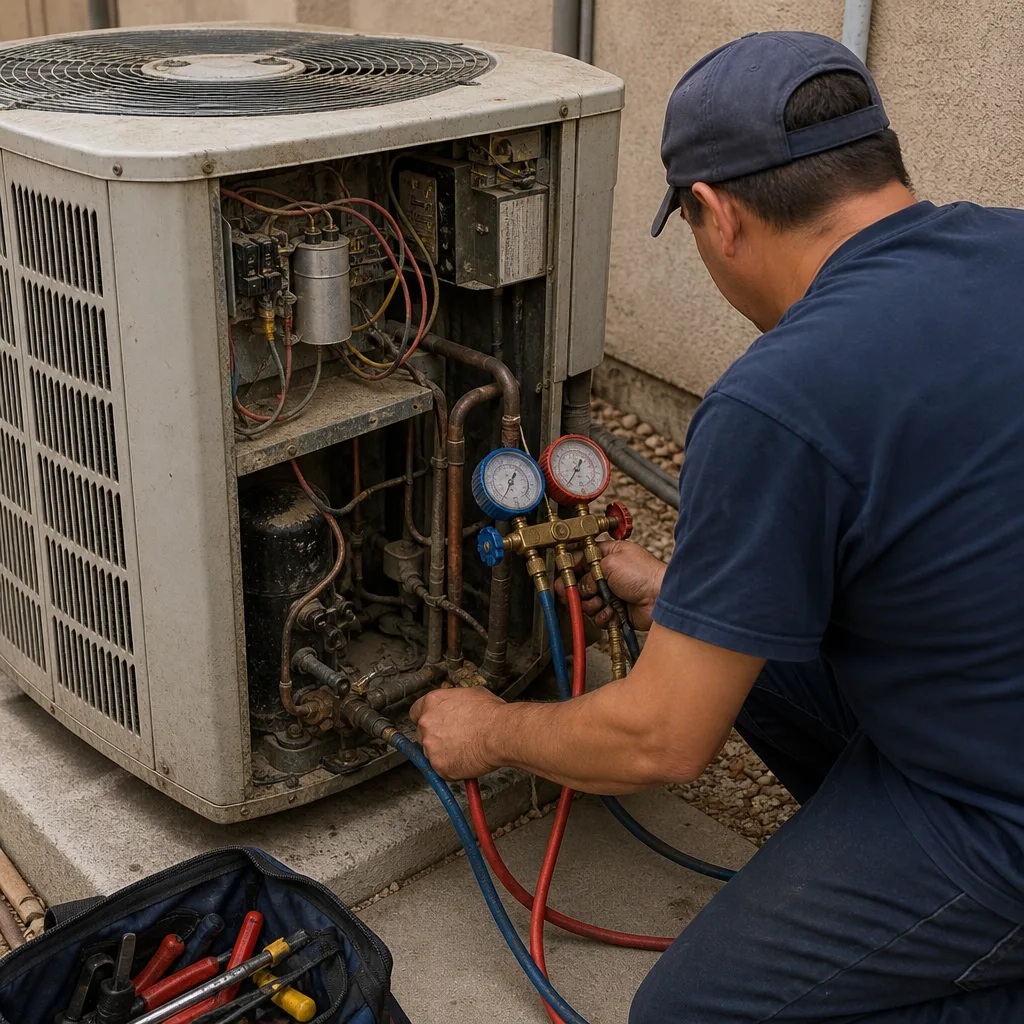 Before
 After
 Before
 After
 Before
 After
When to Call a Professional
Call a licensed professional for anything involving gas piping, gas valve connections, heat exchanger inspection or replacement, flue work, blower or control board replacement, or a lockout that repeats after a single reset. Also call if you smell gas, if a CO detector has ever alarmed, or if a furnace in Summerlin creates a yellow or lazy flame instead of the steady blue one it should produce.
Fireside Heating & Air Co. Summerlin offers free estimates in Summerlin; call (888) 325-9387. Every job is backed by our 90-Day Done Right Promise: if it’s not done right, we make it right, in writing, no arguments. A live person answers the phone around the clock, including the 2 a.m. no-heat call. Technicians are background-checked and uniformed, and they service all nine major residential brands, including Rheem, Daikin, and Bryant. Current offers: $50 off any repair over $250, a free second opinion on any written estimate, an $89 seasonal tune-up, and a standing 5% senior and veteran discount.
Frequently Asked Questions
In Nevada, a homeowner can legally change filters, reset a locked-out furnace, clean a flame sensor, clear a condensate drain, and handle low-voltage thermostat work. Gas line repair, gas valve replacement, heat exchanger work, and anything that modifies the appliance’s combustion system require a licensed contractor under Nevada State Contractors Board rules. When in doubt, ask the question: does this task touch gas or combustion? If yes, it’s a licensed job.
Yes, if you follow three rules: shut off gas and power first, don’t bend the sensor rod, and use a crisp dollar bill or fine Scotch-Brite, never sandpaper or steel wool. The sensor sits inside the combustion path but you’re only cleaning the metal probe, not adjusting the burner. It’s one of the few furnace tasks where the consequence of a mistake is a service call, not a safety issue. If the sensor keeps dirtying up after cleaning, that’s a sign of a bigger combustion problem, and it’s time for a professional. Call (888) 325-9387 for a furnace inspection if that happens.
Yes, in two specific ways. Improper airflow work (sealing returns, blocking vents, using the wrong filter size) stresses the heat exchanger and can crack it, opening a CO path into the ductwork. Overtightening a gas connection creates a slow micro-leak that’s often too small to smell. Neither announces itself, and both are the exact reason Nevada requires licensed work on gas and combustion components. A combustion analysis is the only reliable way to verify a furnace is safe after any DIY work inside the burner compartment. Call us for a combustion check before heating season.
Once a year, in early fall, before the first cold snap. Summerlin’s short, concentrated heating season and long idle summer compound the wear on the flame sensor, igniter, and burner compartment. An annual service visit catches those items before they leave you with no heat on the coldest night of the year. Our $89 seasonal tune-up is the flat-price version of this, and it includes a written report of what the technician actually found. Call (888) 325-9387 to schedule before November.
Press the TEST button on the unit. A working detector sounds its alarm within a few seconds. Then check the manufacture date stamped on the back; a CO sensor older than 5 to 7 years needs replacement even if it still tests fine, because the sensor degrades without giving any warning. Test every detector in the house once a year in October, before the furnace runs for the first time in months. If any unit fails the test or is past its date, replace it before heating season. Call (888) 325-9387 if you’d like a professional combustion check to pair with the annual detector test.
Replace if the furnace is 15 years or older and the repair is over $1,500, especially if the repair involves the heat exchanger. Heat exchanger replacement on a unit that age is rarely worth it; the rest of the furnace is already near end of life. Repair if the furnace is under 12 years and the issue is a burner, sensor, control board, or blower. If you’re unsure, the free second opinion on any written estimate will tell you plainly which side of that line your furnace is on. Call (888) 325-9387 for a straight answer, not a sales pitch.
The Bottom Line
The furnace DIY line is drawn by consequence, not skill. Filter changes, flame sensor cleaning, condensate drains, and lockout resets are homeowner-safe and genuinely save money. Gas connections, heat exchangers, and combustion adjustments are not, because the failure mode is carbon monoxide rather than a warm house. Test every CO detector in October, every October, independent of what you do or don’t do to the furnace itself. If you’ve already done any work inside the burner compartment, get a combustion analysis before the first cold night. Fireside Heating & Air Co. Summerlin offers free estimates and a free second opinion on any written estimate; call (888) 325-9387 for a straight answer about what your furnace needs.
Written by the team at Fireside Heating & Air Co. Summerlin.