
Last updated November 17, 2026
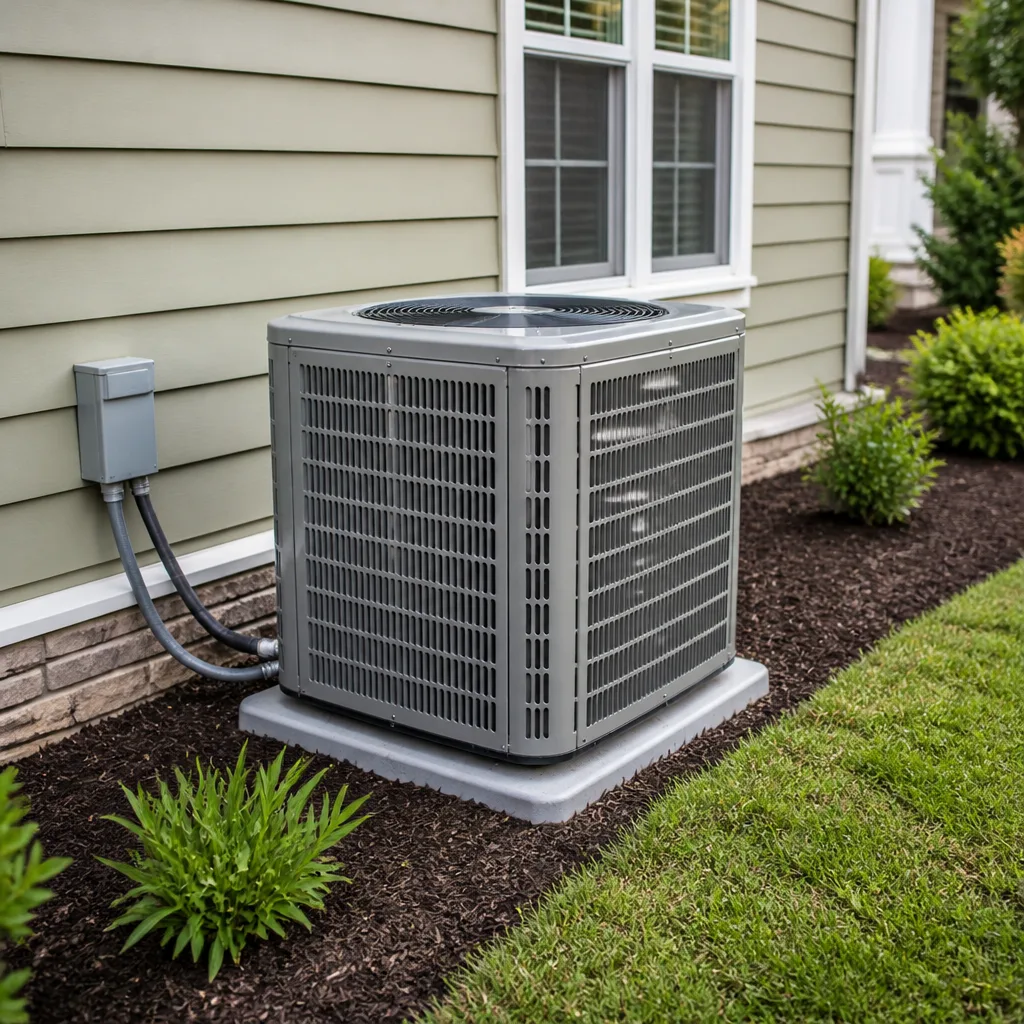 AC repair
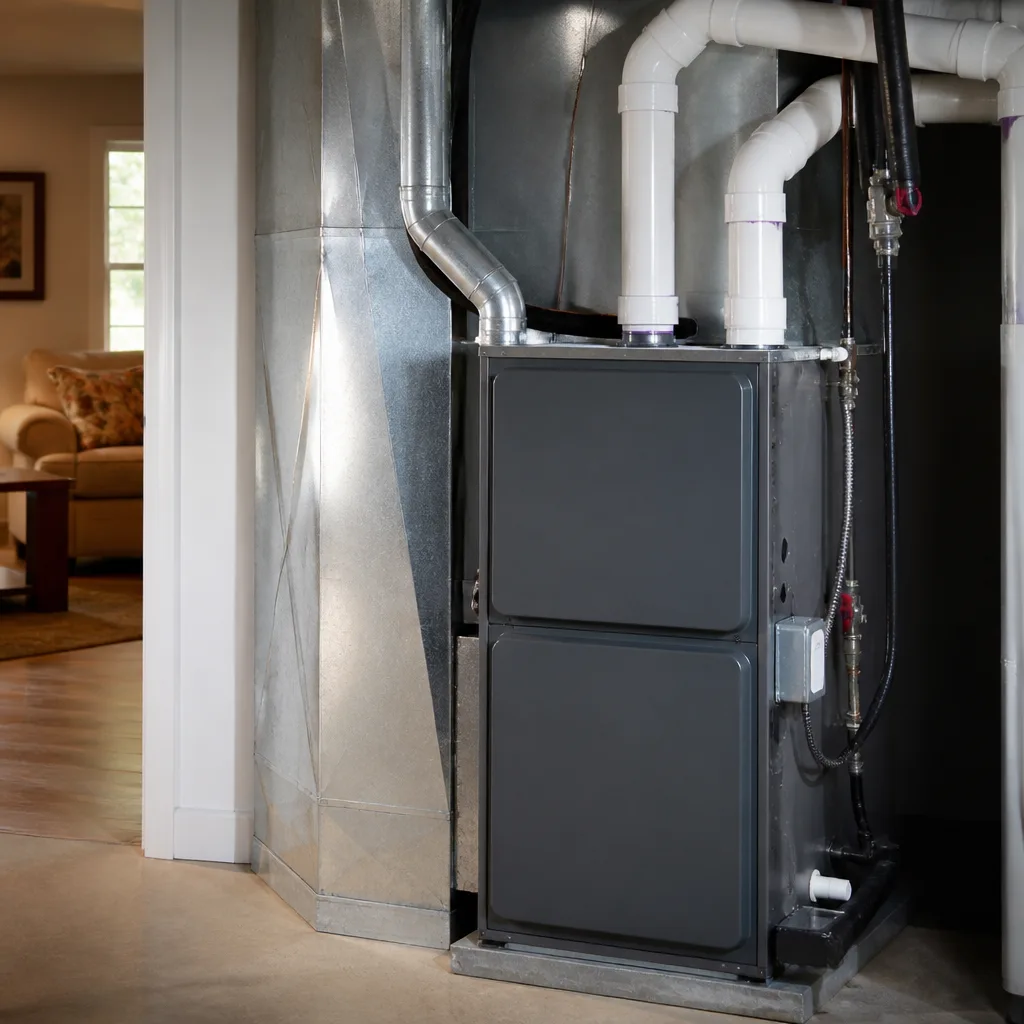 Furnace & heating
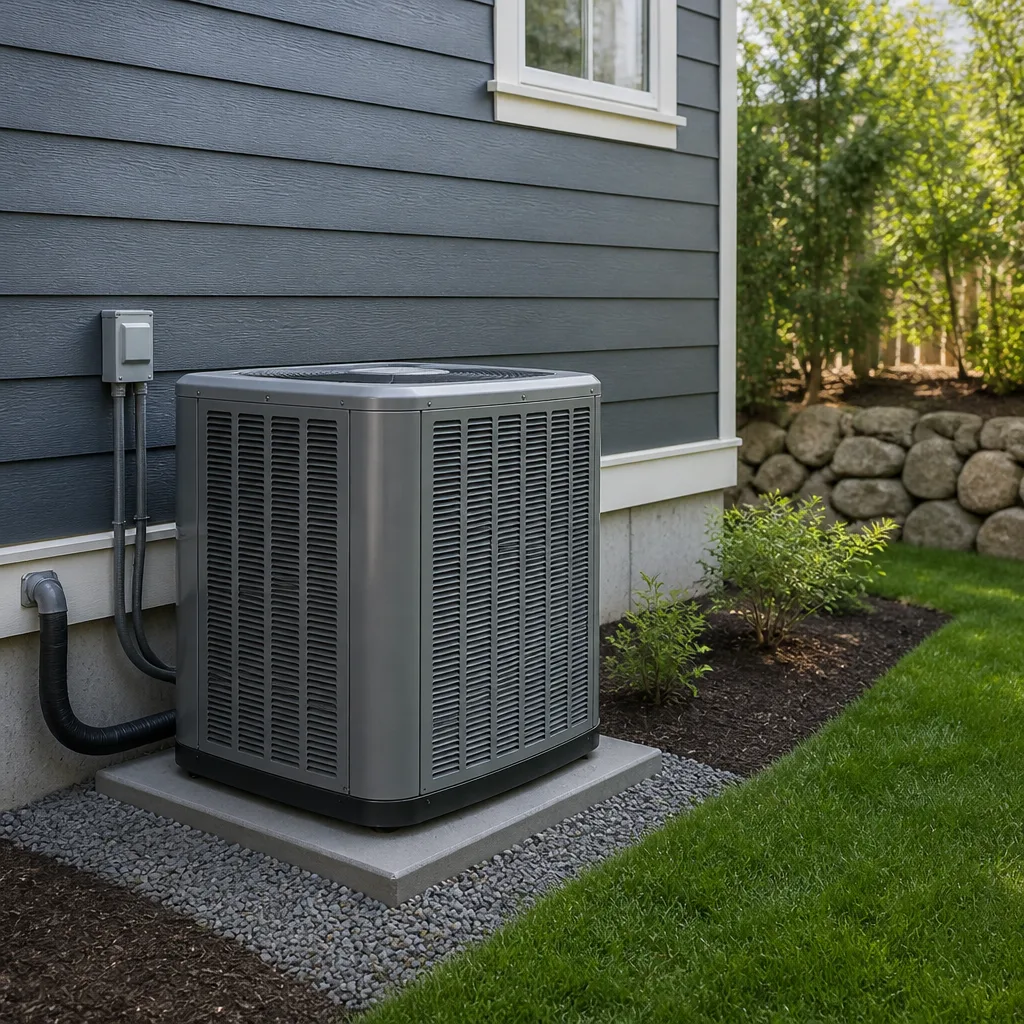 Heat pumps
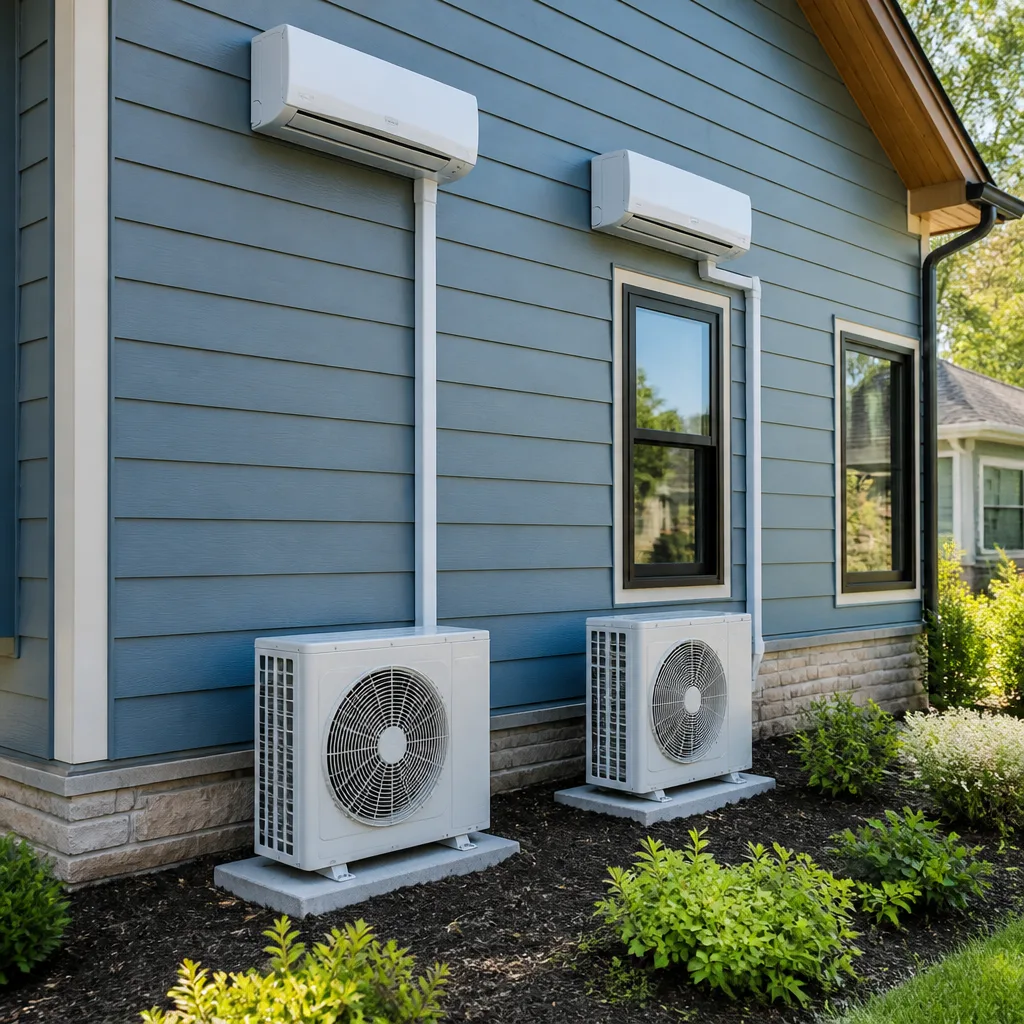 Ductless mini splits
 Carrier
 Trane
 Goodman
Seasonal tune-up and full diagnostic on your Carrier, Trane, or Goodman system - readings shown to you before any repair is proposed
Diagnosis first, numbers second - you approve the repair price before a single part goes in.
Get your free estimateAC Repair & Installation Maintenance Schedule: What to Do and When
If your maintenance reminder says “change the filter every three months,” you’re following advice calibrated for a climate with four roughly equal seasons. Summerlin doesn’t have four equal seasons. Your system runs near-continuously from April through October, then barely at all for two cool months. That asymmetry is why most filters here are either clogged solid or tossed out half-used, and why the calendar-based schedules you’ll find on most HVAC sites never quite fit. This guide lays out a maintenance calendar built around how a Summerlin home actually operates, month by month, along with the tasks you can handle and the ones you genuinely shouldn’t.
Quick Answer
In Summerlin, the single most important maintenance window is March, before the cooling season begins, not the fall. Plan on a professional tune-up in early spring, monthly filter checks during April through October, a condensate drain flush every two to three months in dusty season, and a heating check in late October before the first cold snaps. Anything involving refrigerant, electrical components, or the sealed internals of the outdoor condenser belongs to a licensed technician.
Styles & brands we work with
- AC repair
- Furnace & heating
- Heat pumps
- Ductless mini splits
- Carrier
- Trane
- Goodman
Table of Contents
- Why a Summerlin Maintenance Schedule Looks Different
- The Month-by-Month Calendar for Summerlin Homes
- Filter Intervals Calibrated to Run Hours, Not the Calendar
- Condensate Drain Flushing in Desert Air
- What to Check After a Dust Storm
- What a Homeowner Can Do vs. What Needs a Technician
- Repair or Replace: The Schedule Question Everyone Asks
- What Maintenance and Repair Run in Summerlin
Why a Summerlin Maintenance Schedule Looks Different
Most maintenance calendars were written for places where heating and cooling share the load evenly. Summerlin is not one of those places. From April through October your air conditioner is the hardest-working appliance in the house, running through long stretches of 100-degree-plus afternoons. From November through February, the system mostly rests. Our technicians have up to 8 years of experience working this climate, and the pattern is consistent: equipment fails in the first heat wave because it went into summer without a tune-up.
The practical consequence is that your maintenance year has two real seasons, not four. Cooling-season prep and heating-season prep. The cooling season is longer, hotter, and does more wear. So the schedule puts more weight on late winter and early spring, and lighter tasks through the summer months.
There’s a second local factor. Summerlin sits in high desert, which means dust. Dust coats the outdoor condenser coil faster than in humid climates, clogs return filters sooner, and settles into condensate drain pans where it combines with moisture to form a paste that blocks drainage. A schedule built for a wet, leafy climate will leave your system fighting dust it wasn’t prepared for. If you want the deeper service behind this calendar, our AC repair and installation in Summerlin page walks through what a full service visit includes.
The Month-by-Month Calendar for Summerlin Homes
This is the schedule we’d hand a homeowner who wants to stay ahead of the system instead of chasing it. It’s built around the real operational seasons of a Summerlin house. Follow it and you’ll catch most problems before they turn into emergency calls on the hottest day of the year.
March: The Big One
March is your most important maintenance month, and it’s the point where this guide parts ways with national advice that says fall. Before the first real heat of the year, schedule a professional cooling tune-up. The technician cleans the condenser coil, checks refrigerant charge, tests capacitors and contactors, and verifies airflow. A system that’s low on refrigerant or running on a failing capacitor in March gets fixed cheaply. The same fault discovered in July means a no-cooling call and a hot house. This is also the month to flush the condensate drain and replace the filter.
April through June: Cooling Season Begins
Check your filter every 30 days. Flush the condensate drain once in this window. Walk the outdoor unit after any dusty or windy stretch and hose off visible dust. Cover the condenser if a dust storm is forecast, then uncover it once the air clears. Our Summerlin home comfort overview explains how the whole-house system works together if you want the bigger picture.
July through September: Peak Load
Filter checks every 30 days, sometimes every three weeks if you have pets or keep windows open. Watch for ice on the indoor coil or refrigerant lines, which signals a problem and not a good sign. If the system starts short-cycling or blowing warm, stop using it and call. Running a struggling compressor through peak heat is how a repair becomes a replacement.
October: The Turn
This is your second tune-up window and the counterpart to March. Have the heating side checked before the first cold snap: heat exchanger, ignition, and airflow. Replace the filter one more time and flush the drain. If you heat with a heat pump, this is the month a technician verifies switchover. For dedicated heating service, see our heating and furnace service in Summerlin.
November through February: Heating Season and Rest
Your system mostly idles in these months, which is exactly when deferred maintenance is tempting. Check the filter once a month anyway. Listen for odd noises on cold mornings. If you run a heat pump or mini-split, a mid-winter filter change keeps efficiency up. This is also the season a heat pump does double duty, so our guide to heat pump and mini split systems in Summerlin is worth reading if you’re on one.
Filter Intervals Calibrated to Run Hours, Not the Calendar
The “every three months” rule assumes moderate, even-year-round runtime. In Summerlin your filter does most of its work in a compressed, intense cooling season, and almost none in the winter. A filter that’s fine in January can be fully loaded in four weeks of July. So the right interval isn’t a calendar number. It’s a run-hour number, and the way to read it is to look at the filter itself.
Here’s how to set your own interval:
- Start with a fresh filter on the first day of April.
- Look at it after 30 days. Hold it up to a light. If you can’t see light through the pleats, replace it.
- If it’s still mostly clear, check again in two weeks. Most Summerlin homes land on a four-to-six week summer interval.
- If you have pets, a long-haired household, or keep windows open, tighten the interval to every three weeks in peak season.
- In November through February, you can usually stretch to every eight to twelve weeks because the system is barely running.
There’s an economic point here that national guides miss. Changing a filter every month when the system isn’t running wastes money. Changing it every three months in July chokes the equipment and drives up your power bill while straining the blower. Match the interval to what the filter is actually catching, and you’ll spend less and protect the system better. If you’re unsure what filter your system takes, a technician can tell you on a service visit.
Condensate Drain Flushing in Desert Air
The condensate drain carries the moisture your AC pulls out of the air, and in a dry climate you might assume it’s not doing much. It’s doing plenty. Summerlin summers are hot enough that the system runs long hours, and the drain line sees a steady trickle that mixes with fine desert dust. That dust settles in the pan and line, and over months it forms a sludge that blocks the drain. A blocked drain means water backs up, the pan overflows, and you get water damage in a ceiling or closet. It’s one of the most common preventable calls we see.
Flushing the line is a genuine homeowner task, and it’s straightforward when done carefully:
- Turn the system off at the thermostat.
- Find the drain line near the indoor air handler or in the closet where it exits.
- Locate the access tee or cap on the line.
- Pour a cup of distilled white vinegar into the line to break down the sludge, followed by warm water to flush it through. If the line has a clear drain trap, flush through that.
- Confirm the water flows freely and the pan is dry before restarting.
Do this every two to three months through the cooling season, and once in late spring before the heat arrives. If the line is already backed up, or if you see standing water you can’t clear, stop and call a technician. A shop vac on the wrong end of a drain line can crack a fitting. Our team handles drain clearing on a standard service call.
What to Check After a Dust Storm
Dust storms are a fact of life in the high desert, and they leave real work behind on your system. Knowing what you can safely check and what needs a professional saves you both money and risk.
What a Homeowner Can Inspect
- Look at the outdoor condenser from a distance. Check for debris, leaves, or a visible dust coating on the fins.
- Check the indoor filter. A dust storm can push fine grit into the return.
- Look at the condensate pan for standing water or grit.
- If the outdoor coil is visibly dusty and the unit is off, you can gently rinse the fins with a garden hose from the outside, low pressure, never with a pressure washer. Avoid bending the fins.
- Note any unusual sounds or short-cycling when the system restarts.
What Requires a Licensed Technician
- Any cleaning of the indoor coil, which sits behind sealed panels.
- Anything involving the refrigerant circuit, electrical controls, or the capacitor and contactor.
- Checking refrigerant charge, which requires gauges and training.
- A unit that ran during a heavy dust event and now trips the breaker or won’t start.
If the system ran through a major dust storm and now behaves oddly, don’t keep resetting the breaker. A technician can clean the coil properly and check the electrical components before a small fault becomes a compressor failure. A quick call beats a hot house and an expensive repair.
What a Homeowner Can Do vs. What Needs a Technician
The line between homeowner maintenance and professional service is clearer than most people think. Stay on the safe side of it and you’ll get more life out of the system without risking injury or a voided warranty.
Safe for homeowners:
- Replacing the filter on schedule.
- Flushing the condensate drain with vinegar and water.
- Keeping the area around the outdoor unit clear of debris and plants.
- Rinsing dust off outdoor fins with a garden hose, system off.
- Watching for warning signs: ice, warm air, odd noises, short-cycling.
Technician territory:
- Refrigerant charge and any work on the sealed refrigerant circuit.
- Electrical components: capacitors, contactors, wiring, breakers.
- Indoor coil cleaning behind sealed panels.
- Heat exchanger inspection on the furnace side.
- Any task on the compressor or the sealed system.
There’s a safety reason for that second list. The refrigerant circuit and the electrical panel carry real risk, and the sealed components are not designed for homeowner access. A trained technician with the right tools does it safely and correctly. This is also where membership in a company that stands behind its work matters. The Fireside home base explains the 90-Day Done Right Promise we attach to every service call.
Repair or Replace: The Schedule Question Everyone Asks
No maintenance schedule runs forever without this question coming up. The honest answer depends on age, repair cost relative to replacement cost, and how well the system has been maintained. Here’s the way to think it through.
- Under 12 years old, single repair: repair almost always wins, especially if the schedule above has been followed.
- 12 to 15 years old, one major repair: get a second opinion before committing. A failing compressor or a leak on an older system can approach replacement cost.
- 15-plus years, repeat repairs: replacement usually makes more financial sense than chasing a dying system.
- R-22 refrigerant system: replacement is worth serious consideration, since older refrigerant is expensive to recharge.
If you’re weighing it, get a second opinion on the written estimate.
What Maintenance and Repair Run in Summerlin
Prices vary by system and season, but here are the ranges we see most often. They’re line-item, so you can compare them to a bid you’ve received.
- Seasonal tune-up: around $89 for a standard visit.
- Filter replacement: from about $10 for a basic filter to $40 or more for a high-MERV unit, DIY.
- Condensate drain clearing: typically $100 to $180 as part of a service call.
- Capacitor or contactor replacement: commonly $150 to $300.
- Refrigerant recharge: varies widely by type and amount; quoted upfront after diagnosis.
- Condenser coil cleaning: usually $100 to $250 depending on access.
- Full system replacement: quoted in writing after a load calculation, never over the phone.
Every price we quote is the price you pay. No surprises at the end. Free second opinions on any written estimate are available, and a senior or veteran discount of 5% applies on request.
Common Mistakes to Avoid
- Following the fall-only tune-up rule. National guides schedule service in fall because that’s when heating systems get attention. In Summerlin your cooling season is the long one, so a fall-only visit misses the peak. Schedule in March instead.
- Changing the filter on a fixed calendar. Every three months is wrong in July and wasteful in January. Read the filter, not the calendar.
- Ignoring the condensate drain until it overflows. Desert dust turns that drain into paste. Flush it every two to three months through cooling season and you’ll avoid a water-damage call.
- Pressure-washing the outdoor coil. High pressure bends the delicate fins and does more harm than good. A garden hose, low pressure, system off.
- Resetting the breaker and hoping. If the unit trips a breaker, it’s telling you something is wrong electrically. Repeatedly resetting can turn a small fault into a major one.
- Running a system that’s icing up. Ice on the lines means low refrigerant or an airflow problem, not a happy unit. Turn it off and call.
- Skipping the snowbird months entirely. If your Summerlin home is empty for part of the year, the system sits. Have a technician run it and check it before you leave and after you return.
See the difference
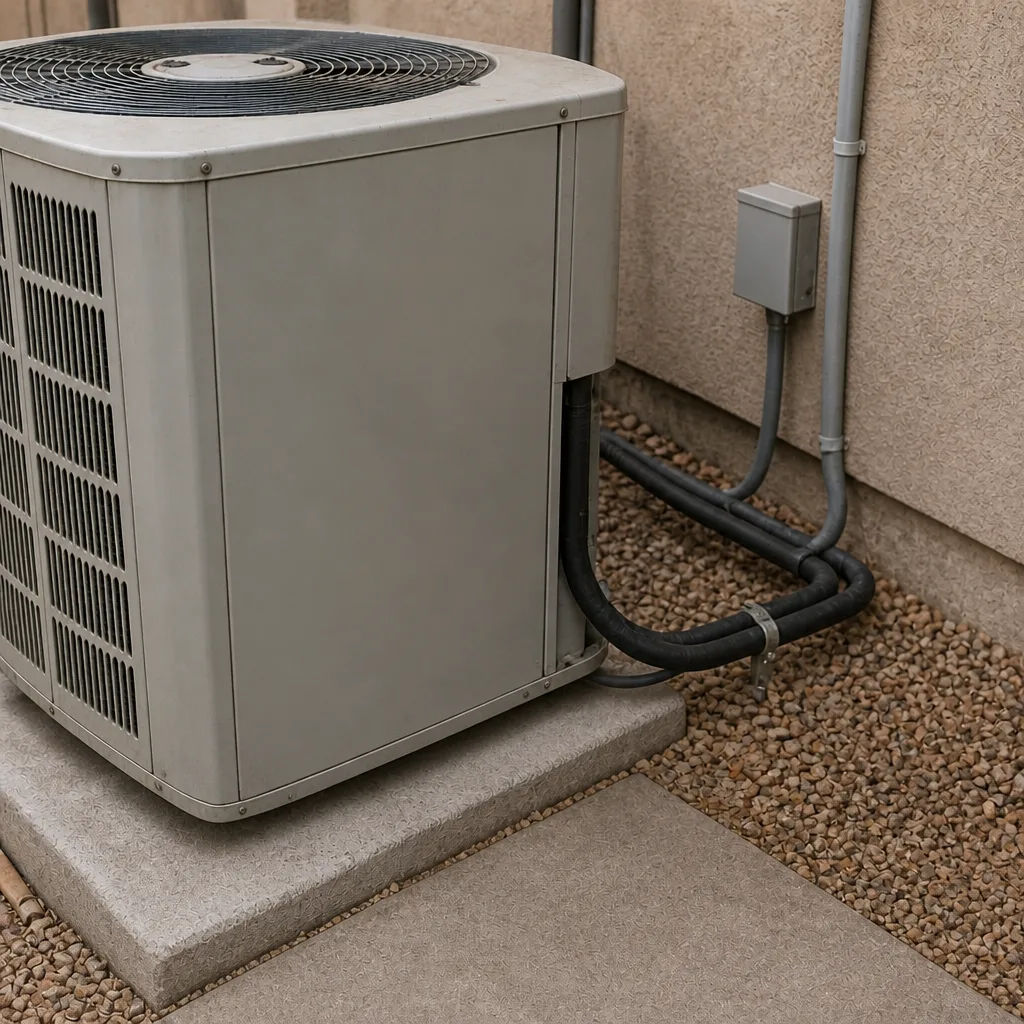
 Before
 After
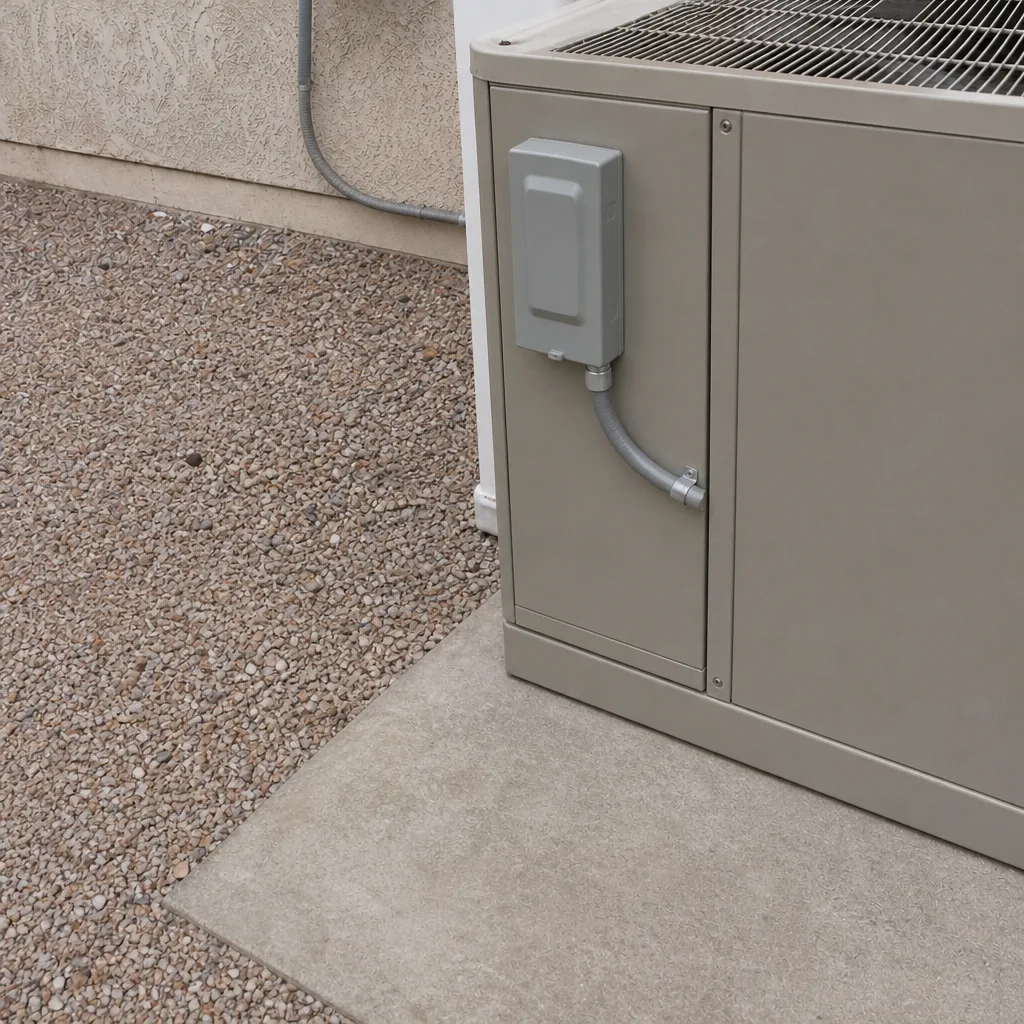
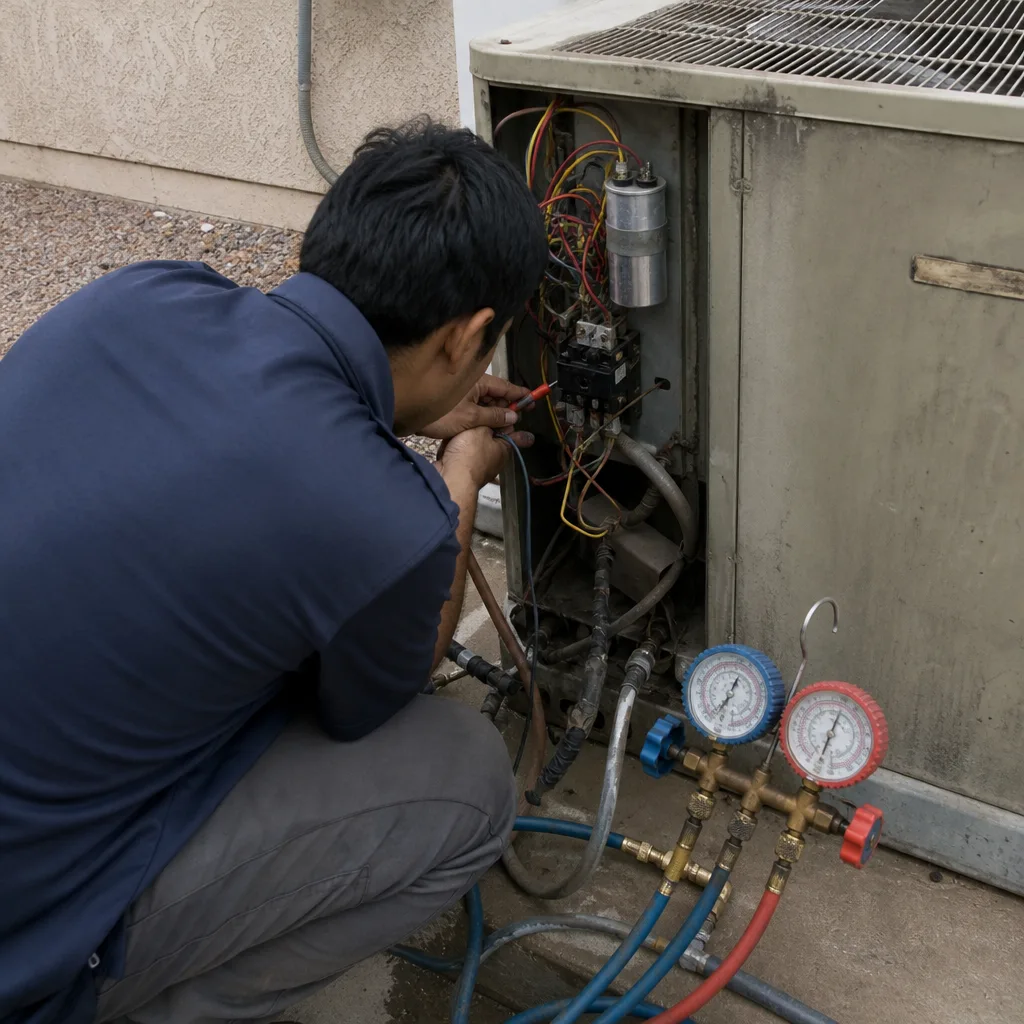 Before
 After
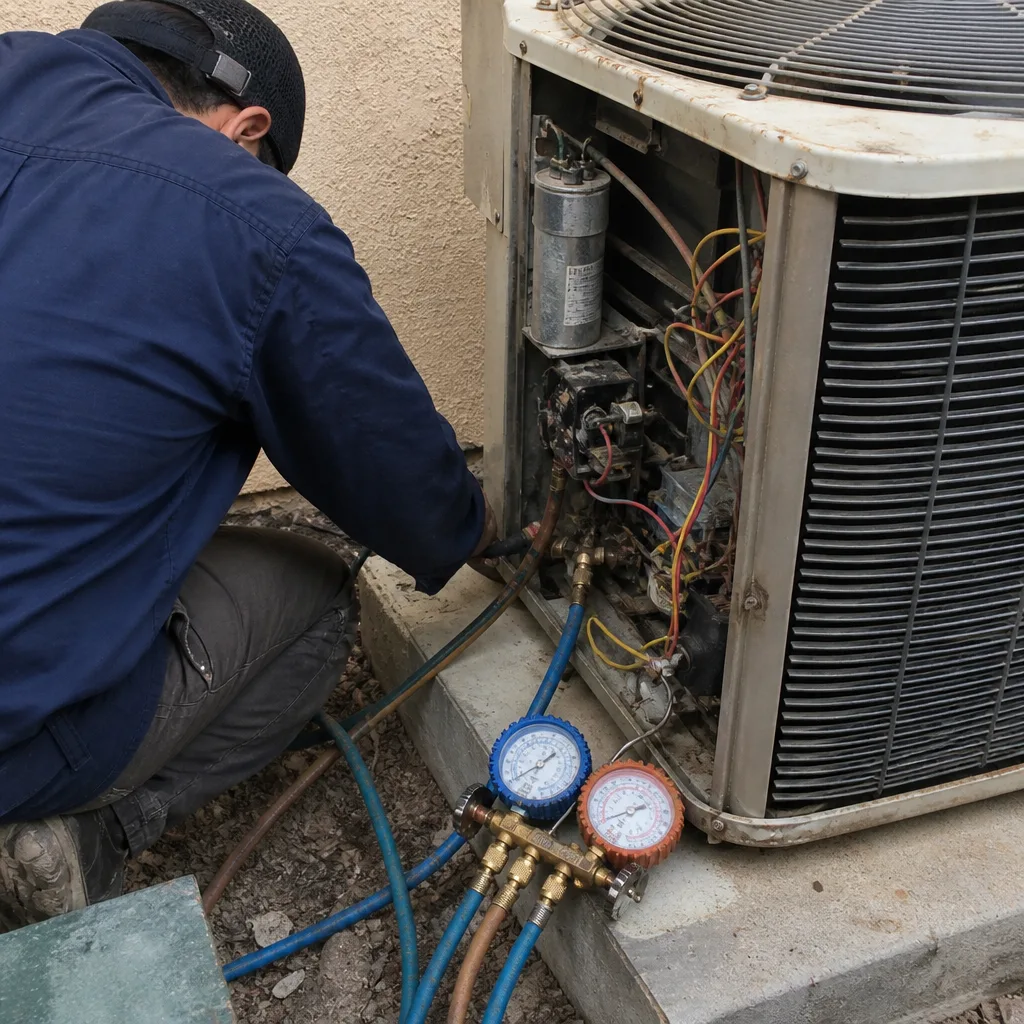 Before
 After
When to Call a Professional
Some things wait. These don’t. Call us if the system is blowing warm air during peak heat, if you see ice on the indoor coil or refrigerant lines, if the unit trips the breaker repeatedly, if water is pooling near the indoor unit or dripping from the ceiling, or if you smell burning or a strange odor when the system runs. Call if the outdoor condenser ran through a heavy dust storm and now won’t start, or if a heat pump stays in one mode. And call if you’re simply not sure whether a repair is worth it. Fireside Heating & Air Co. Summerlin offers free estimates in Summerlin. Call (888) 325-9387, and a live person answers day or night. We’ll be there when we say, quote the price upfront, and stand behind the work in writing for 90 days.
Frequently Asked Questions
Twice a year in most Summerlin homes: a full cooling tune-up in March before the heat, and a heating check in October before the cold. The March visit matters most because that’s when catching a small fault is cheapest. Between visits, the filter checks and drain flushes in this calendar handle the routine side. Call (888) 325-9387 to schedule a tune-up.
Because your cooling season is six months of hard work and your heating season is short. A March tune-up catches refrigerant and electrical problems before the system runs them into the ground during peak heat. A fall-only schedule leaves the cooling side unattended through the summer, which is when it takes the most wear. Fall still matters, but it’s the second most important window.
Every four to six weeks during April through October in most Summerlin homes, and every eight to twelve weeks in the cooler months. The three-month rule doesn’t fit a climate where the system runs flat out for half the year. Look at the filter, hold it to the light, and replace when you can’t see through it. A technician can set the right interval for your home on a tune-up.
Yes, and you should. Pour a cup of distilled white vinegar into the drain access, follow it with warm water, and confirm it flows freely. Do this every two to three months through cooling season. Stop and call a technician if the line is already blocked or you see standing water you can’t clear. Call (888) 325-9387 if the drain won’t clear.
Under 12 years old, repair usually wins. Between 12 and 15 years, get a second opinion on any major repair. At 15-plus with repeat failures, replacement usually costs less over time. Whatever you decide, we’ll quote it upfront and give you a free second opinion on any written estimate you’ve received.
For no-cooling and no-heat calls, we can often get out the same day, and we answer the phone around the clock. When the house is hot in July or cold in December, that’s an emergency, not a scheduling preference. Call (888) 325-9387 and a live person will help you. Estimates are free.
The Bottom Line
A maintenance schedule for a Summerlin home should be built around the calendar this climate actually keeps: a long, hard cooling season and a short, quiet heating season. The biggest move you can make is a March tune-up before the heat, not a fall visit. Between professional visits, check the filter by what it catches rather than the calendar, flush the condensate drain every few months, and inspect the outdoor unit after dust storms without touching the sealed components. Do that and you’ll spend less, catch problems early, and stop treating your system like a surprise waiting to happen.
When you’re ready for a tune-up or you’ve got something that needs a look, call Fireside Heating & Air Co. Summerlin at (888) 325-9387 for a free estimate. The price quoted is the price paid, a live person answers any hour, and every job is backed by the 90-Day Done Right Promise. Done right, or we make it right.
Written by the team at Fireside Heating & Air Co. Summerlin.