
Last updated November 17, 2026
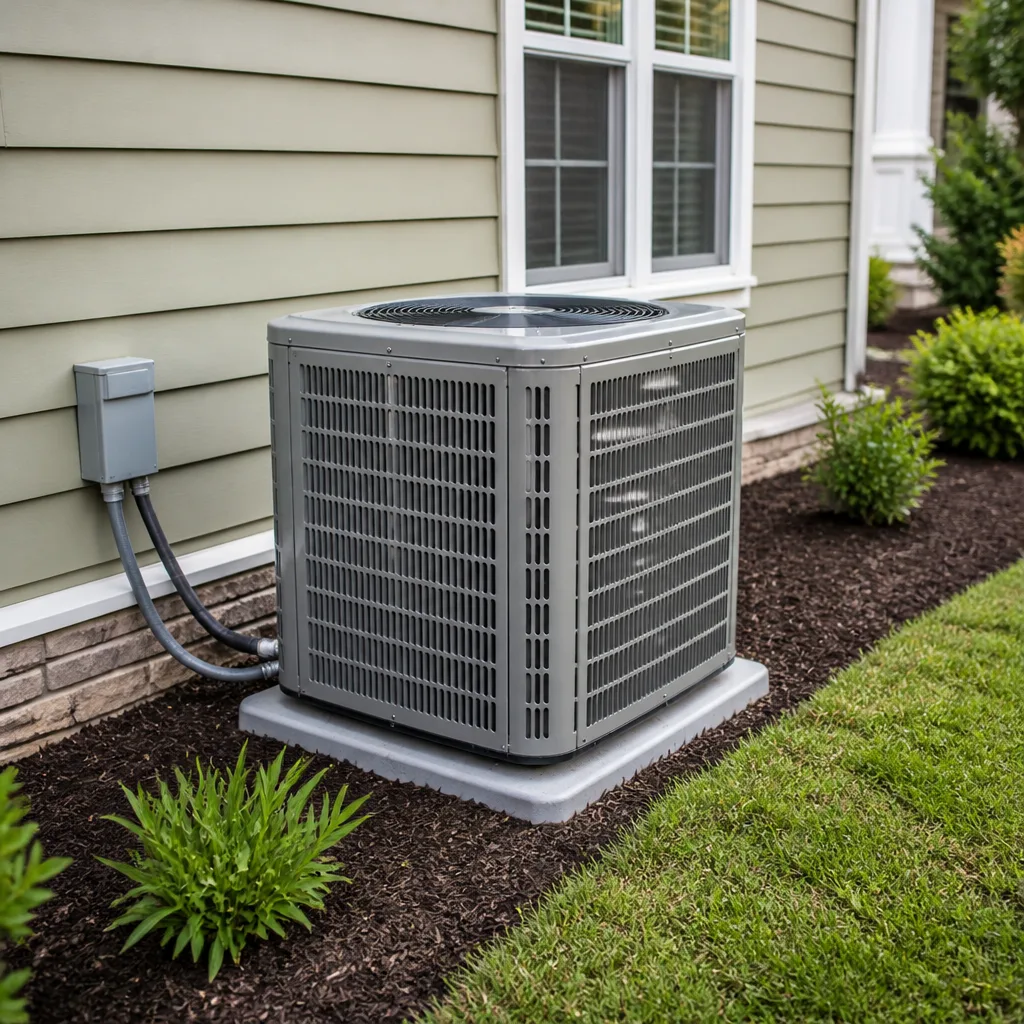 AC repair
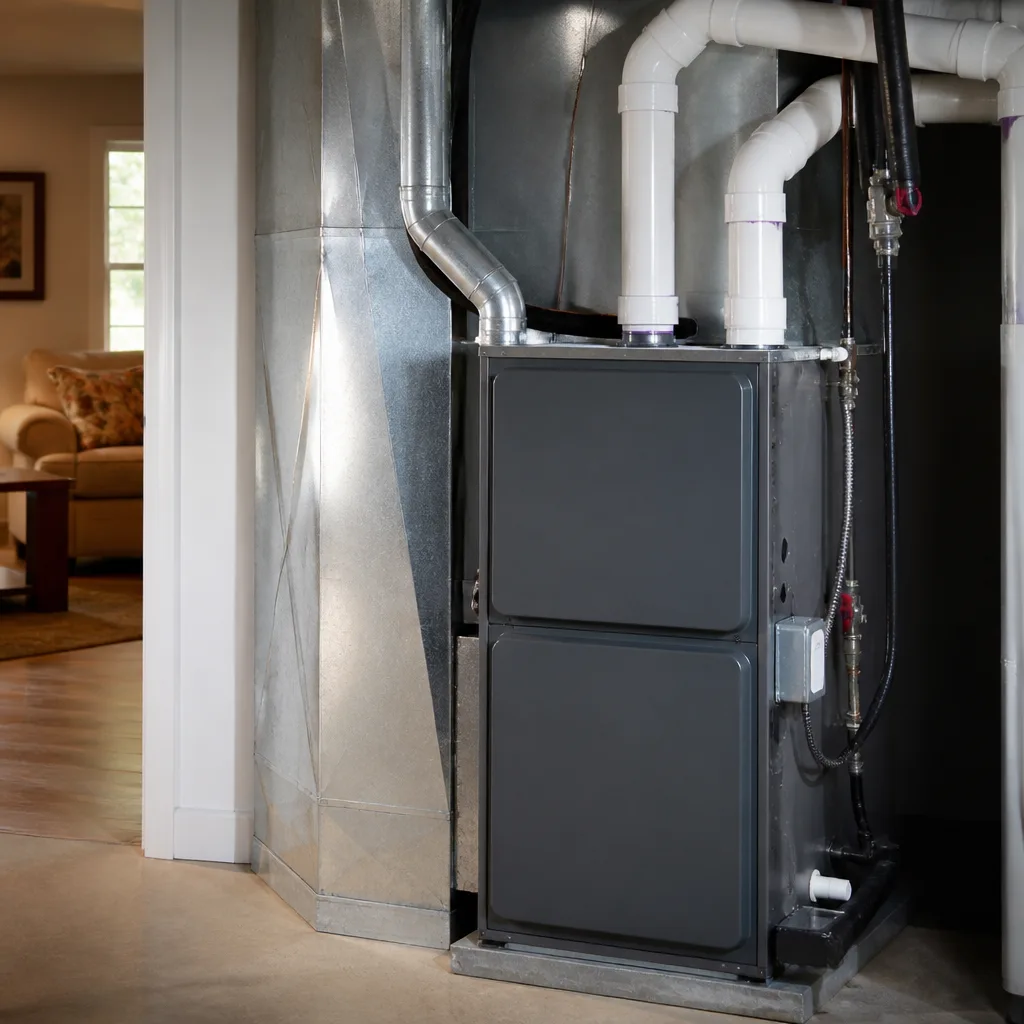 Furnace & heating
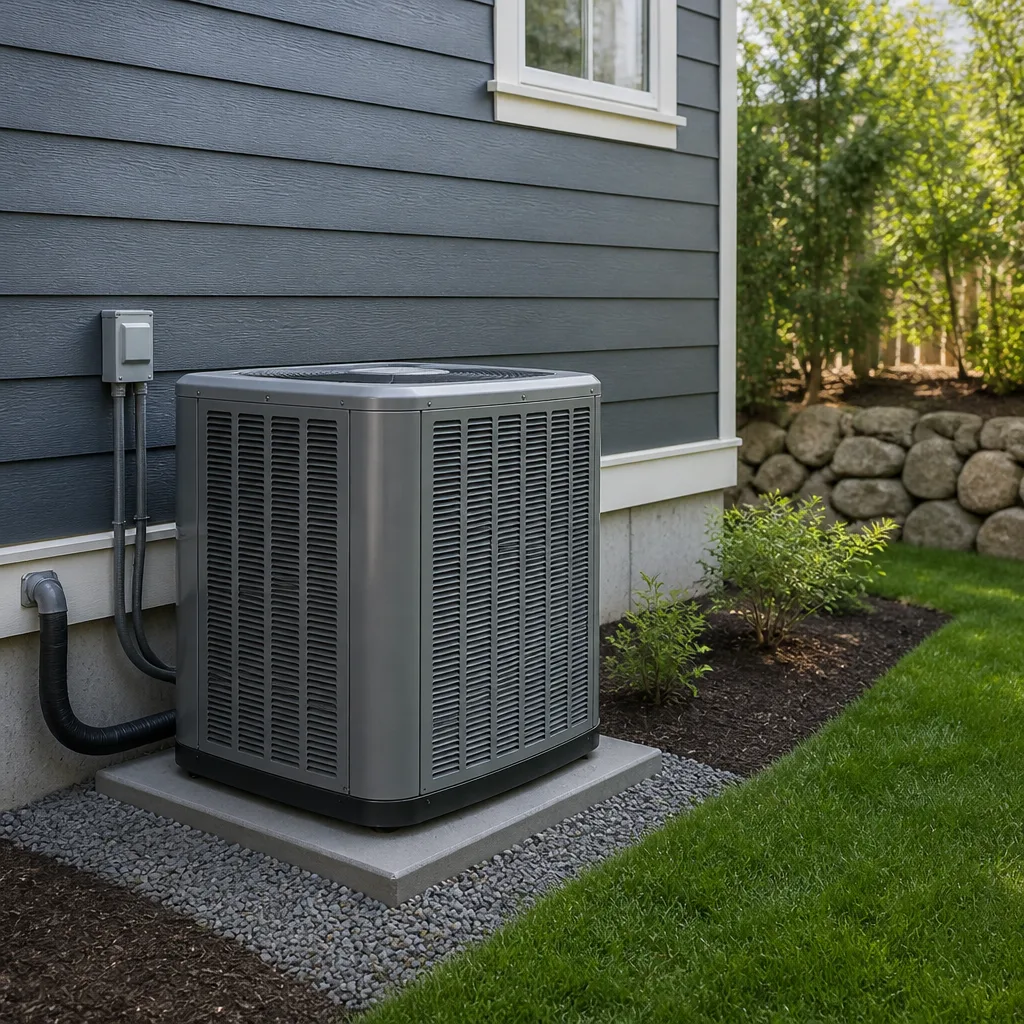 Heat pumps
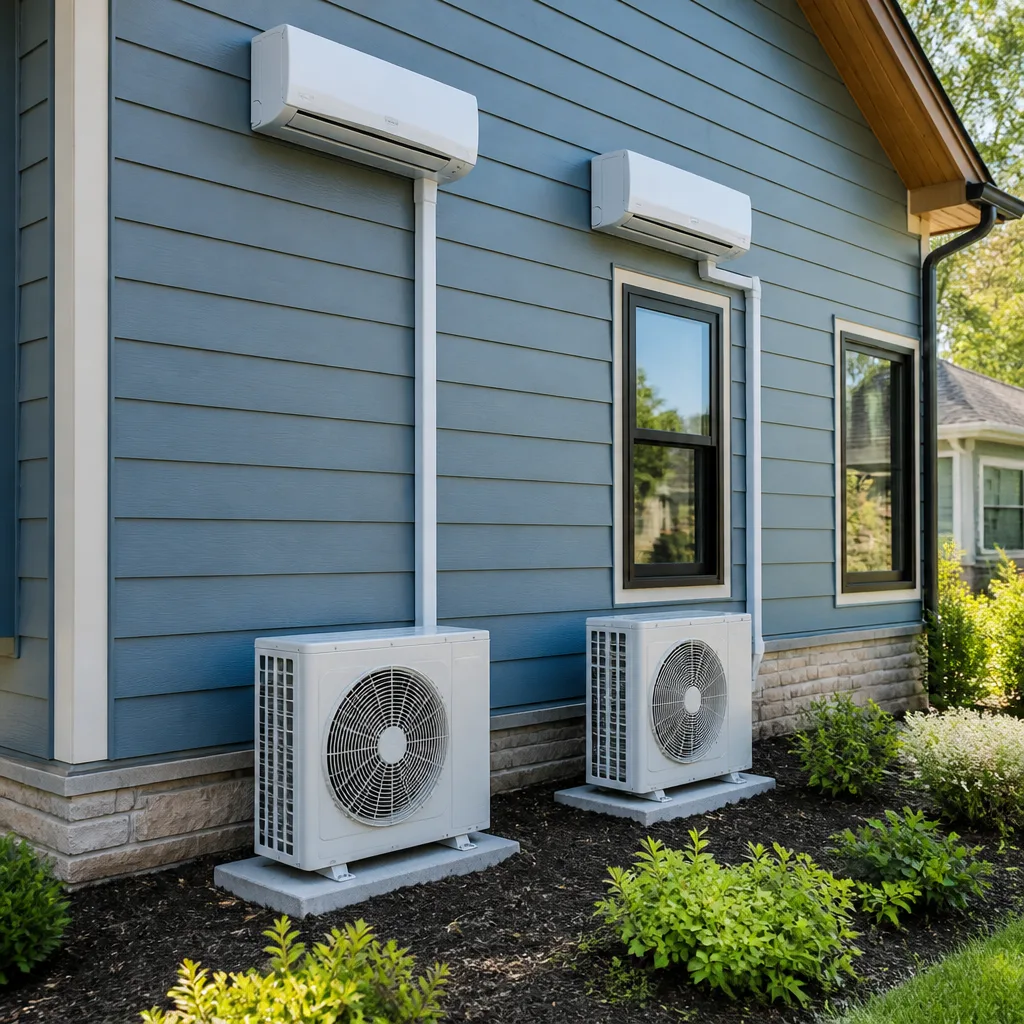 Ductless mini splits
 Carrier
 Trane
 Goodman
Seasonal tune-up and full diagnostic on your Carrier, Trane, or Goodman system - readings shown to you before any repair is proposed
Diagnosis first, numbers second - you approve the repair price before a single part goes in.
Get your free estimateAC Repair & Installation Warning Signs Every Homeowner Should Know
By the time your AC stops cooling entirely, you’ve usually missed three or four warning signs that appeared over the previous four to six weeks. In Summerlin, a system that fails on a 112°F Saturday isn’t an emergency that came out of nowhere. It’s a problem that sent signals you didn’t know to read. The articles you find online tend to describe end-stage failures: the compressor is already dead, the fan has already stopped, the house is already hot. This guide is about the earlier, quieter signals – the ones that show up in June and give you time to act before the hottest week of July. We’ll walk through what your breaker panel, your thermostat, your nose, your utility bill, and your ears are each trying to tell you.
Quick Answer
The most reliable early warning signs of an AC failure are a breaker that trips more than once a season, a system that takes noticeably longer to reach setpoint than it did last summer, a utility bill that jumps 15% or more without a rate change, and any burning or musty smell from the vents. Catch any one of those in Summerlin and you’re typically looking at a repair in the low hundreds rather than a compressor or full-system replacement in the thousands.
Styles & brands we work with
- AC repair
- Furnace & heating
- Heat pumps
- Ductless mini splits
- Carrier
- Trane
- Goodman
Table of Contents
- The Electrical Warning Signs Most Homeowners Miss
- Why a System That Still Cools But Takes Longer Is Telling You Something Specific
- What Each Unusual Smell Actually Means
- Using Your Utility Bill as a Diagnostic Tool
- The Sounds That Mean Stop Right Now Versus Schedule a Visit
- Installation Warning Signs: What a Bad Install Looks Like Years Later
- Why Summerlin Homes See These Signals Earlier Than Most
- What to Do When You Spot a Warning Sign
The Electrical Warning Signs Most Homeowners Miss
Most early electrical failures begin at the breaker panel or the outdoor disconnect, not at the compressor itself. A compressor doesn’t fail in a vacuum – it fails because the circuit feeding it has been running hot, drawing higher-than-normal current, or cycling on and off in a pattern that stresses the windings. Those symptoms show up weeks before the compressor gives out. You just have to know where to look.
Start with the panel. Find the double-pole breaker labeled for the AC. When was the last time you had to reset it?
- Trips once a year: Not unusual in Summerlin’s peak heat. Note it and move on.
- Trips twice in a cooling season: Worth a service call. Something is drawing more current than it should.
- Trips repeatedly within a few days: Stop resetting it. Call a professional. Repeated resetting of a compressor circuit can finish off a failing unit that might have been saved.
- Breaker feels hot to the touch, or you smell a faint burning odor near the panel: Stop using the system and call. This is not something to sit on.
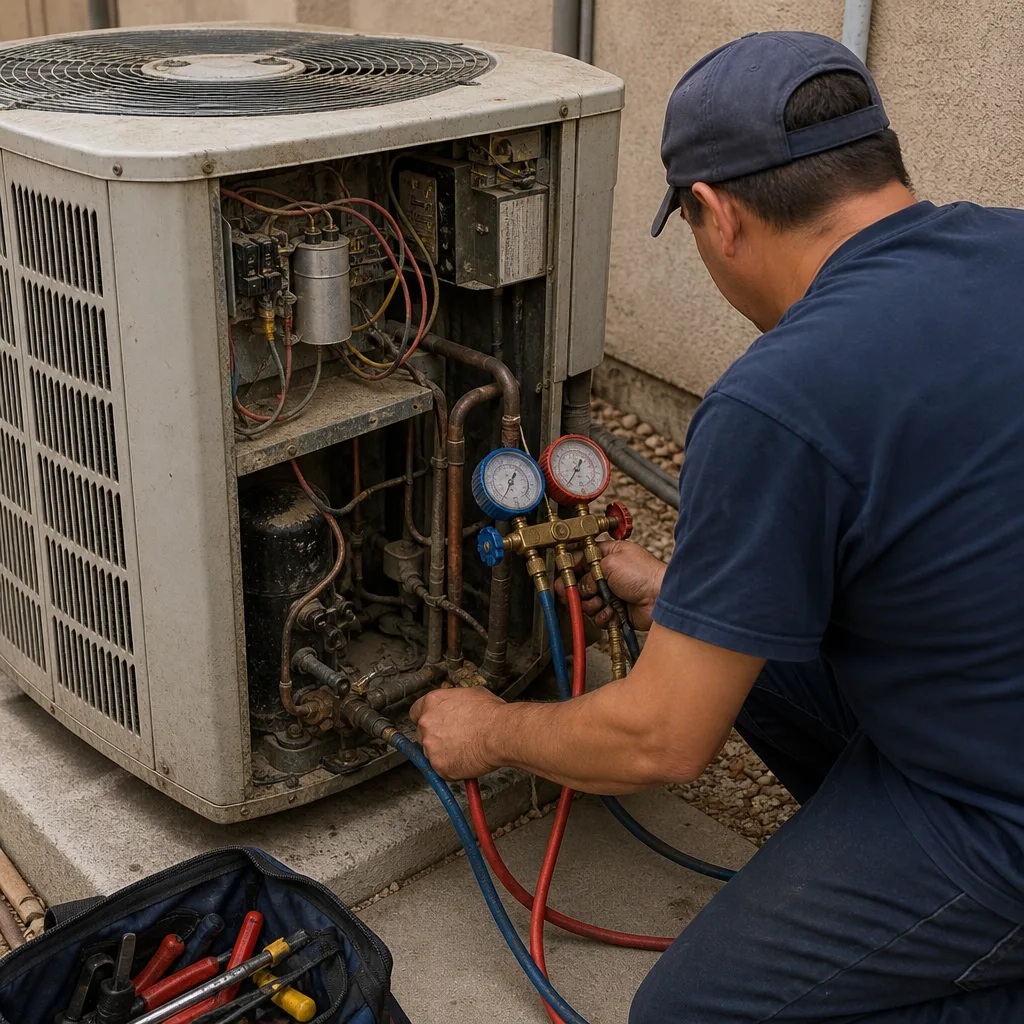
The outdoor disconnect box is the other early indicator. It sits on the wall near the condenser and holds the service disconnect switch. A technician checks for discolored wiring, a loose lug, or pitting on the contacts. Those indicate a loose connection running hot, common in our desert climate because of thermal cycling from warm nights to 110°F afternoons. Tightening a lug is a small job. Replacing a burned disconnect and the wire behind it is not.
What a technician actually checks in 15 minutes
- Panel breaker condition and torque on the AC circuit
- Disconnect box wiring and lug tightness
- Capacitor readings (weak capacitors pull more current than healthy ones)
- Contactor pitting, which causes short-cycling
- Compressor amp draw compared to nameplate rating
That sequence is quick, and it catches most of the failure patterns we see on aging systems in Summerlin before they become a no-cool call in August.
Why a System That Still Cools But Takes Longer Is Telling You Something Specific
This is the single most common early signal we hear about, and it’s the one homeowners most often blow past. The AC is running. The house is cool. It’s just taking longer than it used to. Last summer it hit 74°F by 4 p.m. This summer it’s 4:45 and the thermostat is still showing 77°F. Nothing is broken, so nothing gets called. That’s the mistake.
A system that’s cooling fine but running longer to get there is losing capacity. There are only a few reasons that happens, and they’re all fixable early:
- Low refrigerant charge from a slow leak. The compressor works harder to pull the same heat out of your home. Left alone, this is the number-one killer of compressors in our experience.
- Fouled outdoor coil. Summerlin’s dust and cottonwood season pack the condenser fins. A coil that’s 30% blocked loses measurable capacity – often 10 to 15% – before you notice the house won’t get cool.
- Failing capacitor. The run capacitor helps the compressor and fan motor start and run efficiently. A weak one drags performance down without any obvious symptom until the system quits.
- Restricted airflow indoors. A dirty filter, a crushed flex duct, or a partially closed damper does the same thing.
- Duct leakage in the attic. If 15% of your cold air is bleeding into a 140°F attic, the house still gets cool. It just takes longer, and you pay for it every month.
The good news: each of these is a repair in the low to mid hundreds when caught early, and each is a compressor replacement or full system replacement when ignored. The task is watching for the “still works but works harder” pattern, not the “stopped working” pattern. If you notice it, AC repair & installation in Summerlin for a diagnostic is a small price compared to what a dead compressor costs.
What Each Unusual Smell Actually Means
A smell is data. Each one points at a different failure, and the difference between “wait two weeks” and “turn it off now” is exactly which smell you’re dealing with. Here’s what we’ve learned in more than four decades of running these calls.
Electrical burning or hot plastic
Turn the system off at the thermostat. This indicates a failing motor, a burned wire, a failing contactor, or a capacitor overheating. It is not a smell to wait out. Electrical fires in HVAC equipment happen, and this is the warning sign that precedes them. Call immediately.
Musty, wet-earth, or dirty-sock smell
This is mold or mildew growing on the evaporator coil or in the drain pan. In Summerlin, our wet spring followed by a hot, dry summer creates ideal conditions for mold on a coil that isn’t draining properly. It’s not urgent-dangerous, but it’s a sign of a moisture problem, an airflow problem, or a condensate drain that’s clogged. Schedule a service call within a week or two.
Sweet, faintly chemical smell
Possible refrigerant leak. In Summerlin, we see this most often on older R-22 systems after a hard season. Refrigerant leaks are a serious signal because a leak starves the compressor of oil and cooling, and it’s the leading cause of catastrophic compressor failure. Don’t ignore it. Turn the system off and call.
Burning dust or “first run of the season” smell
The first time you turn on the heat in November, or the AC in May after sitting, some dust burns off the heat exchanger or coil. That’s normal. If the smell persists past the first hour of operation, it’s not dust, and it needs a look.
Rotten-egg or sulfur
This is a gas smell. Turn off the system, leave the house if it’s strong, and call your gas utility first, then us. Don’t run anything electrical.
Using Your Utility Bill as a Diagnostic Tool
Your NV Energy bill is one of the most honest diagnostic tools you have, and almost nobody uses it that way. It tells you, in dollars, whether your system’s efficiency is slipping. The trick is comparing month over month and year over year, and knowing the threshold where it stops being “a hot summer” and starts being “the system is degrading.”
Here’s how to do it. Pull this July’s bill and last July’s bill. Now look at three things:
- Total kWh used, not dollars. Rates change, usage doesn’t lie.
- Degree days for those billing periods. NV Energy publishes these, or you can look up historical data. Very hot July versus mild July matters.
- The percentage change in kWh per cooling degree day. This is the number that tells you the truth.
The general rule we use: if your kWh per cooling degree day has increased 15% or more year over year with no other change in usage habits or equipment, something in the AC has degraded. Refrigerant loss, coil fouling, and duct leakage are the three usual suspects. Each one is a repair. None of them heal on their own.
The pattern we see most often in Summerlin
Homeowners on fixed incomes in the older Summerlin neighborhoods like The Trails and The Crossing watch their bills closely. Many of them call us only once the bill has jumped 25% or more, because that’s when they can’t explain it away. By then, the system has been running hot for two or three months. Caught at 15%, a refrigerant recharge plus a coil cleaning is a repair. Caught at 30% mid-summer, after a compressor has been starved for months, it can turn into a replacement. The 15% number is the one to watch.
Refrigerant loss is the most common cause of this pattern, but a coil that’s 40% blocked with dust will show up the same way. So will a failed run capacitor that lets the compressor run but not efficiently. The bill doesn’t tell you which one, but it tells you it’s time to call.
The Sounds That Mean Stop Right Now Versus Schedule a Visit
Sound is the most direct signal a system gives you, and the easiest to sort once you know the categories. Some noises mean “we can be there Tuesday.” Others mean “turn it off now.” Here’s the split.
Stop the system immediately and call
- Grinding, metal-on-metal screeching. Bearing failure in the fan motor or compressor. Every minute it runs adds damage.
- A loud bang or a thunk followed by silence. Usually a compressor failure or a large capacitor blowout. Don’t try to restart it.
- Loud electrical buzzing or arcing sound from the condenser. Could be the contactor chattering or a failing wire. Turn it off at the breaker and call.
- Continuous hissing from the outdoor unit. Likely a refrigerant leak venting. Turn it off and call.
Schedule a service call within two weeks
- A tick or rattle at startup. Often the contactor or a loose panel. Not usually dangerous, but worth fixing.
- Occasional clicking during operation. Contactor cycling, common on aging equipment.
- Rattling from loose cabinet screws or a slightly off-balance fan blade. Cosmetic until it isn’t.
- Whistling from the return air grille. Undersized return or a dirty filter restricting airflow.
We’ve seen Summerlin homeowners in Sun City Summerlin keep a system running through three weeks of grinding because the house was still cool. That’s the worst possible outcome, because it turns a $400 bearing-and-motor job into a $2,000 condenser replacement. The sound was warning them the whole time. Turn it off. It’s cheaper to skip a day of AC than to replace the equipment.
Installation Warning Signs: What a Bad Install Looks Like Years Later
The early signals of a bad installation don’t show up in the first month. They show up in year three, five, seven – as a system that’s already showing the warning signs that shouldn’t appear on a well-installed unit for at least a decade. Newer Summerlin homes and recently replaced systems deserve a look at the install, not just the equipment.
Here’s what we check when we’re called out to a system that’s aging faster than it should:
- Was the system properly sized? A unit that’s too large short-cycles, which means it never runs long enough to dehumidify and it wears out the compressor faster. In our climate, oversized equipment is the most common install defect we find.
- Was a Manual J load calculation done? If not, the equipment was sized by rule of thumb (an old 500-square-feet-per-ton guess), which is not a real sizing method.
- Was the refrigerant charge verified by subcooling or superheat? The proper charge at install makes the difference between a 15-year compressor and a 7-year one.
- Were the duct connections properly sealed? A leaking return in a 140°F Summerlin attic pulls hot air into the system all summer.
- Was a permit pulled? Clark County requires permits for HVAC replacements. A prior install without one is a red flag.
- Was the line set sized correctly? Undersized lines from an old system reused on a new one costs efficiency and compressor life.
These are the things a proper install gets right and a fast bid skips. If you had a system installed in the last five years and it’s already showing early warning signs, get a second opinion on the install before you throw money at repairs. Our heat pump & mini split in Summerlin team sees this same pattern on systems that were swapped as “like for like” without a load calc.
Why Summerlin Homes See These Signals Earlier Than Most
Summerlin isn’t a mild climate for AC equipment, and the warning signs we covered don’t follow a national timeline here. They show up earlier and they escalate faster. Three things drive that.
Design-day temperatures every year
Summerlin’s design-day cooling load is 105°F to 107°F by common tables, but the last few summers have delivered multi-day stretches at 112°F to 115°F. A system that’s lost 10% of its capacity performs okay at 100°F and fails at 112°F. So the “still cools but slower” signal gets masked right up until the first big heat wave, then it becomes a no-cool call. Watch for the slower-cooling sign in June, when the temperatures are still moderate enough that you can act on it.
Dust and monsoon
Summerlin sits on the west edge of the valley, which means more wind-blown dust than neighborhoods closer to the mountains’ protection. A condenser coil that would take two seasons to foul in a wetter climate will foul in one here. The monsoon season (July through September) adds a short burst of humidity every afternoon that can drive mold growth on a coil that isn’t draining right. Both of these accelerate the utility-bill signal and the smell signal.
Older neighborhoods hit first
The Trails, The Crossing, and parts of Sun City Summerlin have a lot of original equipment from the mid-1990s and early 2000s still running. Those systems have been through 25 summers in one of the harshest cooling climates in the country. Bearings, capacitors, contactors, and compressor windings are all at the far end of their service life. If your system is over 15 years old and showing any of the early signs, you’re not looking at whether to replace it, you’re looking at when. Heating & furnace in Summerlin has the same set of concerns on the other side of the year, and it’s worth reading that guide too, because the breaker and disconnect signs are identical.
The good news about Summerlin is that we see the same three or four failure patterns over and over, which makes them easy to catch once you know what you’re watching for. See Fireside Heating & Air Co.’s Summerlin home page for the full picture of what we service in this area.
What to Do When You Spot a Warning Sign
If you’ve read this far and something is ringing a bell, here’s the sequence that gets the best outcome in Summerlin. Turn the system off first if it’s in the “stop now” category – burning smell, grinding sound, or a breaker that just tripped for the third time in two days. Otherwise, it’s fine to run until we get there, but don’t ignore it for the rest of the summer.
- Write down what you noticed and when. Was it the bill, the sound, the smell, the sluggish cooling? That’s the diagnostic.
- Change the filter if it’s been more than 90 days. Our dust means filters load fast. A dirty filter mimics several failure signals.
- Check the breaker panel once. If it’s already tripped, you know something is current-driven. Don’t reset repeatedly.
- Call for a diagnostic. We answer the phone at (888) 325-9387 – a live person, 24 hours a day, every day of the year.
- Ask for upfront pricing before work begins. The price quoted is the price paid. No surprises.
Every job we do in Summerlin is backed by the 90-Day Done Right Promise. If it’s not done right, we make it right, in writing, no arguing. That’s the standard we’ve stood behind for over 42 years and every technician we send is background-checked, uniformed, and treats your home like his own mother’s. Our technicians have up to 8 years of experience, and they service all of the major brands including York, Daikin, Bryant, and American Standard.
- $50 Off Any Repair Over $250
- Free Second Opinion on Any Written Estimate
- $89 Seasonal Tune-Up
- Senior & Veteran 5% – Always
Common Mistakes to Avoid
- Waiting until the system quits. The whole point of this guide is that the early warning signs exist. Waiting for the failure costs you a compressor, not a capacitor. The 3 a.m. call in August is a worse version of the painless 10 a.m. call in June.
- Resetting the breaker more than once. Each reset sends current through a system that’s already struggling. We’ve seen units go from a fixable $300 repair to a $2,200 compressor replacement in a weekend of breaker-resets. Turn it off and call.
- Assuming a high bill is just “a hot summer.” Summerlin summers are always hot. That’s not the comparison. The comparison is this July versus last July at the same temperatures. If the kWh is up 15% with no other change, it’s the equipment.
- Filling a refrigerant leak without finding it. Recharging a system without finding the leak is a stopgap that costs you the refrigerant twice. Any system that’s low on charge has a leak. Find it, then fix it.
- Letting a “still cools” system keep running on a grinding or screeching noise. A bearing failure that’s caught early is a motor replacement. The same failure caught late is a condenser replacement. Turn it off.
- Hiring the lowest bid for a replacement. The cheap install that skips the load calculation and the permit is the reason some Summerlin homes need another system in seven years instead of fifteen. Pay for the install done right the first time.
- Ignoring the smell. A musty smell is a moisture problem. A sweet smell is likely refrigerant. A burning smell is electrical. Each one has a specific repair. None of them resolve on their own.
See the difference
 Before
 After
 Before
 After
 Before
 After
When to Call a Professional
Call us when any of the following applies, and call the emergency line if the system is off entirely in a Summerlin heat wave or the panel is hot to the touch. Call for a scheduled visit if you’ve noticed the “still cools but slower” pattern, an unexplained 15% rise in the utility bill, or any sound that’s new this season. Call for a second opinion if you’ve been told a system needs replacing – we’ll give you a free second opinion on any written estimate, no obligation. And call if your system is over 15 years old and starting to show any of the early signals in this guide. In our experience, the call is cheaper than the wait.
The goal is simple: catch it in June, not on the hottest day of July. Fireside Heating & Air Co. Summerlin offers free estimates in Summerlin – call (888) 325-9387. A live person answers every time, including at 2 a.m.
Frequently Asked Questions
The most reliable early signal is a breaker that trips more than once in a cooling season, because it points to a component drawing more current than it should weeks before the compressor fails. The second most common is a system that still cools but takes noticeably longer to reach setpoint than it did the previous summer. Either one warrants a diagnostic in Summerlin. Call (888) 325-9387 and we’ll get out to look at it – estimates are free.
A diagnostic visit typically runs $89-$150 in the Summerlin market, and repair prices after the diagnostic range from about $180 for a capacitor to $450-$900 for a fan motor, depending on the part. Compressor replacements run $1,400-$2,400. Call (888) 325-9387 for an exact quote on your system – the price quoted is the price paid, and estimates are free.
A 15% or higher increase in kWh per cooling degree day, with no other change in usage, usually points to refrigerant loss, a fouled outdoor coil, or duct leakage in the attic. Each of those is a repair when caught early. In Summerlin’s heat, the same problem left alone through the summer can starve a compressor and turn the repair into a replacement. Call (888) 325-9387 to schedule a diagnostic.
Yes if it smells like burning plastic, hot metal, or electrical, turn the system off at the thermostat and at the breaker and call immediately, because it can indicate a failing motor, contactor, or wire. A dusty smell during the first hour of the season is normal. Any smell that persists past that is not. We answer the phone 24 hours a day for exactly this reason.
The signs are a system that cools but takes longer to hit setpoint, a faint sweet or chemical smell, hissing at the outdoor unit, and a utility bill that’s climbed without explanation. A technician confirms it with pressure and temperature readings. Recharging without finding the leak is a stopgap, and we won’t do it. Call (888) 325-9387 for a diagnostic.
The general rule is: if the repair is one-third or more of the cost of a new system and the equipment is over 12 years old, replacement usually wins. Below 10 years, repair almost always wins. In Summerlin, we add: if the equipment is over 15 and any of the early warning signs in this guide show up together, it’s time to plan a replacement, not chase repairs. Call (888) 325-9387 for a free second opinion on any written estimate before you decide.
The Bottom Line
The warning signs of an AC failure show up weeks or months before the system quits, not the day it quits. A breaker that trips twice, a house that takes longer to cool than it did last summer, a bill that’s climbed 15% for no reason, a smell that doesn’t fit, a sound that’s new – each one is a specific signal pointing at a specific failure, and each one is fixable if you call in June rather than on the hottest day of July. In Summerlin, our dust, monsoon humidity, and 112°F heat waves accelerate every one of these signals. Take them seriously, act early, and let a professional look at the system before it looks at you. That’s the whole game.
Fireside Heating & Air Co. Summerlin is here when you need us, with a live person on the phone at (888) 325-9387 24 hours a day, upfront pricing on every job, and the 90-Day Done Right Promise behind every repair. Call for a free estimate – we’ll be there when we say.
Written by the team at Fireside Heating & Air Co. Summerlin.