
Last updated November 17, 2026
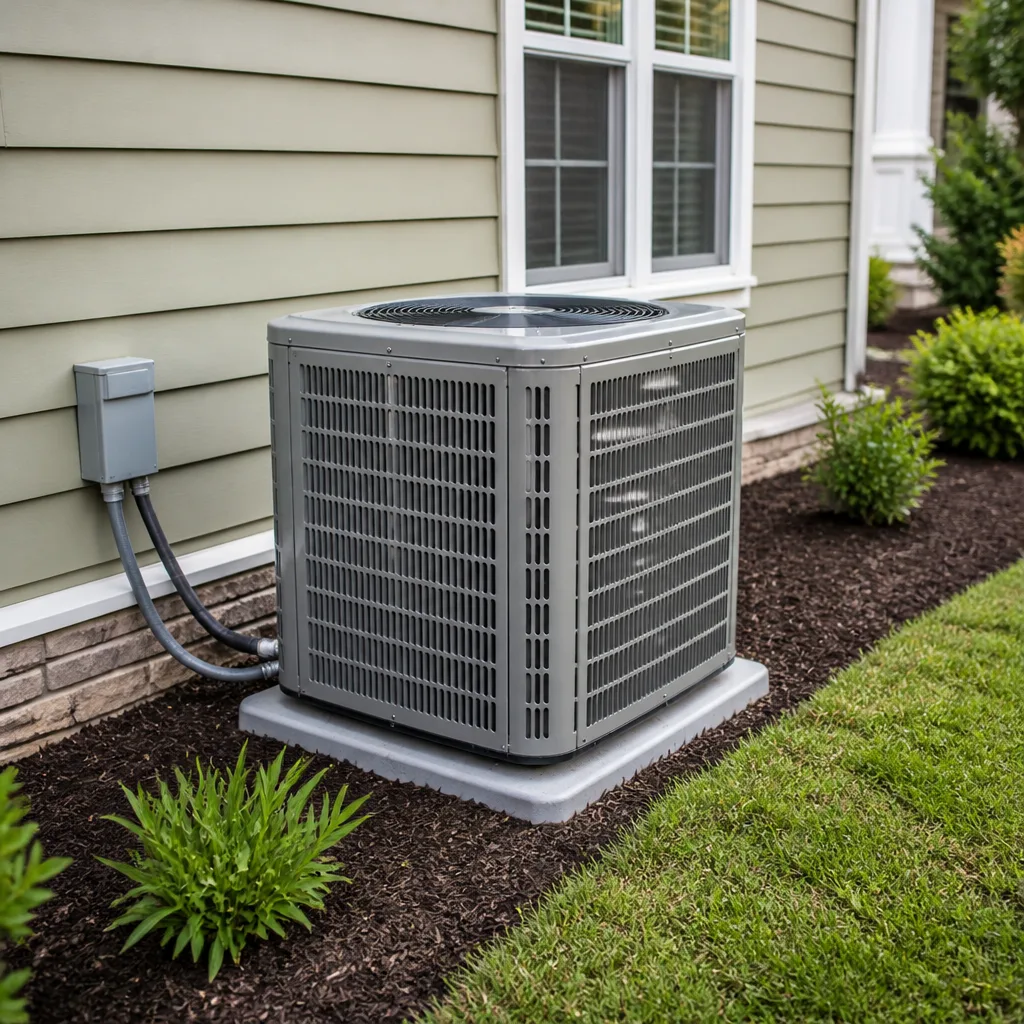 AC repair
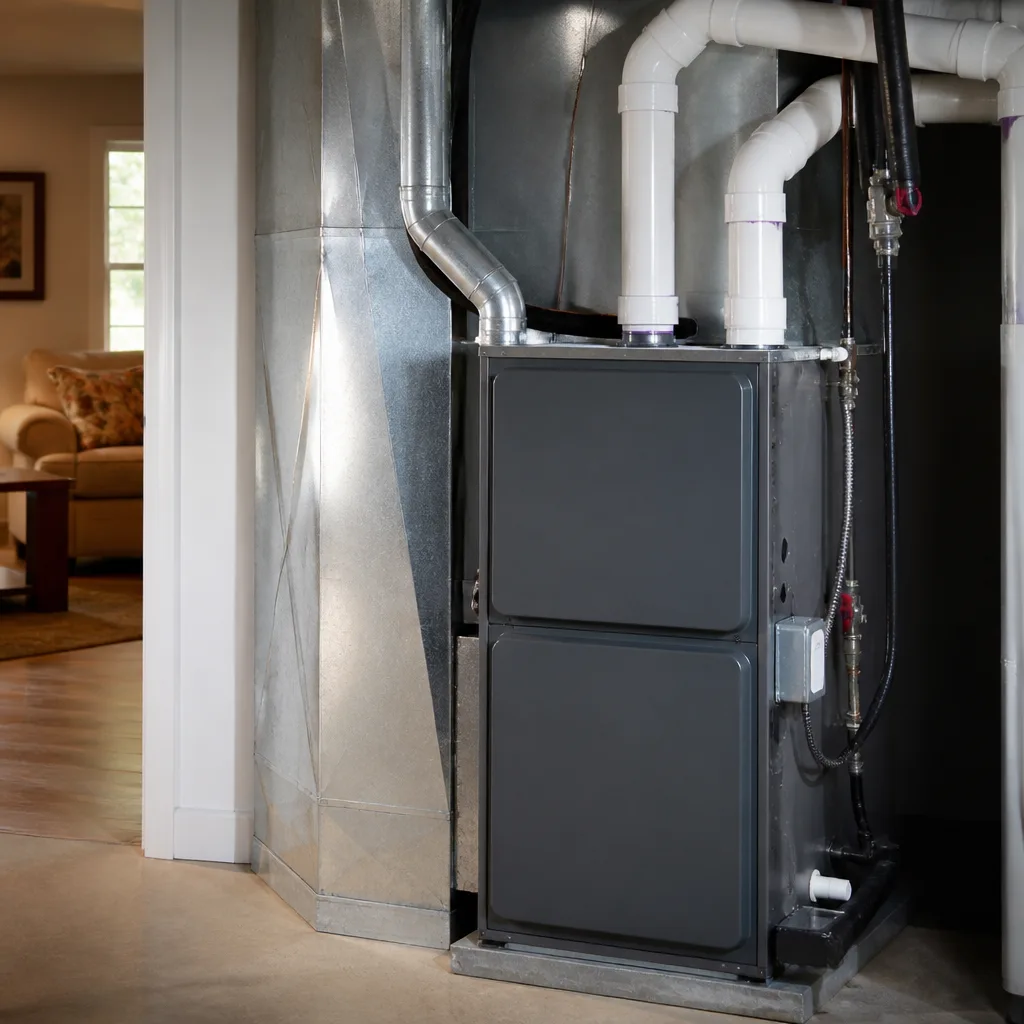 Furnace & heating
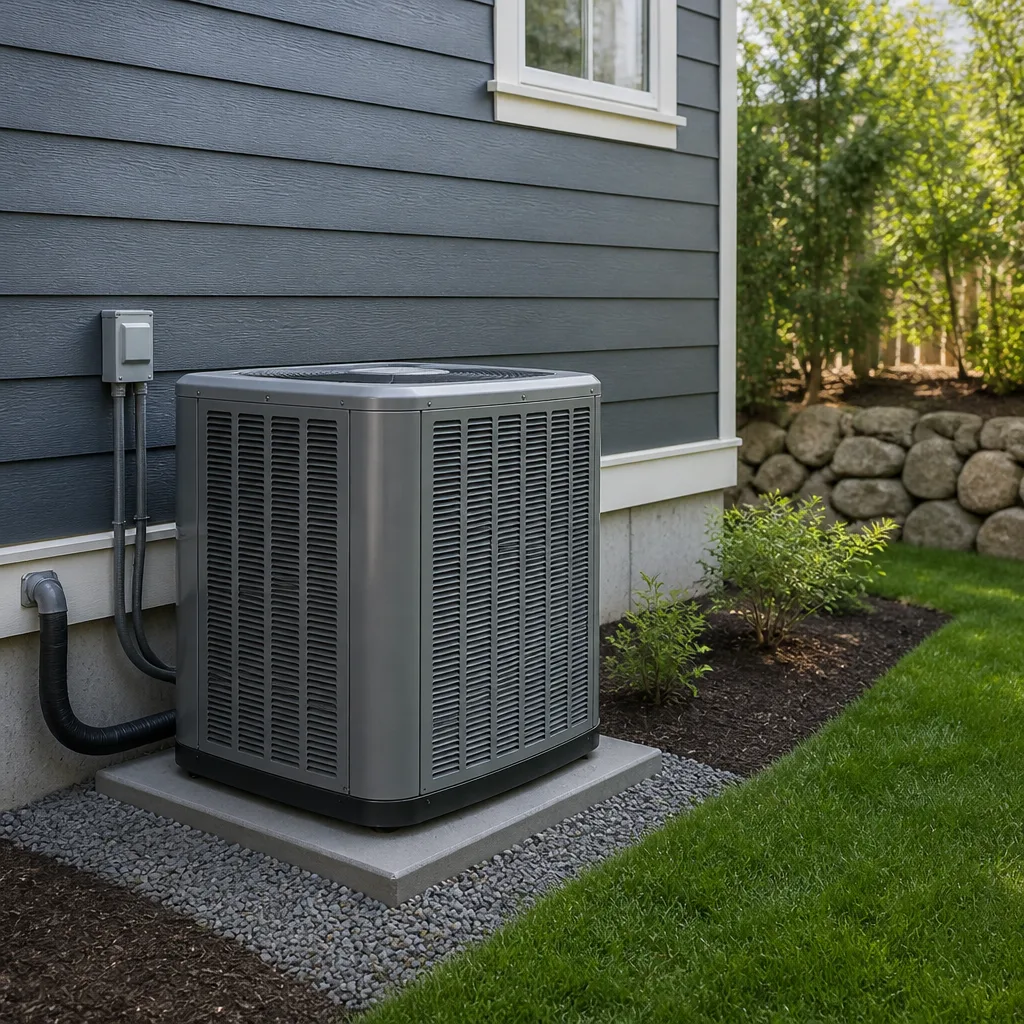 Heat pumps
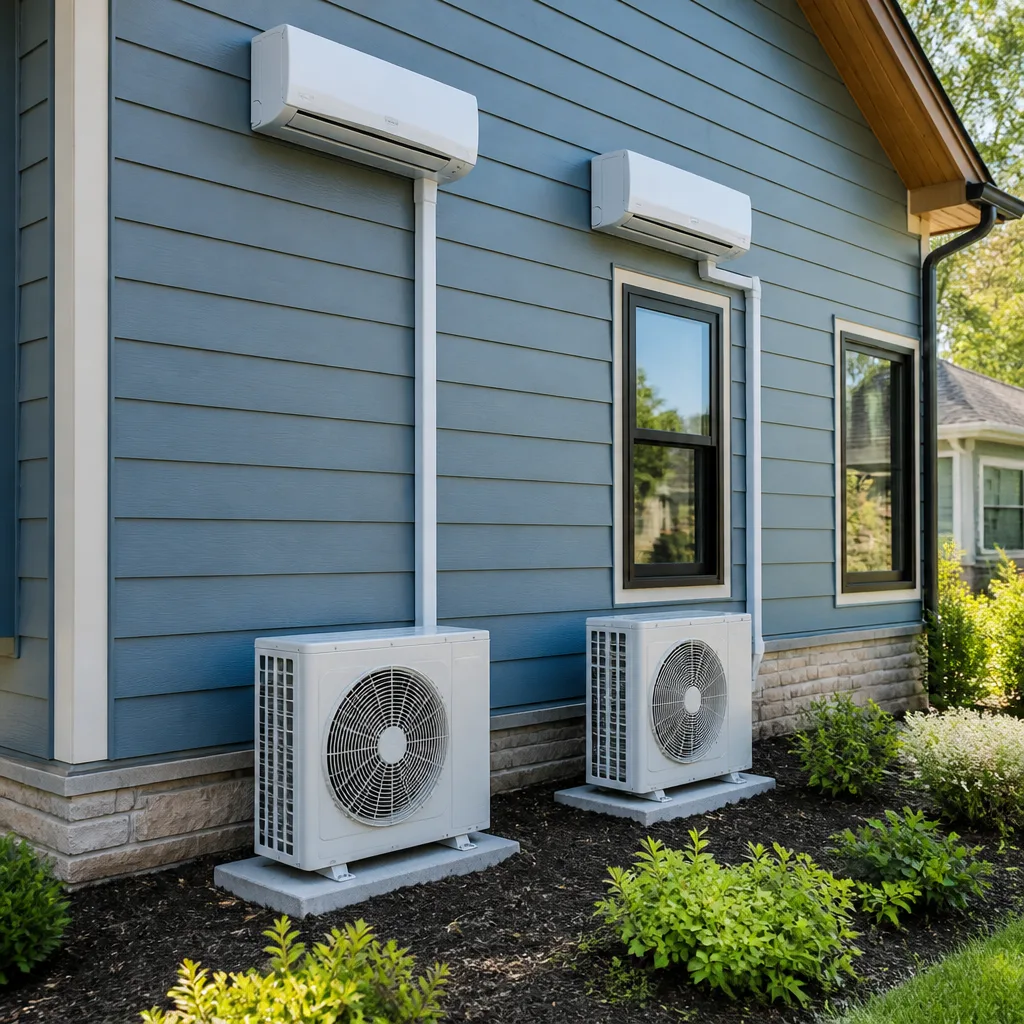 Ductless mini splits
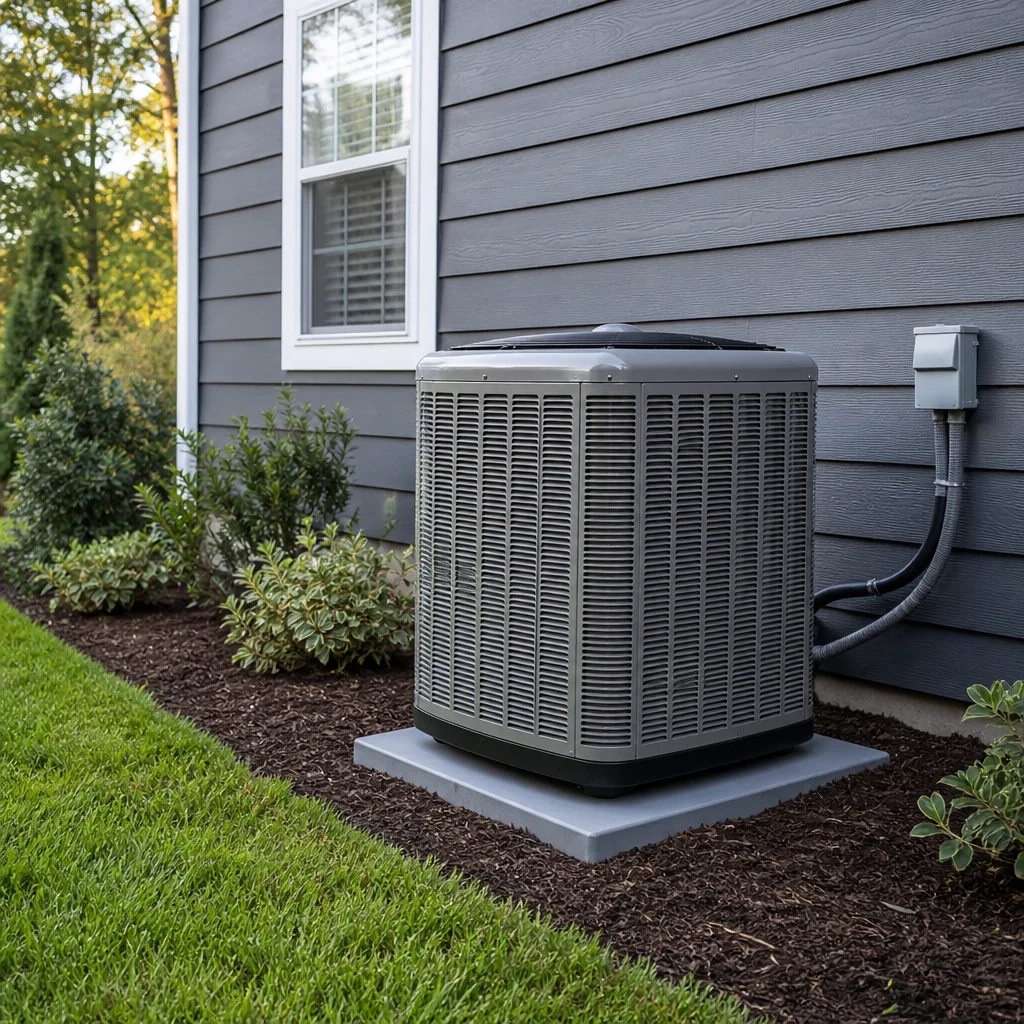 Carrier
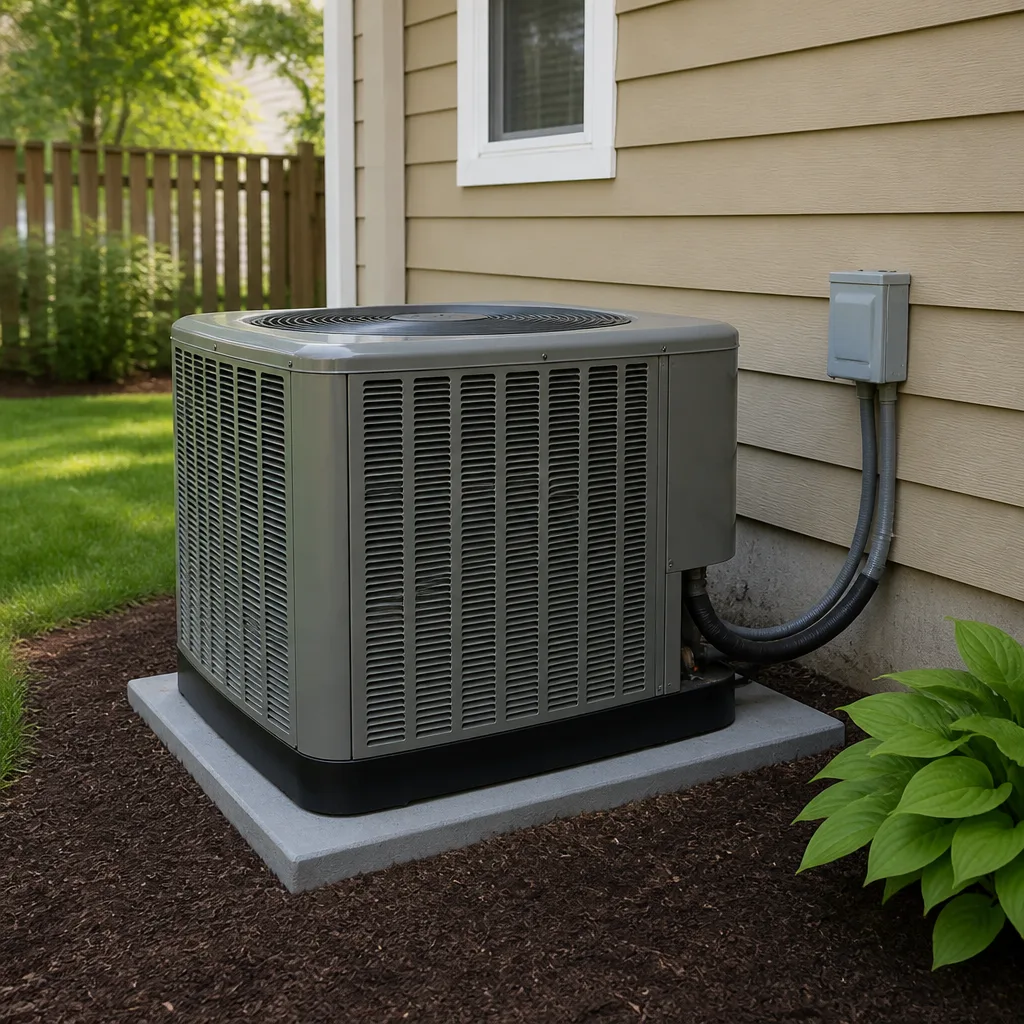 Trane
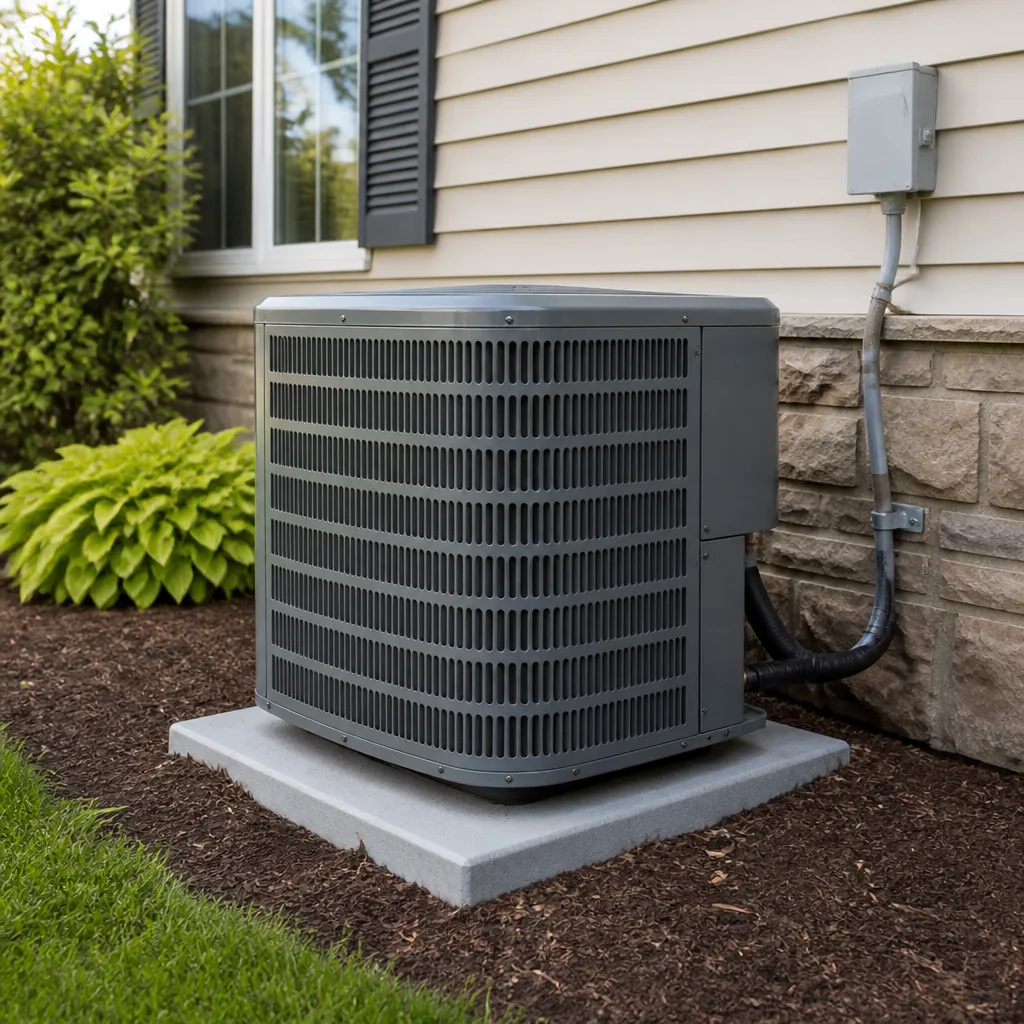 Goodman
Seasonal tune-up and full diagnostic on your Carrier, Trane, or Goodman system - readings shown to you before any repair is proposed
Diagnosis first, numbers second - you approve the repair price before a single part goes in.
Get your free estimateSeasonal HVAC Care for Summerlin: Year-Round Homeowner’s Guide
The leading cause of heating failures in Summerlin isn’t a cracked heat exchanger. It’s a furnace that sat idle from March to November without one person ever running a heat cycle to check that it still lights, that the flue is clear, and that the capacitor hasn’t quietly degraded through seven months of attic heat. By the time the first cold night arrives, the damage is already done and the repair bill has doubled. Summerlin doesn’t hand you four equal seasons. It gives you a long cooling siege, two narrow transition windows, and a short heating stretch most homeowners ignore until it’s too late. This guide lays out the 12-month rhythm that actually fits that reality.
Quick Answer
Year-round HVAC care in Summerlin works off a calendar that follows the desert, not the calendar printed in most maintenance brochures. The highest-value service windows are October and March, your condenser and ducts need attention after every dust season, and the furnace needs to be test-fired before first use even though you won’t heat the house until December. A system maintained on that rhythm lasts longer, runs cheaper, and fails far less often on the worst possible day.
Styles & brands we work with
- AC repair
- Furnace & heating
- Heat pumps
- Ductless mini splits
- Carrier
- Trane
- Goodman
Table of Contents
- The Summerlin 12-Month HVAC Calendar
- Why October and March Matter More Than Any Other Month
- Summer Care in the Desert: Coils, Shade, and Overnight Cooling
- The October Furnace Test You Should Never Skip
- Managing an HVAC System in a Home That Sits Empty
- Duct Leakage: The Deferred Item That Costs the Most
- Common Mistakes to Avoid
- When to Call a Professional
The Summerlin 12-Month HVAC Calendar
Most maintenance plans sold in Summerlin are copies of a national template: a spring tune-up and a fall tune-up, assigned to months that make sense in Ohio. Our calendar is keyed to what actually happens here. The point of the calendar is that each task lands in the month it genuinely matters, so you’re not paying for a checkup in a window where nothing is at risk.
- January: Run the heat and listen. Short cycles, odd smells, or a blower that sounds labored get flagged now, while parts and appointments are easy.
- February: Check the furnace filter and change it if you’ve been heating steadily. Verify the condensate line isn’t frozen at the exterior.
- March: The big spring window. Full cooling tune-up, coil inspection, refrigerant check, and a thermostat test before the first real heat.
- April: After the first dusty wind event, rinse the outdoor condenser coil and clear debris from around the unit.
- May: Confirm your shade strategy. Inspect window coverings, check the attic for radiant barrier condition, and set your cooling schedule.
- June through August: Peak cooling. Change the filter monthly, keep the condenser clear, and watch for rising run times.
- September: Late-summer check. Listen for bearing noise, look for ice on the indoor coil, and schedule a coil cleaning if it’s been more than a year.
- October: The big fall window and the most-skipped one. Test-fire the furnace, verify the flue, inspect the capacitor, and change the filter.
- November: Final pre-heating check. Look for drafts around registers, run a full heat cycle, and note anything that sounds different from last year.
- December: Heating season. Watch for short-cycling and keep the filter clean.
If you follow nothing else on this calendar, follow the October furnace test. It is the single item we see skipped most often in Summerlin homes, and it is the one that turns a cheap repair into a cold night waiting for someone to call you back.
Why October and March Matter More Than Any Other Month
The transition months are where Summerlin HVAC care pays off. October and March are the only two windows where we can inspect both sides of the system before it’s needed under stress. In the peak of summer, a technician can check cooling but can’t meaningfully evaluate the furnace without disturbing the home’s comfort. In the dead of winter, the reverse is true. October and March are when the whole system is inspectable without a compromise.
Here’s what makes each window different and what to do in each.
March: The Cooling-Side Window
- Full cooling tune-up, including refrigerant charge verification against manufacturer spec.
- Condenser coil cleaning before the first dust storm bakes a layer of grit onto the fins.
- Drain pan and condensate line flush, because a clogged drain in August means water damage in the closet.
- Thermostat calibration and schedule review before you commit to a summer setting.
- Airflow check at every register, since a collapsed flex duct tends to reveal itself only under load.
October: The Heating-Side Window
- Test-fire the furnace at least three full cycles, watching for ignition, flame color, and blower timing.
- Inspect the flue for bird nests, debris, or corrosion. This is the one item we cannot overstate.
- Check the capacitor, which degrades quietly through the summer attic heat and is the single most common cause of “it won’t start” in December.
- Change the filter and check the return grill for dust buildup from the cooling season.
- Verify carbon monoxide detectors are in working order. This is not optional.
The reason both windows matter so much in Summerlin is that between them sit seven months of continuous demand. A system that misses even one of these windows runs a full season without a checkup, and the odds of a failure shift hard against you by the following year.
Summer Care in the Desert: Coils, Shade, and Overnight Cooling
Summerlin summer care is not the same as summer care in a temperate city, and most homeowners never hear the differences spelled out. The three biggest factors are dust, shade, and how you use the coolest hours of the night. Each offers a real chance to lower your bill and extend the life of the system.
Condenser Coil Cleaning After Dust Storms
The Las Vegas Valley’s dust events leave a fine, cement-like layer on condenser fins. Once it cakes, the system works harder on every cycle. A gentle rinse from the inside of the coil outward, with the power off, clears the worst of it. Do this after any significant dust storm, not on a fixed schedule. If the coil is heavily caked or the fins are bent, that’s a technician’s job because a bent coil can be made worse with a garden hose.
Shade Structure Impact
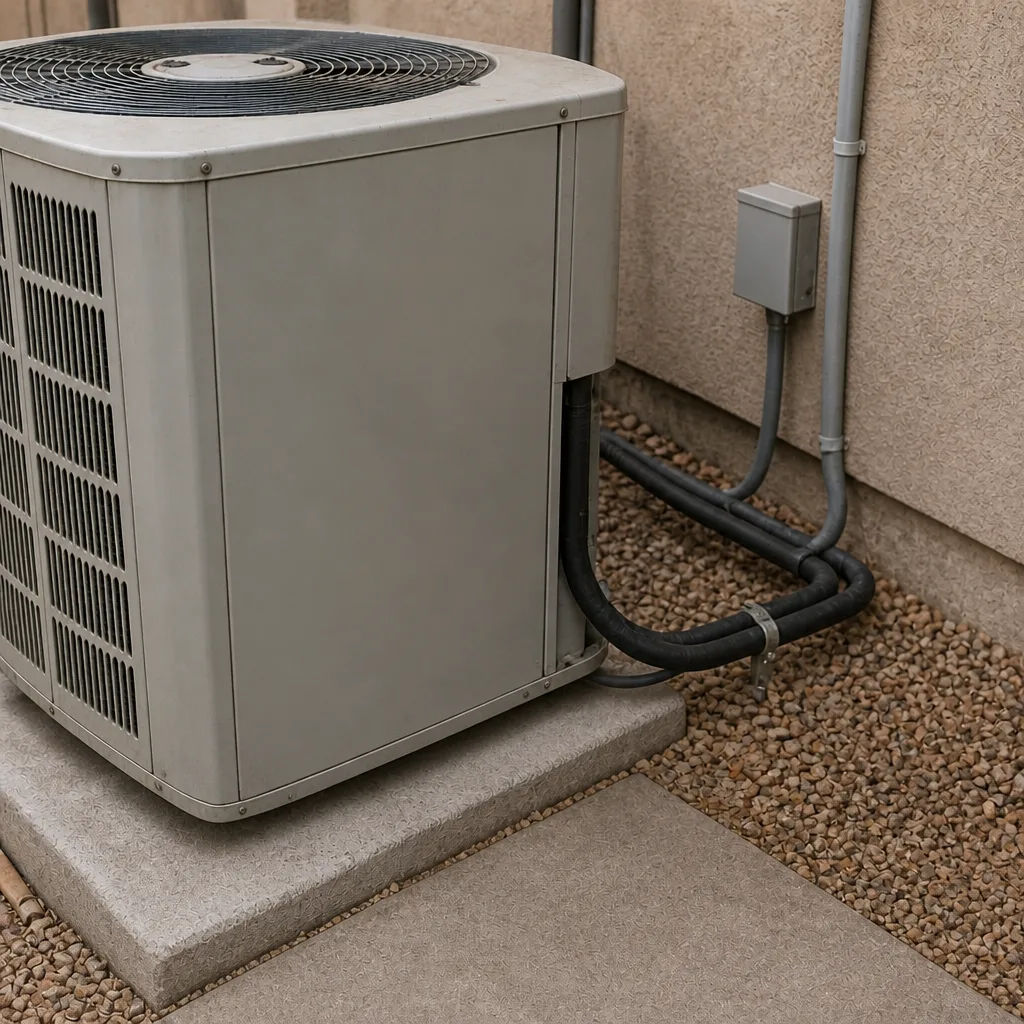
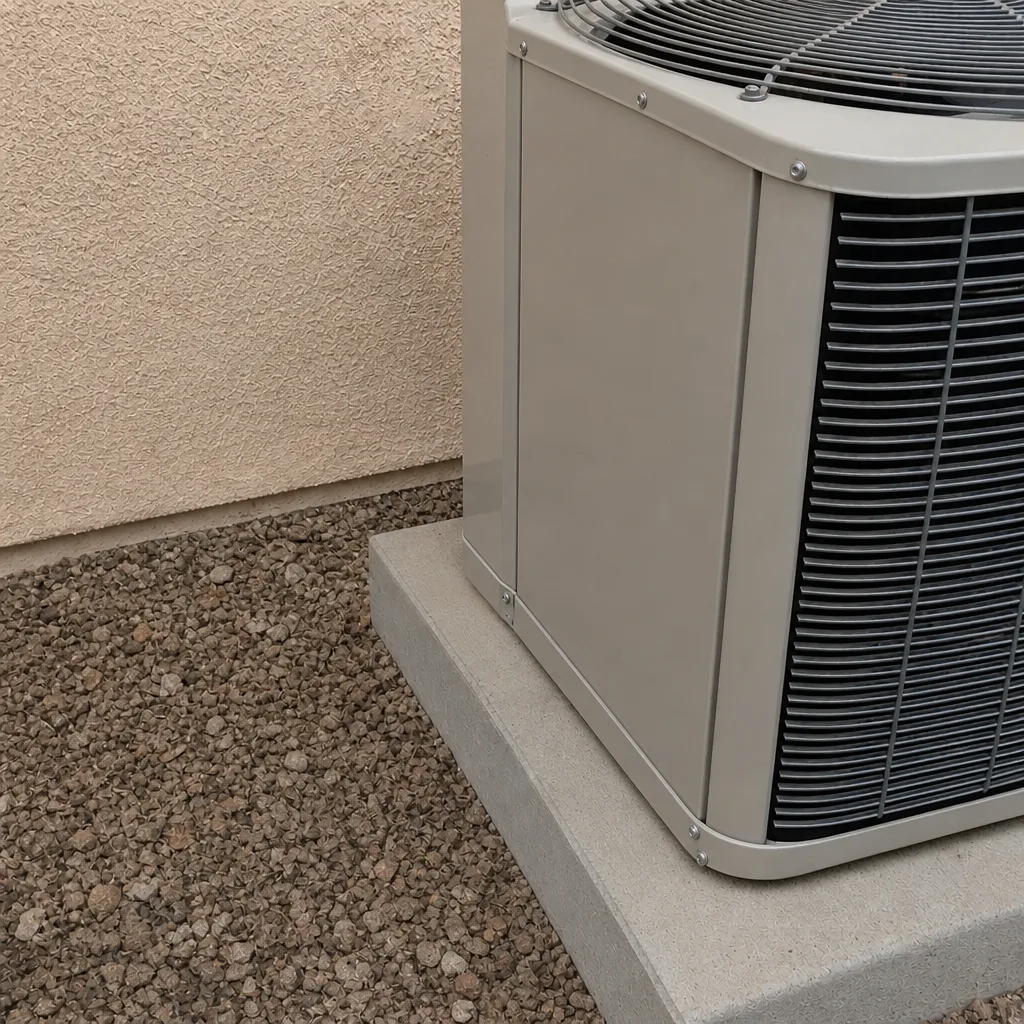
A shade structure over the outdoor unit can lower head pressure and improve efficiency noticeably, but there’s a limit. Shrubs and pergolas pressed right against the unit cut airflow and cost you more than they save. Keep at least two feet of clearance on all sides and top, and never enclose the unit. In Summerlin, west-facing units take the worst of the late-day sun, so shading from that side is the highest-value move.
Overnight Ventilation Strategy
Summerlin cools off enough most summer nights to make whole-house ventilation or simple window-fan strategy worthwhile, especially in the foothill neighborhoods. Run the system less aggressively from 10 p.m. to 6 a.m. while drawing in cooler outside air, then close the house before sunrise and let the AC pick up from a lower starting point. This works best when the system is already running efficiently, so it’s not a substitute for a tune-up. It’s a payoff on one.
The October Furnace Test You Should Never Skip
We can’t repeat this enough. The October furnace test is the single most valuable 20 minutes you’ll spend on your HVAC system all year in Summerlin. Here’s what it involves, and what to look for without opening anything you shouldn’t.
- Turn the thermostat to heat and let it run a full cycle. Watch the ignition sequence. A healthy furnace lights smoothly and settles into a steady flame.
- Listen for the sequence. You should hear the inducer fan, then ignition, then the main blower. Any of those missing is a flag.
- Watch for a yellow or orange flame. A clean burn is blue. Yellow or orange is a safety concern that needs a professional eye, not a homeowner check.
- Check for any odd smell. A light dust smell on first run is normal. A persistent smell of exhaust or gas is not. Turn the system off and call.
- Verify carbon monoxide detectors. Replace batteries if you haven’t in the last year and test each unit.
A safety note: never inspect the flue, the heat exchanger, or the gas train yourself. Carbon monoxide is invisible, and the components involved are not homeowner-serviceable. If anything about the furnace seems off during the October test, stop and call.
If your system is more than a decade old, or you’ve been putting off the furnace check for a couple of years, this is a good moment to have a full heating and furnace service in Summerlin look at it before the cold sets in. Our technicians have up to 8 years of experience with the major brands, including Carrier, Trane, Lennox, and Goodman, and we’ll tell you plainly if the furnace is fine or if it’s time to talk replacement.
Managing an HVAC System in a Home That Sits Empty
Snowbirds and second-home owners in Summerlin have a special problem: a system that sits idle for months and then gets asked to run at full load the day someone arrives. We see it every spring and fall, and it’s usually preventable.
The core idea is that an idle system in the desert is not a “resting” system. It’s a system being slowly hurt by heat, dust, and lack of air movement. Here’s the plan that holds up:
- Set the thermostat to a moderate year-round temperature. Do not turn the system off. A setting around 85°F in summer and 60°F in winter keeps the home from reaching extremes and keeps air moving. That movement prevents moisture problems and dust accumulation.
- Change the filter before you leave and check it if you can remotely. A clogged filter in a vacant home is the most common reason for a blower motor failure by the time someone returns.
- Arrange a mid-season check. If your home will be empty more than 90 days, a single tune-up visit partway through the season catches the small issues while they’re still small.
- Have someone run a cycle. A neighbor or property manager running the AC for 20 minutes once a month keeps the compressor seals healthy and the refrigerant circulating.
- Close up before you leave. Shades down, registers open, and an inspection of the outdoor unit for dust accumulations.
- On return, don’t jump straight to a full load. Run the system in stages over the first day, and watch for anything unusual on the first cycle.
For properties with heat pumps or mini-splits, the idle-season care is slightly different and worth a conversation with a technician before you leave. Our heat pump and mini split service in Summerlin team handles occupancy checks for second-home owners throughout the year and can set up a mid-season visit before you head out of town.
Duct Leakage: The Deferred Item That Costs the Most
If we could change one thing about how Summerlin homeowners maintain their HVAC systems, it would be this: duct leakage is the single most deferred item on the list, and it costs more here than in almost any other climate in the country. The reason is attic temperature.
A Summerlin attic routinely hits 140°F to 160°F in July and August. Any cooled air that leaks from a supply duct into that attic is not just lost. It’s replaced by outside air pulled in through the return, which then has to be cooled from scratch. A duct system with 15 percent leakage in a Summerlin attic can add a meaningful share to your summer bill every month, and it shortens the life of the system by making it run longer on every cycle.
Signs of duct leakage worth watching for:
- Rooms that are noticeably warmer than the rest of the house, especially on the west side.
- Dust accumulating on registers within days of cleaning.
- Bills that climb year over year without a clear cause.
- Whistling, humming, or rattling sounds at registers or return grills.
- Visible sagging or disconnected flex duct in the attic (a technician can confirm during a tune-up visit).
Duct sealing pays back faster in Summerlin than almost anywhere, and the difference is measurable on the very next utility bill. If you’ve had the system tuned up and your bills still don’t make sense, have the ducts assessed. It’s the piece most people overlook when they focus only on the equipment.
See the difference
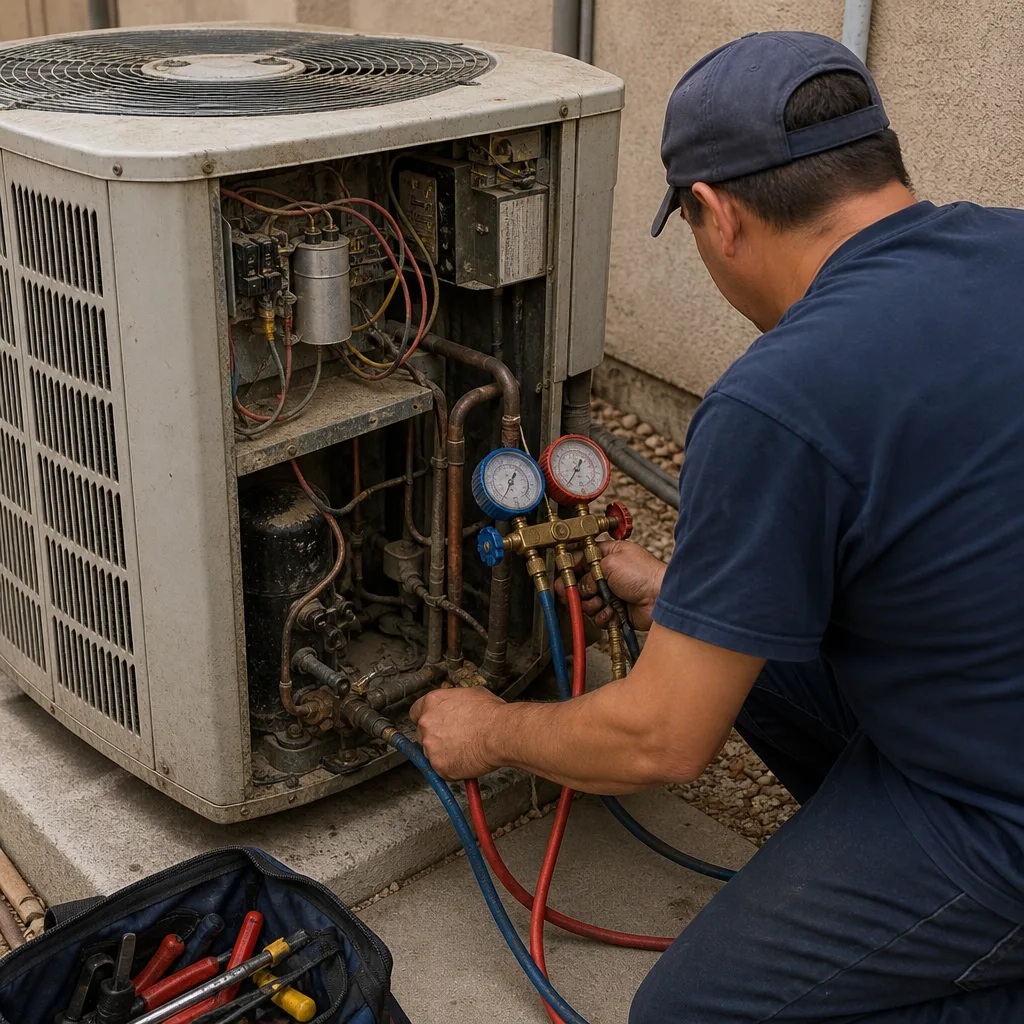 Before
 After
 Before
 After
 Before
 After
Related Reading
For cooling-side work in the heat of the summer, our AC repair and installation in Summerlin page covers the repair and replacement decisions in more depth. If you’re new to the area or want a broader view of how we work, start at Fireside Heating & Air Co. Summerlin home.
Common Mistakes to Avoid
- Skipping the October furnace test because the house hasn’t been cold yet. First cold night is when most furnace failures land, and it’s also when every other homeowner is calling. Test in October, not December.
- Running the system with a dirty filter because it “still works.” A clogged filter in Summerlin’s summer heat is the fastest way to burn out a blower motor. Change it monthly in peak season.
- Turning the AC off completely in a vacant home. An off system in a Summerlin summer lets the house reach temperatures that damage interior finishes and stress the equipment on return. Set a moderate hold and leave it.
- Ignoring duct leakage because the AC still cools. The system can cool fine and still be losing 15 percent of your bill to attic leakage. If bills climb without explanation, check the ducts.
- Blocking the outdoor unit with landscaping. Shade cuts head pressure and saves energy. Enclosure cuts airflow and does the opposite. Keep two feet of clearance.
- Running a heat cycle for the first time on the day you need it. A furnace that hasn’t been test-fired in a year is an unknown quantity. Fire it up in October, not on the first cold evening.
- Skipping the carbon monoxide detector check. Every furnace tune-up should include it, but a homeowner check between visits is the backstop. Replace batteries annually and confirm each unit functions.
When to Call a Professional
Some tasks belong to any homeowner with a hose and an hour. Others genuinely don’t. Call a professional for anything involving the furnace flue, the heat exchanger, the gas train, refrigerant, electrical components inside the equipment, or a system that shows any sign of carbon monoxide. If your AC is icing on the indoor coil, if your furnace is short-cycling, if the breaker trips on startup, or if a duct has come loose in the attic, those are all customer-calls-us signals, not homeowner projects. Our Fireside Heating & Air Co. Summerlin home page lays out how we work; the short version is a live person answering every call, upfront pricing, and a written guarantee. Free estimates in Summerlin are available at (888) 325-9387.
Frequently Asked Questions
Twice a year, in March and October. March is the cooling-side window before the long summer, and October is the heating-side window before first use. That rhythm is more useful in Summerlin than the national spring/fall pattern because it lines up with the actual demand on the system.
Because it sat unused for eight or nine months without anyone test-firing it. Capacitors degrade in the summer attic heat, flues collect debris, and small issues compound quietly. A three-cycle test in October catches most of them before the first cold evening. If the furnace fails, call (888) 325-9387. We answer every call in person.
No. Set the thermostat to a moderate hold, around 85°F in summer, and leave it running. An off system in a Summerlin summer lets interior temperatures reach levels that can damage finishes and stress the equipment on your return. A single mid-season check plus a monthly 20-minute cycle from a neighbor is the plan that holds up.
Duct sealing cost depends on the size of the system and how much leakage is found, and it’s worth doing in Summerlin more than in most cities because of attic temperatures. A 15 percent leakage in a 150°F attic is a measurable bill impact every summer month. Call (888) 325-9387 for a free estimate. Estimates in Summerlin are free.
A gentle rinse after a dust storm is a reasonable homeowner task with the power off. Heavy caking, bent fins, or any uncertainty about the condition of the coil is a technician’s job. Rinsing the wrong way or with too much pressure can bend fins and reduce efficiency.
Rebate availability changes and varies by equipment type and efficiency tier. Our team will walk you through the current options when we quote a replacement. Call (888) 325-9387 for a free second opinion on any written estimate you already have. A square deal matters more than the marketing on the quote.
The Bottom Line
Summerlin HVAC care is not the two-tune-up rhythm the brochures push. It’s a desert calendar: a March cooling-side window, an October heating-side window, a summer built around dust, shade, and overnight cooling, and duct work that pays back faster here than almost anywhere because of attic temperatures. Test the furnace in October even though you won’t need it until December. Set a hold when you leave for the season. Change the filter in the heat. Follow those four things and your system will not only last longer, it will fail fewer times on the nights you can least afford it. When it’s time to call, call (888) 325-9387 for a free estimate in Summerlin. We’ll be there when we say.
Written by the team at Fireside Heating & Air Co. Summerlin.