
Last updated November 17, 2026
 AC repair
 Furnace & heating
 Heat pumps
 Ductless mini splits
 Carrier
 Trane
 Goodman
Seasonal tune-up and full diagnostic on your Carrier, Trane, or Goodman system - readings shown to you before any repair is proposed
Diagnosis first, numbers second - you approve the repair price before a single part goes in.
Get your free estimateHVAC Permits, Codes & Inspections in NV: What You Need to Know
In Clark County, replacing an HVAC system without a closed permit can be classified as an unpermitted alteration at resale. We’ve watched buyers’ lenders stall closings in Summerlin neighborhoods over exactly this issue within the last two years, and the seller’s only option at that point was a retroactive inspection on a system already bolted to the house. The permit does not exist to generate fees. It exists to put a trained inspector’s eyes on work that a homeowner cannot see inside a wall or a return chase. This guide covers which jobs legally need a Clark County permit, who is responsible for pulling it, how to verify it was opened and closed, and what a failed final inspection means for your insurance.
Quick Answer
In Clark County, a full HVAC system replacement, a new installation, or any modification to ductwork requires a permit pulled by the licensed contractor doing the work, not the homeowner. Like-for-like repairs, such as swapping a failed motor, capacitor, or thermostat, generally do not require a permit. The permit must be closed with a passed final inspection, and you can verify that status yourself through the Clark County permit portal using the address or permit number.
Styles & brands we work with
- AC repair
- Furnace & heating
- Heat pumps
- Ductless mini splits
- Carrier
- Trane
- Goodman
Table of Contents
- Which HVAC jobs legally require a Clark County permit?
- Who is legally responsible for pulling the permit?
- How do you verify a permit was actually opened and closed?
- What happens if the final inspection fails?
- Nevada energy code and SEER2: what the inspector checks
- Why Summerlin homes see this issue more often
- Common mistakes to avoid
- Frequently asked questions
Which HVAC jobs legally require a Clark County permit?
The line between “permit required” and “repair only” is more clear-cut than most homeowners expect. Clark County draws it at the point where the work changes the system rather than restores it.
Requires a permit:
- Full replacement of an existing furnace, air conditioner, or heat pump, even if the new unit is the same size and brand.
- New installation in a newly finished space, addition, or converted garage.
- Any change to ductwork layout, including adding a run, rerouting a trunk line, or resizing a return.
- Installation of a mini-split system, which involves new refrigerant lines, electrical connections, and often a new disconnect.
- Any gas line work associated with a furnace or gas-pack replacement, including a new sediment trap or shutoff valve.
Does not require a permit:
- Swapping a failed compressor, condenser fan motor, blower motor, capacitor, contactor, or control board.
- Replacing a thermostat with a compatible model.
- Cleaning, tuning, or charging an existing system.
- Replacing a filter, belt, or igniter.
The rule of thumb we use: if the work involves new refrigerant lines, new gas piping, new electrical circuits, or changes the footprint of the equipment, it needs a permit. If you are putting back a part that failed, you are repairing, not altering. If you are in Summerlin and someone gives you a different answer, ask them to show you where Clark County says otherwise.
Who is legally responsible for pulling the permit?
The licensed contractor pulls the permit. Not the homeowner. This is where a lot of trouble starts, and it’s the single most important thing to understand in this whole process.
Clark County issues HVAC permits to licensed mechanical contractors. When a contractor asks you, the homeowner, to pull the permit yourself, that’s a red flag, and a big one. It usually means one of three things: the contractor isn’t licensed to pull it, doesn’t want the inspection on their record, or is trying to avoid the fee and pass the risk onto you. In any of those cases, you have hired the wrong company.
There’s a second layer to this. When a homeowner pulls the permit, the homeowner becomes the party of record. If the final inspection fails, the homeowner is on the hook for the corrections, not the contractor. The contractor may be long gone. And an unlicensed or improperly permitted installation can complicate your homeowner’s insurance claim if the system later causes water damage, fire, or a carbon monoxide incident.
A legitimate contractor in Summerlin will pull the permit under their own license number, schedule the inspection, and hand you the closed permit record when the job is finished. If that paperwork never shows up, the job isn’t finished, regardless of whether the air is blowing cold.
If you want to understand how a properly permitted replacement should go from first estimate to final inspection, our AC repair and installation in Summerlin page walks through the full process.
How do you verify a permit was actually opened and closed?
A contractor telling you “the permit’s handled” is not verification. The county’s own record is. Here is the exact process, and it takes about five minutes.
- Go to the Clark County Department of Building & Fire Prevention permit search. You can search by address, permit number, or contractor license. If the contractor gave you a permit number, use that first.
- Search by property address. Enter your Summerlin street address without the unit number first. If multiple permits come up for the property, look for the one with a date matching your installation and a permit type listed as mechanical or HVAC.
- Check the permit status field. You are looking for “Finaled,” “Closed,” or “Certificate of Occupancy issued.” Anything else, including “Issued,” “Inspection pending,” or “Open,” means the job is not closed.
- Check the inspection history. A closed permit should show at least one passed inspection. Some counties list it as “Final inspection – Approved.” If there is a failed inspection with no subsequent pass, the work was never corrected.
- Cross-check the contractor name and license number on the permit. The name on the permit should match the company that did the work. If it doesn’t, ask why.
- Save a PDF of the closed permit. Keep it with your closing documents. You will need it when you sell, and buyers now ask for it before the inspection period ends.
If the contractor cannot give you a permit number within 24 hours of the job starting, that’s a problem. A permit is pulled before the work, not after. If the work is already done and there is no permit on record, call us before you call anyone else. We’ve helped Summerlin homeowners sort out exactly this situation, and the earlier it gets caught, the cheaper it is to fix.
What happens if the final inspection fails?
A failed final inspection is not the end of the world, but it does matter, and it matters most when you’re not looking. Here is what actually happens.
First, the permit stays open. An open permit shows up on a title search at resale, and a buyer’s lender has every right to require it be closed before the loan funds. We’ve seen this stall real closings, not just delay them. A seller in Summerlin who couldn’t produce a closed permit had to pay for a retroactive inspection, and in the worst case had to have ductwork re-opened to verify clearances.
Second, insurance gets complicated. Most homeowner policies will pay a claim for a fire or water loss caused by HVAC equipment. But if the equipment was installed without a permit or in violation of code, the insurer can investigate whether the loss was due to unpermitted or non-compliant work. That investigation can take months, and the outcome is not guaranteed. A closed permit does not guarantee an insurance payout, but an open or missing permit is exactly the kind of thing a claims adjuster will ask about.
Third, the underlying problem rarely fixes itself. Failed inspections in Summerlin usually come down to a handful of things: inadequate clearances around the outdoor unit, a condensate drain that doesn’t meet the trap-and-slope requirement, a flue pipe on a furnace that’s too close to combustible material, or a disconnect that isn’t accessible. These are real safety items. A flue clearance issue is a carbon monoxide concern, not a paperwork one.
Nevada energy code and SEER2: what the inspector checks
Nevada enforces minimum efficiency standards for new HVAC equipment, and Clark County inspections check against them. As of the current code cycle, residential central air conditioners and heat pumps must meet minimum SEER2 and EER2 thresholds. In simple terms, the efficiency rating has to be printed on the equipment’s spec plate and has to meet or exceed the code minimum for the system size and type.
This is where a low bid gets dangerous. A contractor who installs below-code equipment to shave a few hundred dollars off the price is installing equipment the county will not pass at final inspection. You end up with a system that runs, but with an open permit, and no recourse when the trouble shows up years later.
The inspections that catch this are routine:
- Equipment matches the permit. The model and serial numbers on your installed unit match what was submitted.
- Efficiency ratings meet code. SEER2 and EER2 are verified from the equipment plate.
- Refrigerant lines are properly supported and insulated. No exposed line sets in Summerlin attics, which routinely hit 140 degrees in July.
- Condensate is properly trapped and piped. A big one in Summerlin, where attic-mounted air handlers in the dry heat produce a lot of condensate in cooling season.
- Electrical disconnect and overcurrent protection. The breaker and disconnect match the nameplate rating.
If you are budgeting a replacement and want to understand what compliant equipment actually costs, the heat pump and mini-split page for Summerlin walks through system types and what different efficiency tiers cost in the local market.
Why Summerlin homes see this issue more often
Summerlin has a specific set of conditions that make permits and inspections matter more here than in some other parts of the valley.
Most of Summerlin was built in a compressed window, which means thousands of homes in neighborhoods like The Ridges, Red Rock Country Club, and Sun City Summerlin are hitting the same replacement age at the same time. When that many systems need replacing in a short span, the market fills up with contractors who specialize in fast swaps. Some are excellent. Some are not, and the ones who are not are the ones most likely to skip the permit. If you are in a 1990s or early-2000s Summerlin home and your neighbors are all getting new systems this year, be especially alert.
Summerlin also runs at higher elevations and through long stretches of extreme heat. The west side climbs above 110 degrees for weeks, and attic temperatures can damage improperly installed equipment or line sets much faster than in a milder climate. An installation that would pass inspection elsewhere can fail here, which is one reason the county is strict about clearances, insulation, and condensate.
HOA architectural review is a second layer that only exists here. Even with a fully permitted installation, many Summerlin neighborhoods require a separate HOA approval for the outdoor unit’s visibility, screening, or placement. The contractor should know this. If your contractor has never dealt with a Summerlin HOA before, you will be the one making phone calls to get it sorted.
Last, the resale stakes are high. Summerlin is a desirable market with buyers who run title searches and lenders who ask for permits. An open HVAC permit is an easy thing for a buyer’s agent to flag, and it weakens your negotiating position. Getting the permit closed at the time of installation costs you nothing. Getting it closed retroactively, years later, costs real money.
Common Mistakes to Avoid
- Pulling the permit yourself. If a contractor asks you to do this, walk away. It transfers liability to you, and it usually means they aren’t licensed to pull it under their own number.
- Accepting “we don’t need a permit for a replacement.” In Clark County, a full system replacement needs a permit even if it is a like-for-like swap.
- Skipping the SEER2 check. Ask for the equipment spec plate before installation begins, and verify the efficiency rating meets code. A below-code install is a failed inspection waiting to happen.
- Never verifying the closed permit. “The permit’s handled” is not the same as a closed permit with a passed final inspection. Check the county portal yourself.
- Forgetting the Summerlin HOA review. A permitted install that violates your HOA’s equipment screening rules can require you to re-do the installation at your own cost.
- Ignoring a failed inspection. If the inspection fails, make sure the corrections are made and the permit is re-inspected and closed. Do not let it go.
- Assuming the warranty covers code problems. Manufacturer warranties cover defects, not permit or inspection failures. Those come back to you.
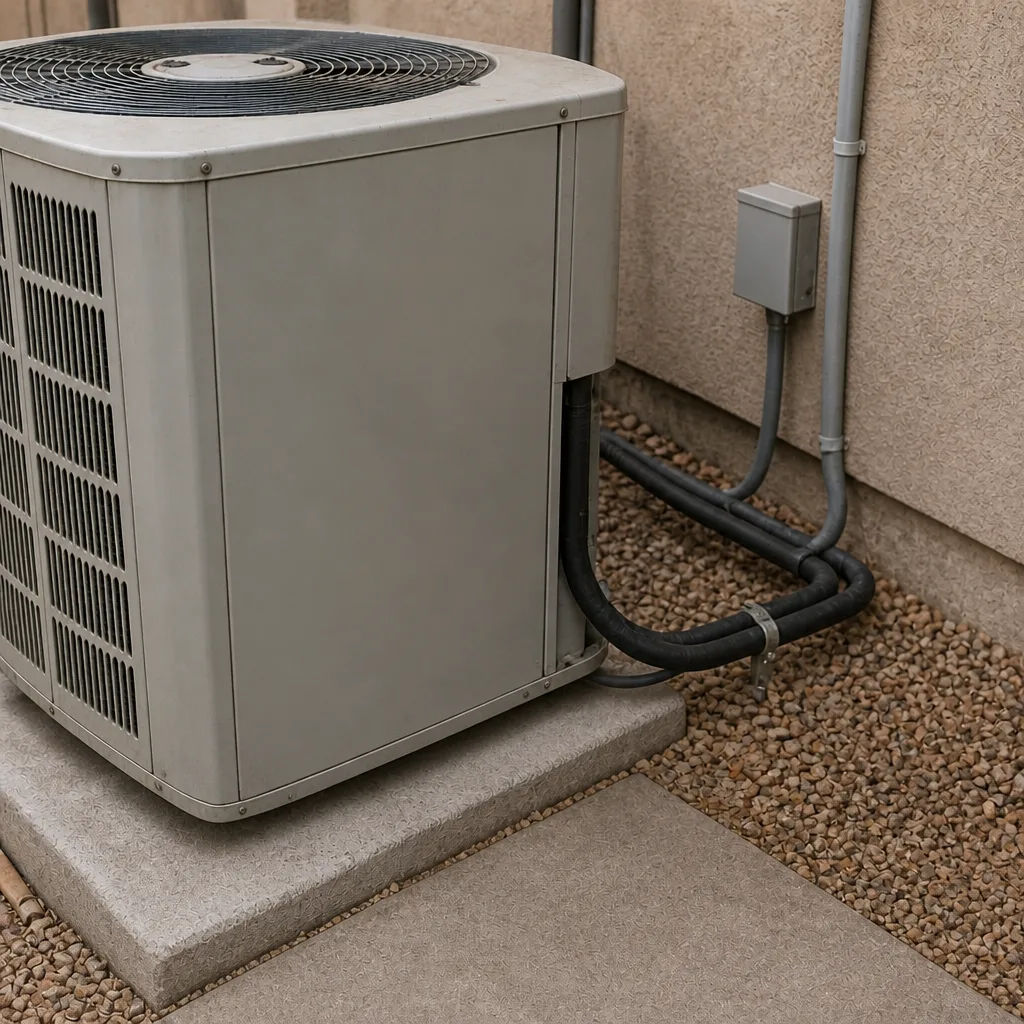
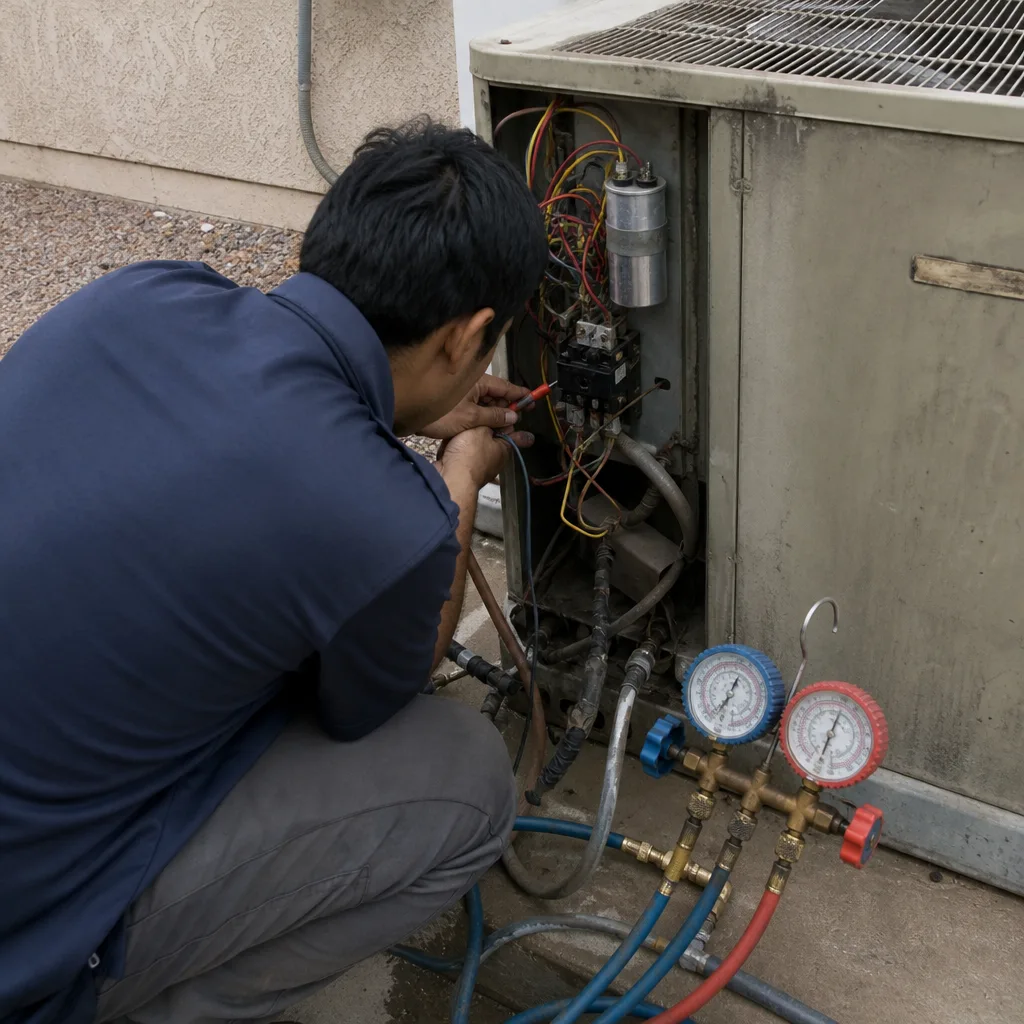
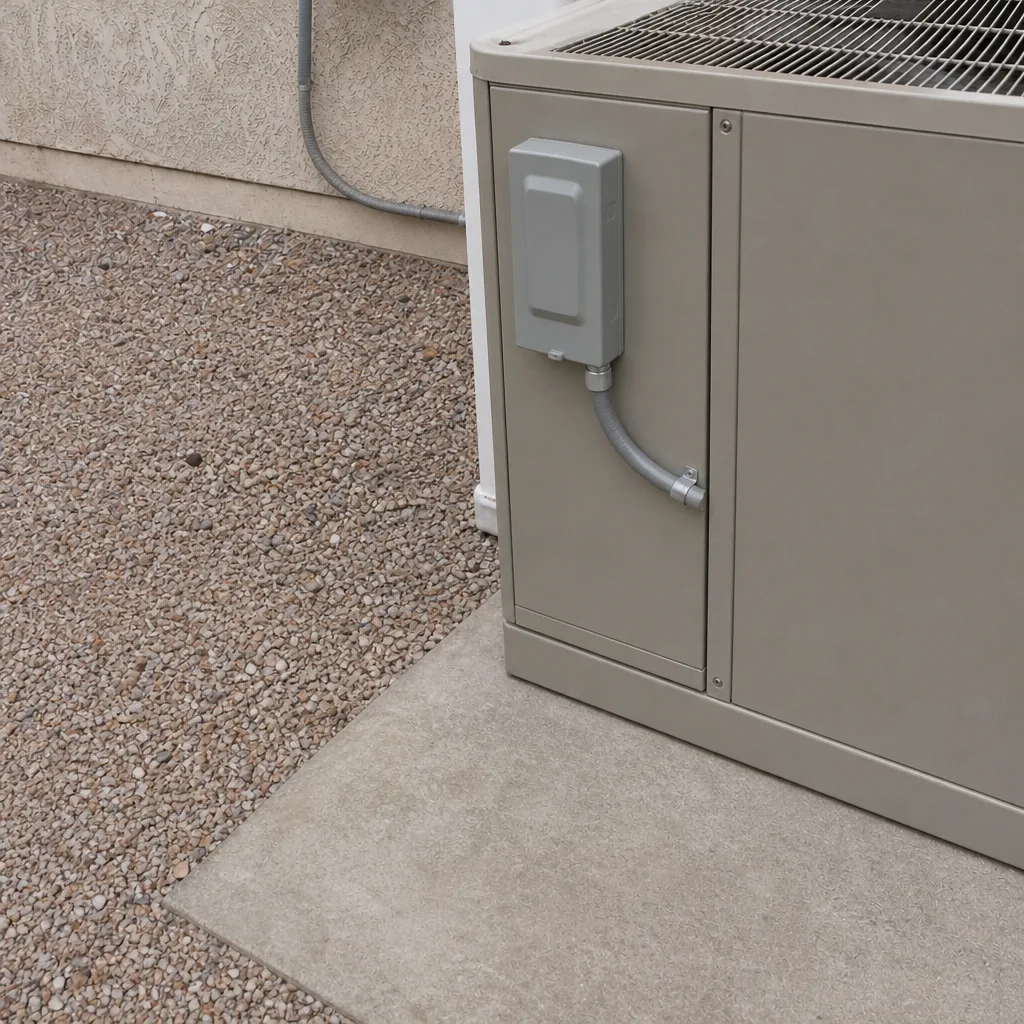
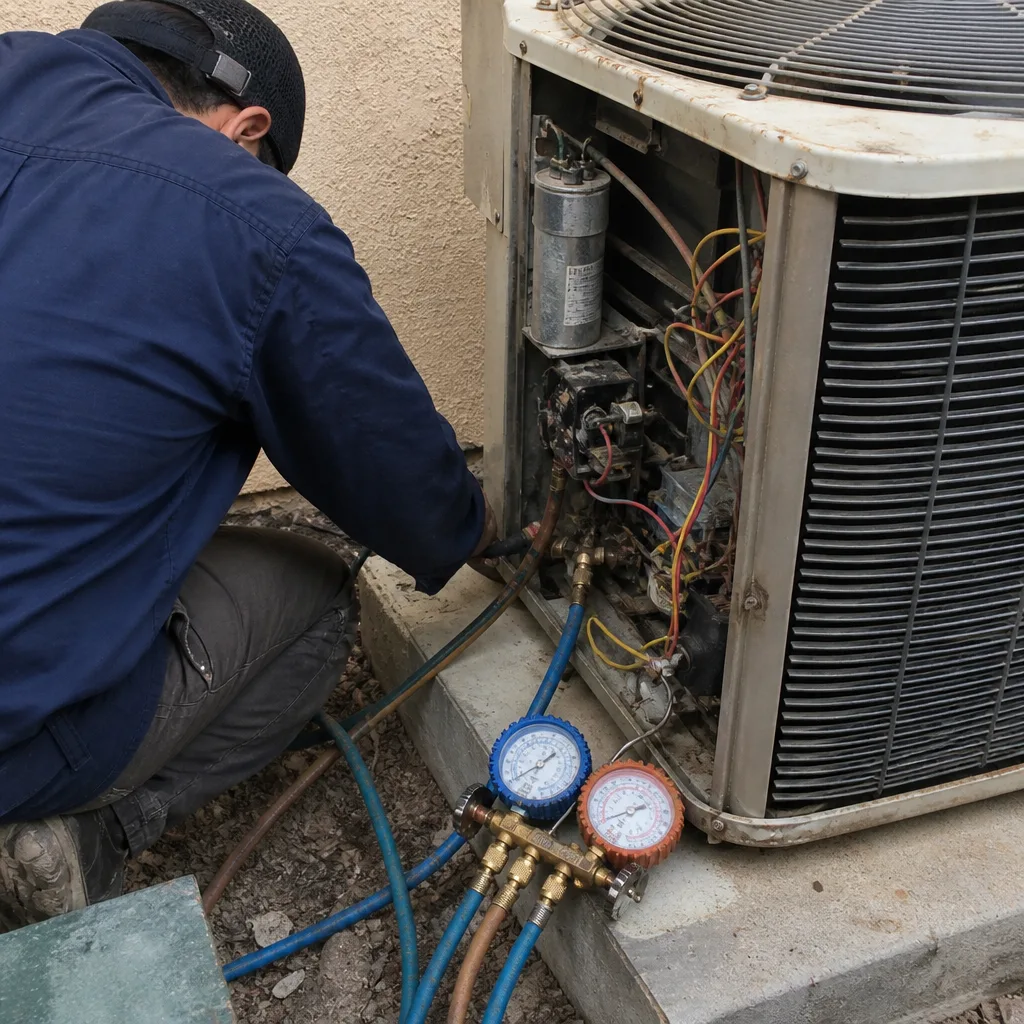
See the difference
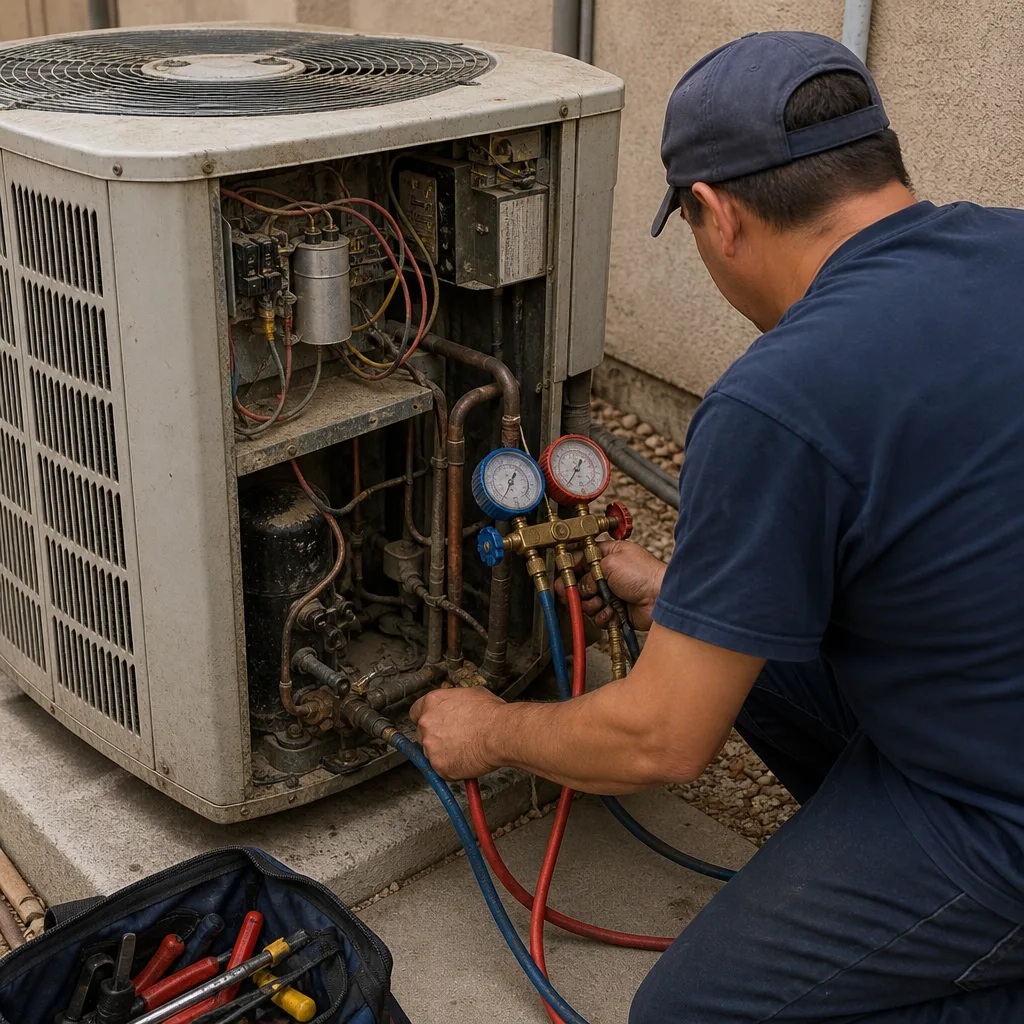 Before
 After
 Before
 After
 Before
 After
When to Call a Professional
Call a licensed HVAC contractor when you are considering any work that changes the system rather than repairs a part: replacement, new installation, ductwork changes, or a mini-split. Call when a contractor has quoted a job and is vague about the permit, or when a contractor asks you to pull it yourself. Call when you are buying or selling a Summerlin home and the permit history is unclear. Call if the work was already done and you cannot find a closed permit on the county portal. These situations are common, and they are fixable, but only with a licensed contractor who knows the Clark County process. Fireside Heating & Air Co. Summerlin offers free estimates in Summerlin. Call (888) 325-9387 and we will walk you through what your specific job needs.
Frequently Asked Questions
Yes. A full replacement of a furnace, air conditioner, or heat pump requires a Clark County permit, pulled by the licensed contractor doing the work. Like-for-like repairs, such as replacing a failed motor or capacitor, generally do not. If you are unsure which category your job falls into, call Fireside Heating & Air Co. Summerlin at (888) 325-9387 for a free answer, no obligation.
In practice, no, and you shouldn’t try. Clark County issues mechanical permits to licensed contractors, and when a homeowner pulls one, the homeowner becomes the party of record and bears the liability for corrections. If a contractor asks you to pull the permit, that’s a sign to look elsewhere. Call us at (888) 325-9387 for a second opinion on any written estimate.
Typically the permit is pulled before the work begins, and the final inspection is scheduled after the installation is complete. In most Summerlin jobs, that means the permit is opened within a day or two of the contract and the final inspection happens within a few business days of the install. The important thing is that it’s closed, not just that it was opened. Verify it on the county portal when the job is done.
A title search will find the open permit, and a buyer’s lender can require it be closed before closing. That means the seller pays for a retroactive inspection, and in some cases for corrections. We’ve seen closings held up over exactly this in Summerlin. Getting the permit closed at installation time is far cheaper and less stressful than sorting it out at resale.
Not necessarily. Most policies will pay a claim for fire or water damage caused by HVAC equipment, but an adjuster will investigate whether the loss was due to unpermitted or non-code-compliant work. A closed permit doesn’t guarantee a payout, but a missing permit is exactly what triggers scrutiny. If you have an unpermitted install, call (888) 325-9387 to discuss your options before something goes wrong.
Yes. A mini-split installation involves new refrigerant lines, a new electrical circuit, and often a new disconnect, all of which require a Clark County permit pulled by the licensed contractor. It’s one of the more permit-dependent jobs you can do on a Summerlin home. Call Fireside Heating & Air Co. Summerlin at (888) 325-9387 for a free estimate.
The Bottom Line
The Clark County HVAC permit process is not there to make your life difficult. It is there to make sure a licensed inspector has verified the work, and that a record exists you can fall back on. Skipping it saves a contractor a little time and can save you nothing. A closed permit protects your insurance claim, your resale, and your safety when a flue or a refrigerant line was installed wrong. If you are planning a replacement in Summerlin, ask for the permit number before work starts, verify it on the county portal when the job finishes, and keep a copy with your closing documents. That’s the whole game, and it’s more valuable than anything else you’ll read on the subject. For the broader picture on how we handle installations and service, start with our Fireside Heating & Air Co. Summerlin home page and our heating and furnace service in Summerlin. If you need an exact price for your project, call (888) 325-9387 for a free estimate. No pressure, no fine print, and a written price you can hold us to.
Written by the team at Fireside Heating & Air Co. Summerlin.