
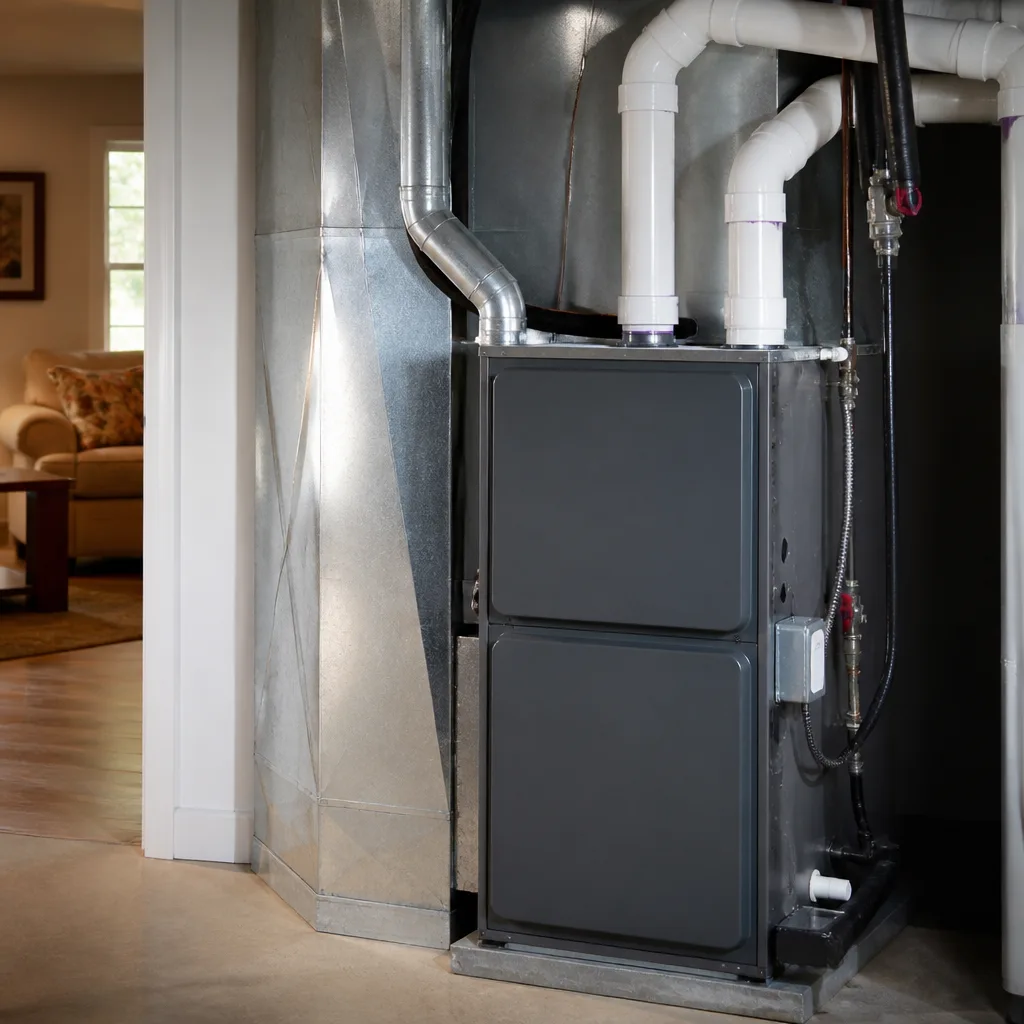
 Furnace & heating
 AC repair
 Heat pumps
 Ductless mini splits
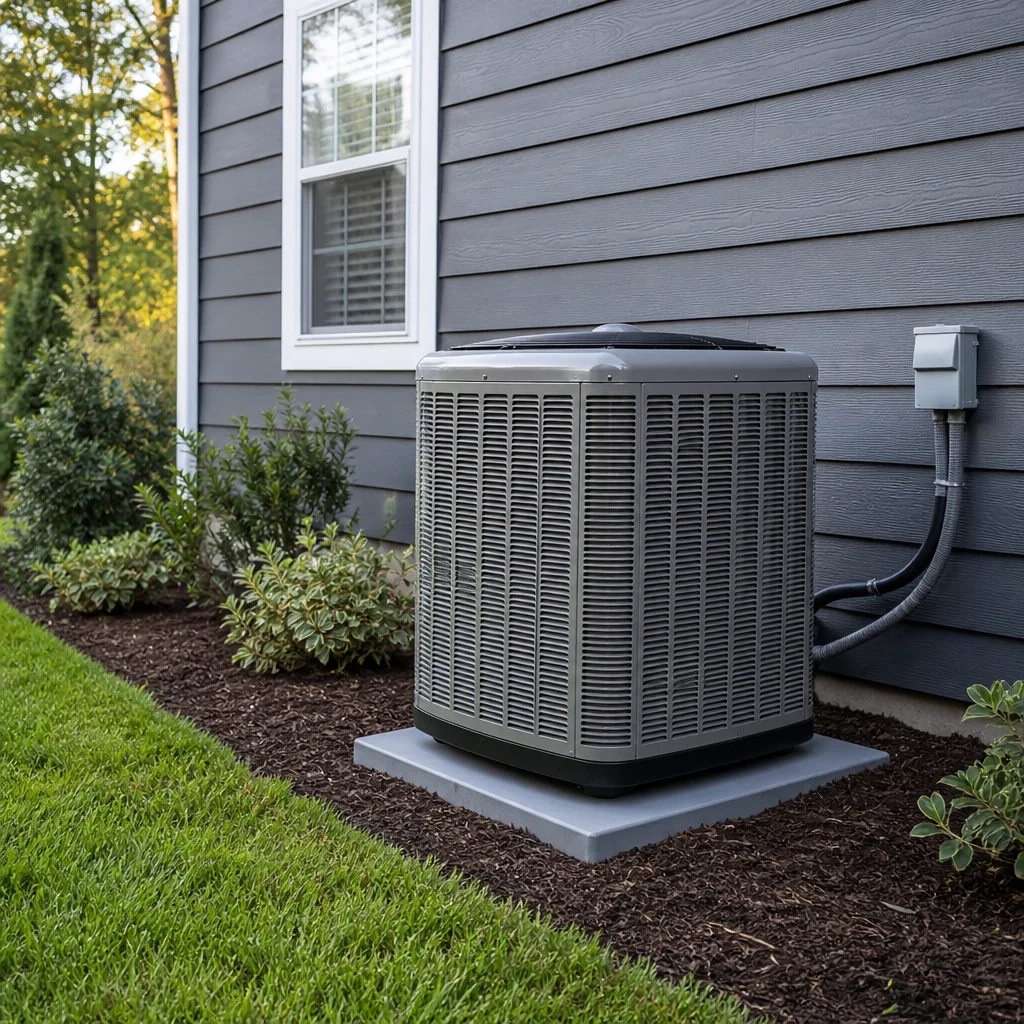 Carrier
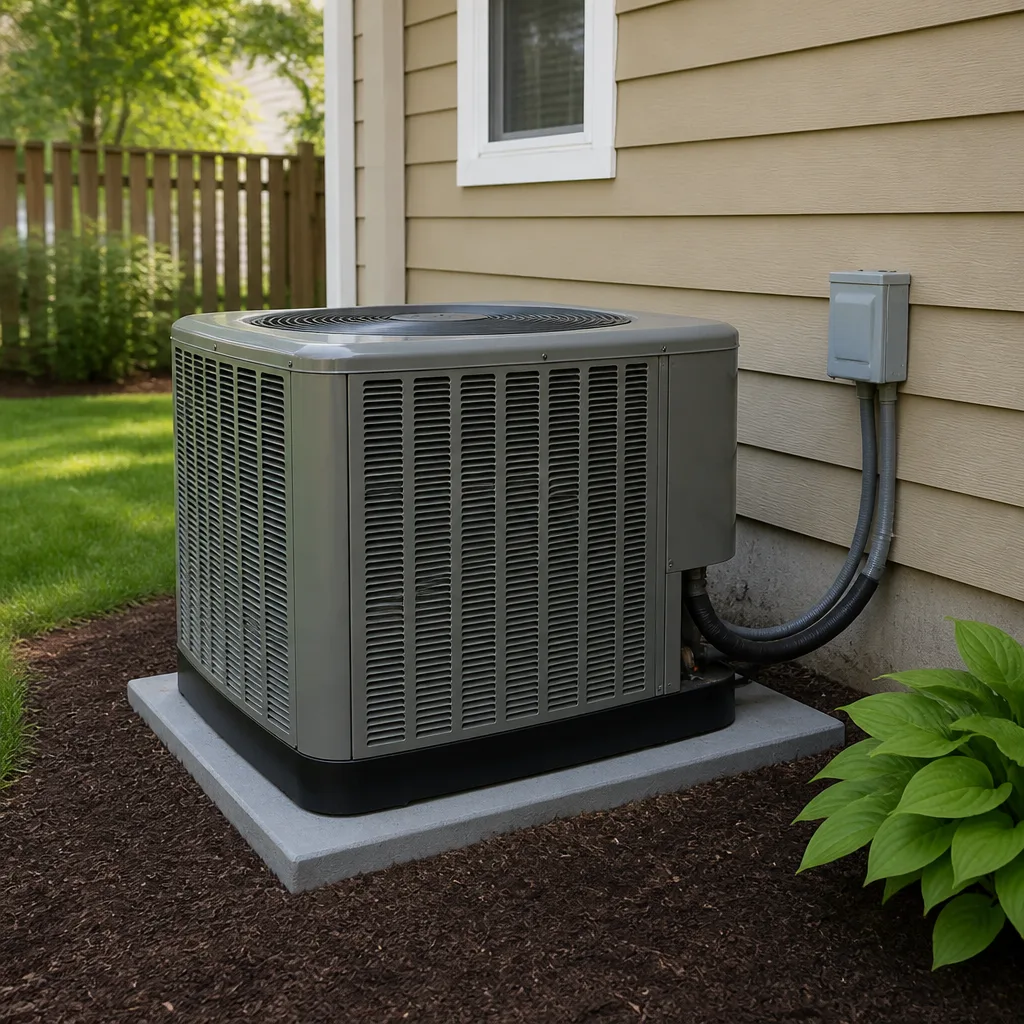 Trane
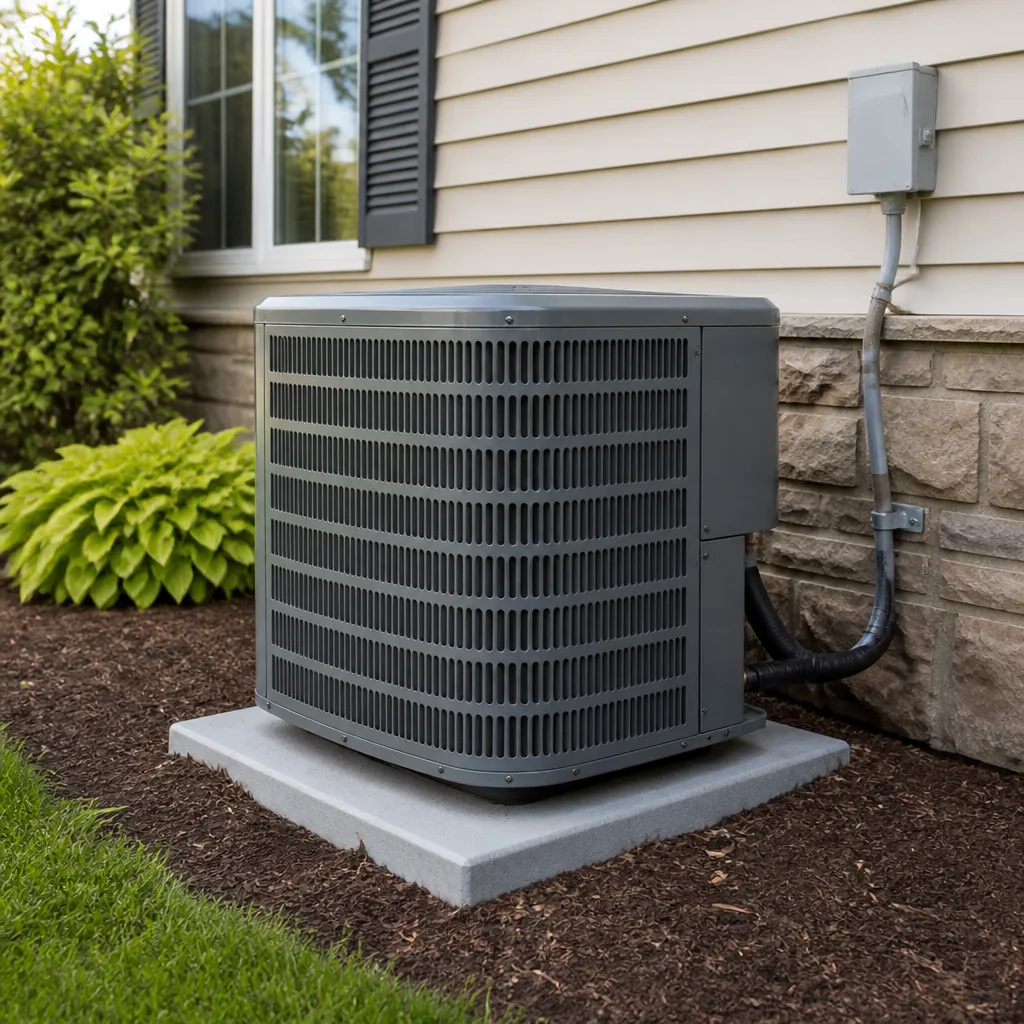 Goodman
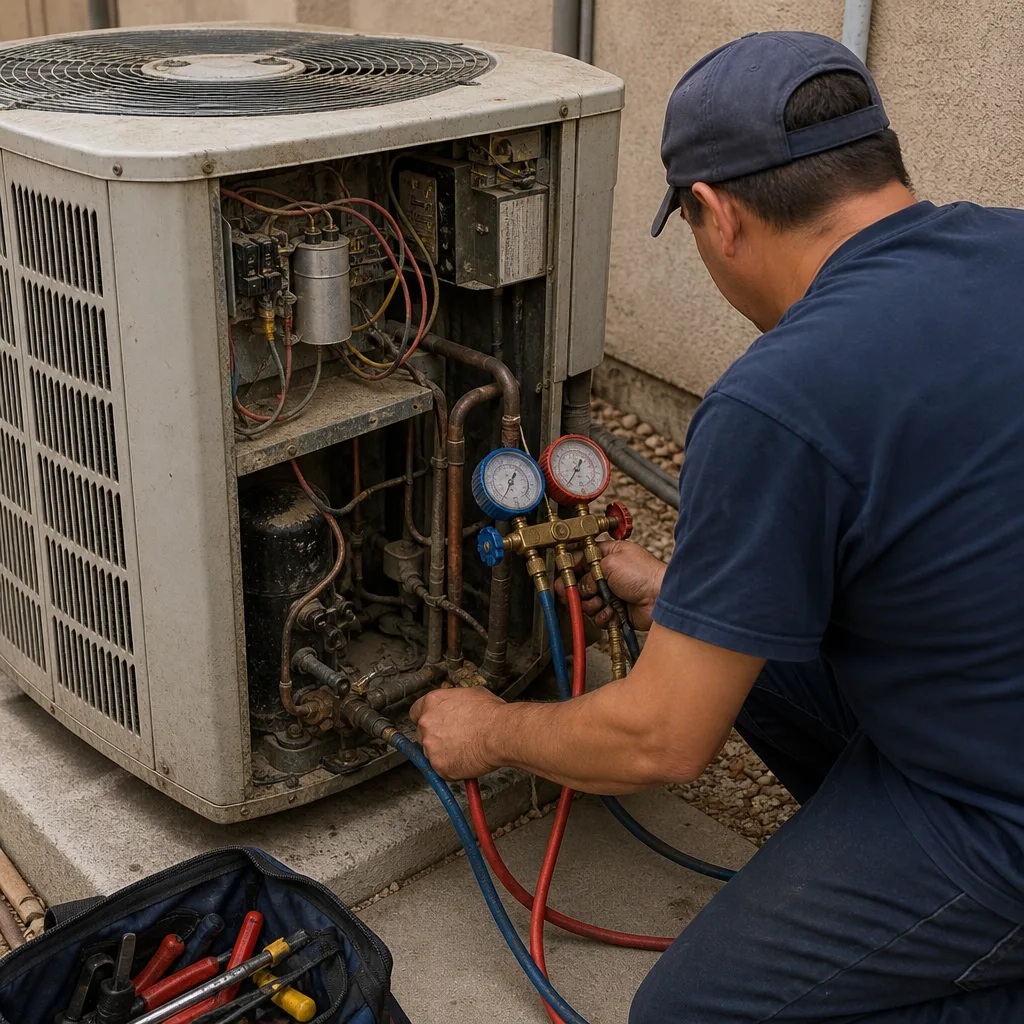
Seasonal tune-up and full diagnostic on your Carrier, Trane, or Goodman system - readings shown to you before any repair is proposed
Diagnosis first, numbers second - you approve the repair price before a single part goes in.
Get your free estimateStyles & brands we work with
- AC repair
- Furnace & heating
- Heat pumps
- Ductless mini splits
- Carrier
- Trane
- Goodman
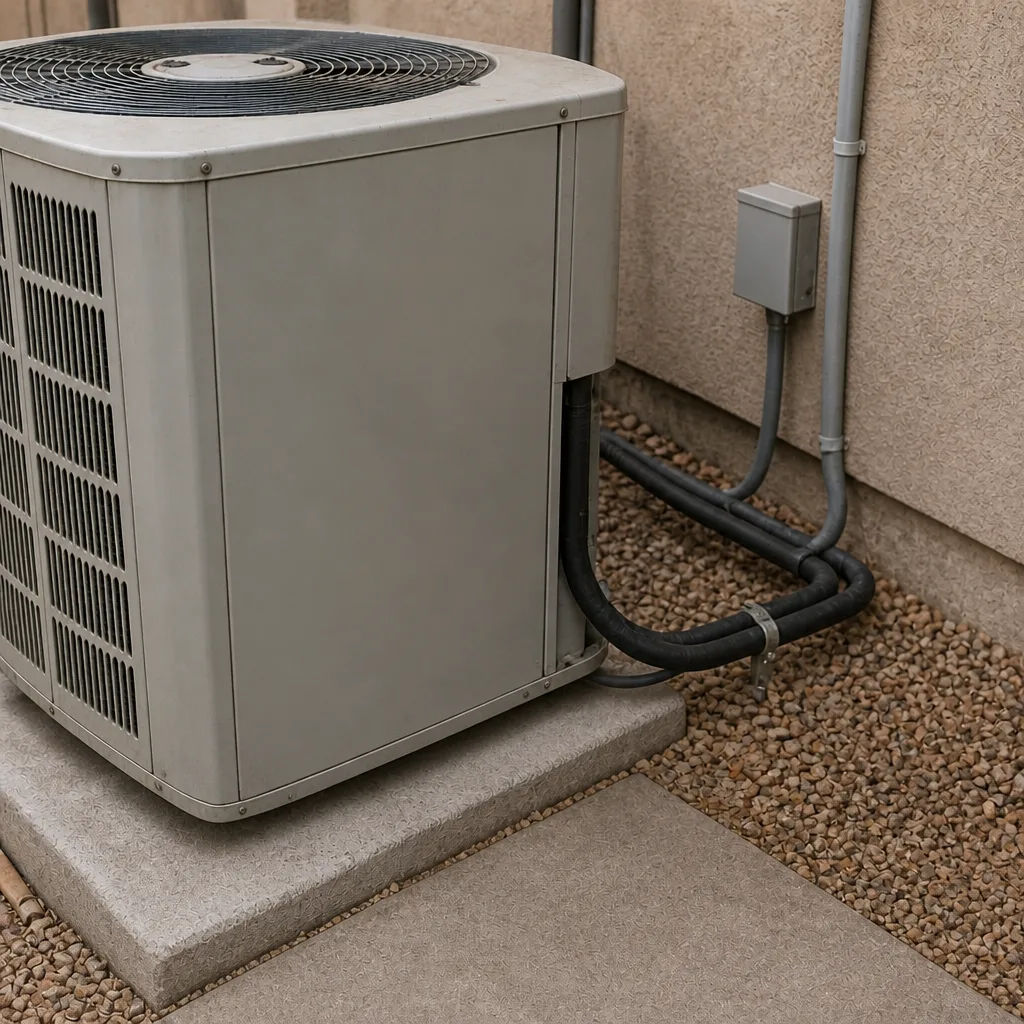
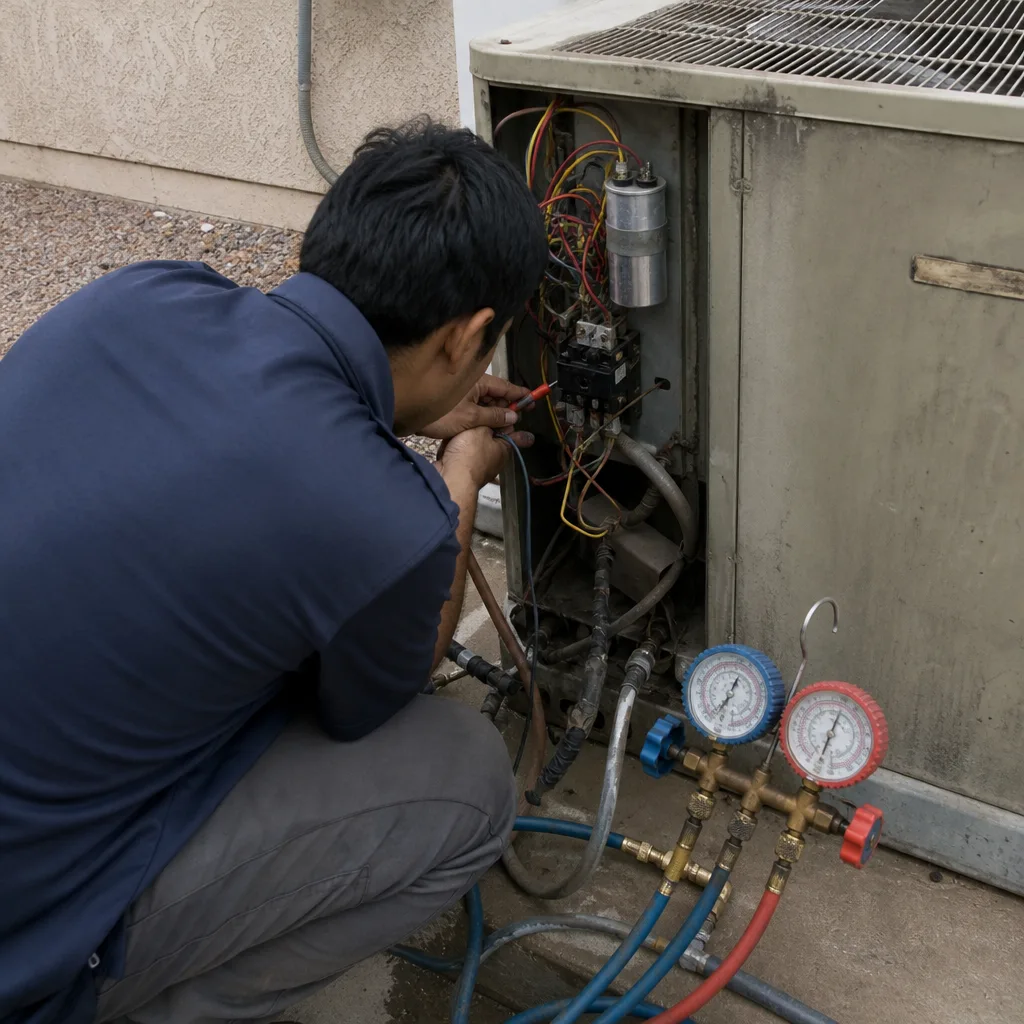
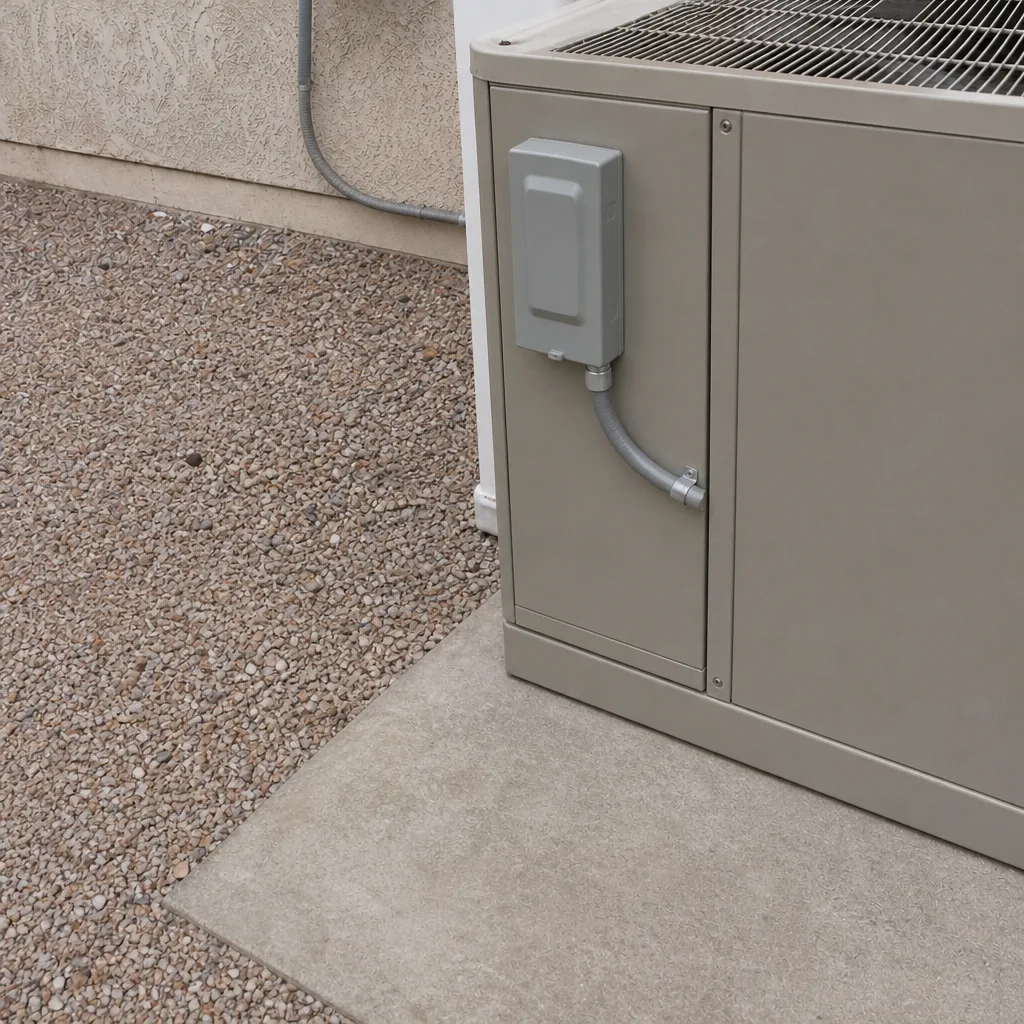
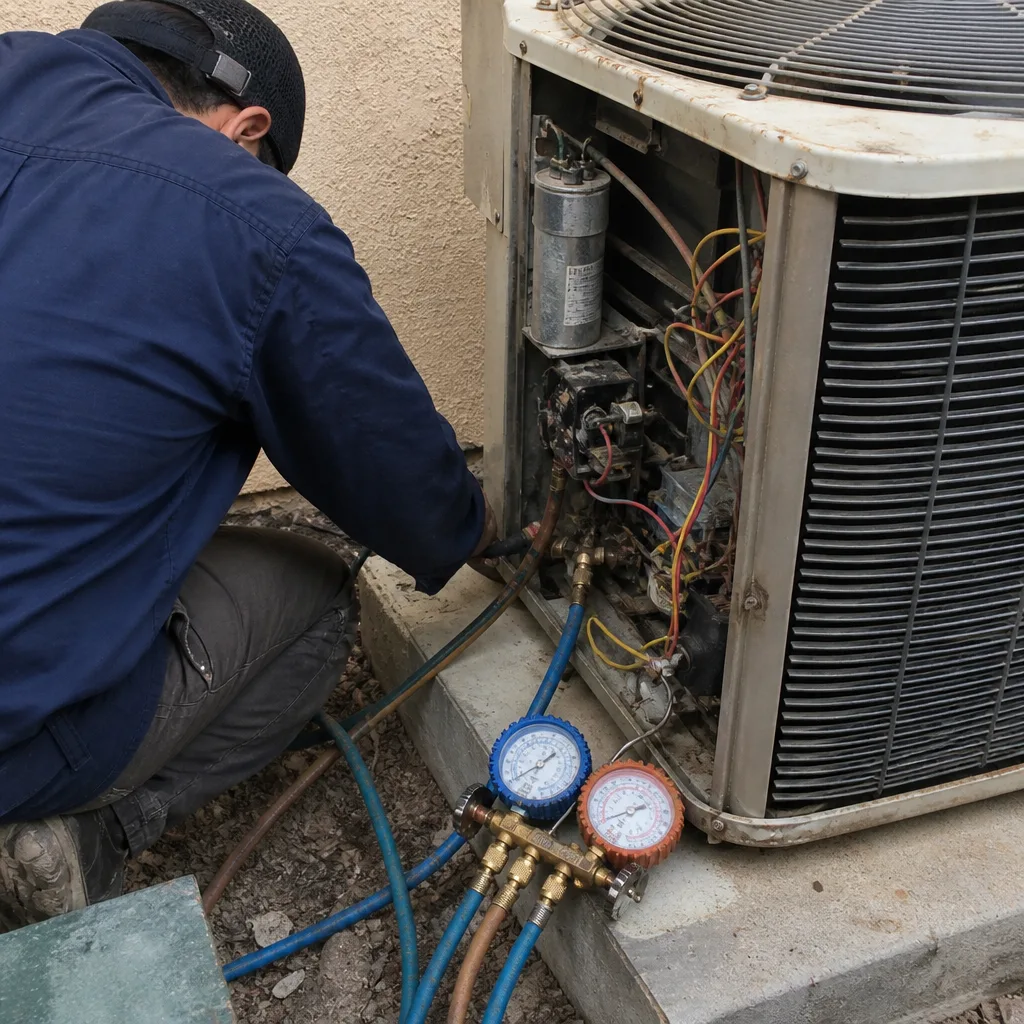
See the difference
 Before
 After
 Before
 After
 Before
 After
How Long Does a Furnace Last in Summerlin, NV? The Honest Answer
Most furnaces are rated for 15 to 20 years, but a Summerlin furnace in an attic installation realistically tops out around 20 to 22 years – and many of the original 1990s units still running in The Trails and The Crossing are already past that mark. The reason isn’t run time. It’s thermal age: 25 summers baking in an attic that reaches 150 to 160°F for five or six months a year, whether the furnace fires or not. If yours is from the mid-1990s to early 2000s and it’s installed in the attic, it’s worth a look before the next cold snap. Call (888) 325-9387 and we’ll tell you straight what it has left.
Why Summerlin Furnaces Age Differently Than the National Guides Say
A Summerlin furnace from 1998 may have fewer actual run hours than a Minneapolis furnace from 2010. We have far fewer heating-degree days here. But the 1998 unit has spent its whole life in an attic that hits 160°F every July, and that heat has been working on the heat exchanger, the capacitors, and the control board every day, running or not.
National lifespan charts count how many hours a furnace fires. They don’t count passive heat load. In Summerlin, that passive load is the whole story. A furnace in a garage or interior closet dodges most of it and can stretch past 20 years without much drama. An attic unit from the 1990s is living on borrowed time.
Fireside Heating & Air Co. Summerlin has worked on Summerlin furnaces since before most of those original units were even installed. When one of our technicians says it’s time, it’s because the failure pattern for that model has played out in front of them dozens of times – not because anyone is chasing a sales number.
The Three Failure Modes That Signal End-of-Life in a Summerlin Furnace
These aren’t generic warnings. They’re the specific things we open up a 25-year-old attic furnace in Summerlin and find.
- Heat exchanger stress cracks from thermal cycling. Metal expands and contracts every time the furnace heats and cools. After 20-plus years of that plus a hot attic, stress cracks form. You can’t see them without pulling the unit apart, but a carbon monoxide test in the air stream will find them. This is the one that matters most – a cracked heat exchanger can put CO into your home.
- Control board capacitor failure from heat soak. The capacitors on the board cook slowly in that attic heat. The symptom is a furnace that won’t ignite reliably, or fires and quits, or needs a reset. A board replacement runs $400 to $700 in Summerlin. When it fails on a 25-year-old unit, it’s usually the first domino, not the last.
- Inducer motor bearing failure. Twenty-five years of vibration in a hot attic wears out the bearings in the inducer motor. You’ll hear it before it dies – a grind or a whine at startup. Left alone, it stops the furnace cold.
If you’ve noticed any of these, the next step is a proper inspection, and that’s a job for a trained technician. Furnace internals carry gas, high voltage, and carbon monoxide risk. This is not a Saturday DIY project. You want someone who knows what a failing heat exchanger looks like – and if the furnace is anywhere near end of life, our Heating & Furnace team can walk it with you.
Attic Versus Garage: A Real Difference in Summerlin
Where your furnace sits changes its lifespan more than most people realize. In Summerlin’s master-planned housing – mostly stucco single-family homes and townhomes built from the 1990s into the 2010s – furnaces turn up in attics, interior closets, and garages.
| Install location | Typical realistic lifespan | What shortens it |
|---|---|---|
| Attic (unconditioned) | 20-22 years max, even if well maintained | 150-160°F summer heat load, dust infiltration |
| Interior closet (conditioned space) | 22-25 years | Normal cycling; far less passive heat |
| Garage | 22-25 years | Some heat and dust, but nowhere near attic levels |
If you’re in an attic-furnace home from the mid-1990s to early 2000s, you’ve crossed the line where a repair without a full inspection is money thrown at a problem you can’t see. That’s the honest read.
The Replacement Decision Rule, In Plain Terms
People ask how long a furnace lasts because they’re really deciding whether to fix it or replace it. Here’s the rule we use, and it holds up across Summerlin:
- Furnace is over 20 years old, and… along with any of the following, replacement is almost always the right call.
- The repair exceeds $600. Furnace repairs in Summerlin run $150 to $700 depending on the part. A $600-plus bill on a 22-year-old attic unit is a down payment on the next repair.
- An inspection finds heat exchanger wear or repeated ignition failures. These aren’t patched – they’re a signal the unit is done.
The point isn’t that the furnace can’t be limped along another season. It’s that the next repair is coming within 18 months, and you’ll have paid for two when one new unit would have covered both.
On the other side, if your furnace is 12 years old and the igniter failed, that’s a cheap, straightforward repair – not a replacement conversation. A tune-up runs $80 to $200 and catches small problems before they become the expensive kind. Our home page has the full menu if you want to see how we work.
Common Summerlin Scenarios We See
In The Trails, we regularly find original 1990s furnaces that have never had a heat exchanger inspection. The unit fires fine, but a CO test tells a different story. Those homeowners often had no idea anything was wrong.
In The Crossing, we see a lot of second-repair-in-two-years calls – a board goes, gets replaced, then the inducer motor fails, then the igniter. Each bill looked reasonable. Together they’d have covered a good chunk of a new Trane or Lennox unit that would have ended the cycle.
And in the gated communities where HOA rules shape equipment placement, service access itself can be tricky – which is one more reason to have a tech who knows the layouts. If you want a second opinion on a written estimate before you commit, we offer that free.
FAQs
A Summerlin furnace typically lasts 20 to 22 years in an attic installation and up to 25 years in a garage or interior closet. The attic number is shorter than national guides because of the extreme summer heat load, even during months the furnace isn’t running. If yours is past 20 and in the attic, get it inspected. Call (888) 325-9387 for a free estimate.
On a 20-year-plus furnace, replacement is usually the better value once the repair passes $600 or an inspection shows heat exchanger wear. A repair in that range often leads to another one within 18 months, so you end up paying twice. On a younger furnace, a single repair is almost always the right move. Call (888) 325-9387 and we’ll give you a straight repair-versus-replace answer.
Furnace repair in Summerlin runs $150 to $700 depending on the part and the access. Control board and inducer motor work sits at the top of that range; igniters and simpler fixes sit lower. We quote upfront, and the price quoted is the price paid. Call (888) 325-9387 for an exact number – estimates are free.
Yes. A live person answers our line 24 hours a day, including the 2 a.m. no-heat call, and we get out to Summerlin as fast as we can. Most jobs are finished in a single visit. Call (888) 325-9387 and we’ll be there when we say.
Need a Straight Answer on Your Furnace?
If you’d rather have it looked at, Fireside Heating & Air Co. Summerlin offers a no-pressure assessment in Summerlin – call (888) 325-9387. We’ll tell you what the unit has left, what a repair costs, and whether replacement actually makes sense. Done right, or we make it right – in writing, for 90 days, no arguing.
Written by the team at Fireside Heating & Air Co. Summerlin, serving Summerlin, NV.