
Last updated November 17, 2026
 AC repair
 Furnace & heating
 Heat pumps
 Ductless mini splits
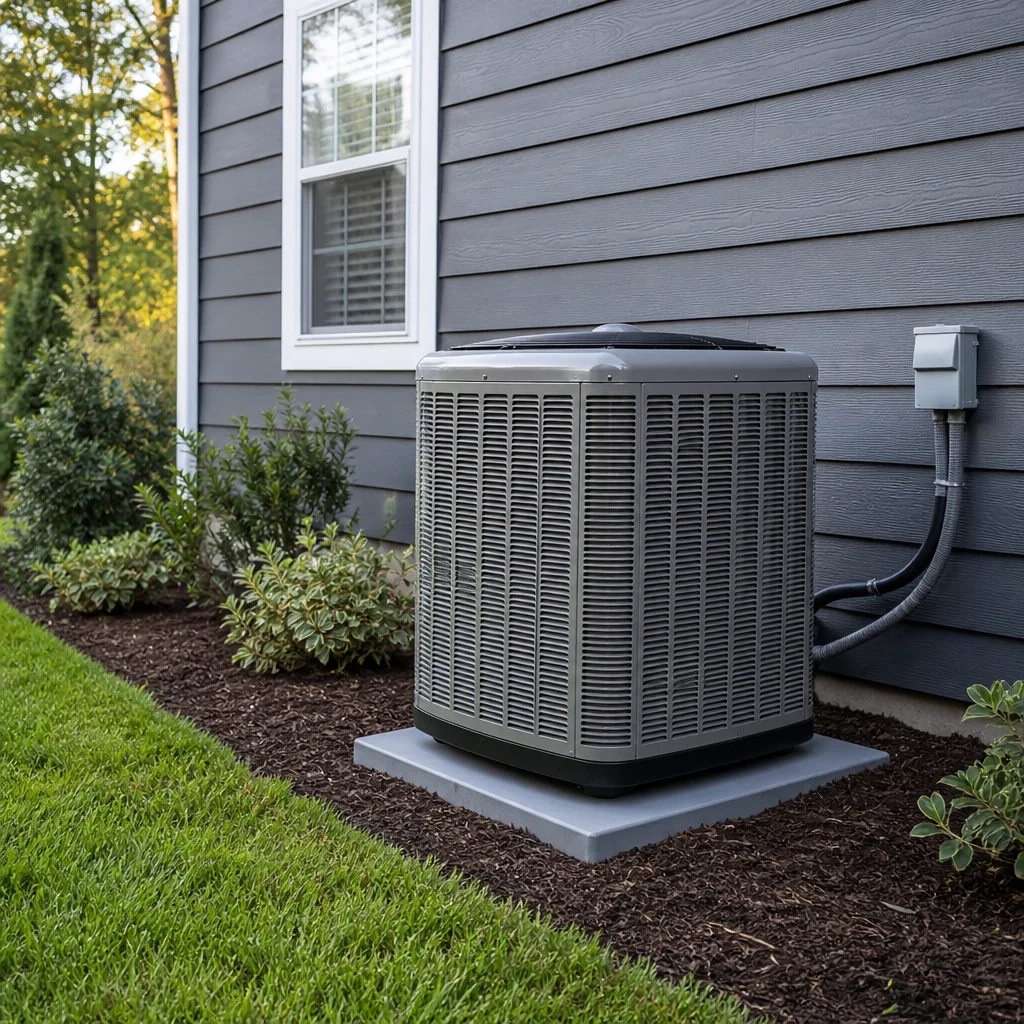 Carrier
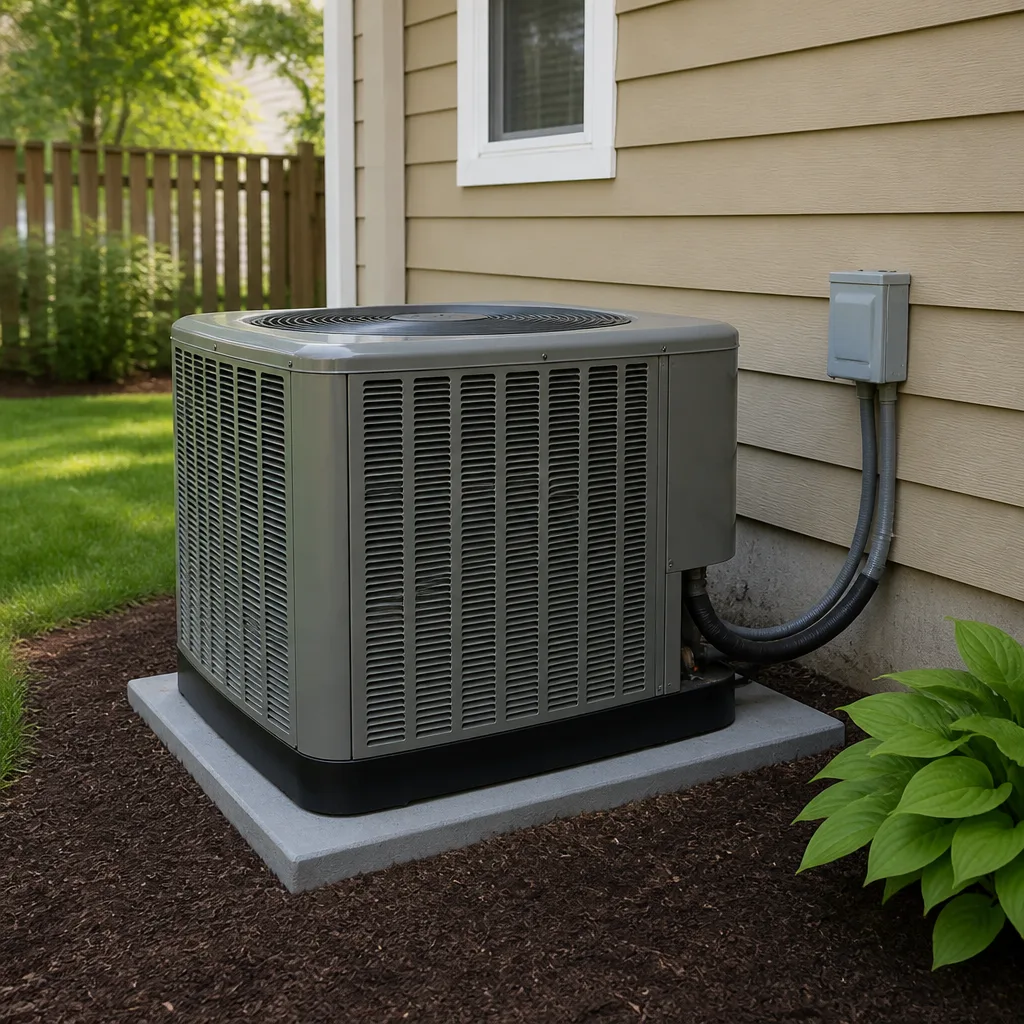 Trane
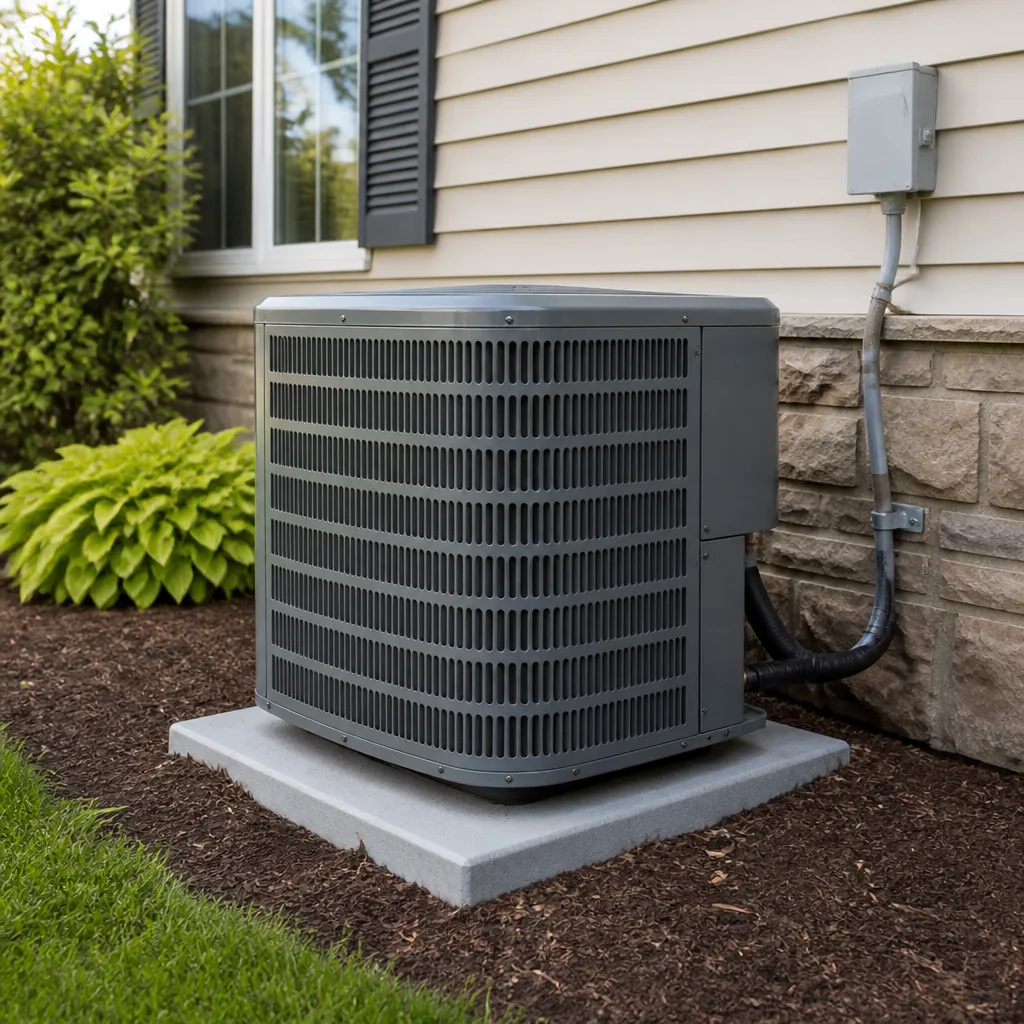 Goodman
Seasonal tune-up and full diagnostic on your Carrier, Trane, or Goodman system - readings shown to you before any repair is proposed
Diagnosis first, numbers second - you approve the repair price before a single part goes in.
Get your free estimateHVAC Emergency Preparedness Guide for Summerlin Homes
Las Vegas recorded 24 heat-related deaths during a single July heat event, and most of those deaths happened indoors, in homes where the air conditioning had failed and no backup plan existed. Summerlin is not exempt from that outcome. The desert doesn’t care that your street backs up to the Red Rock foothills or that your HOA keeps the block immaculate. A failed condenser at 11 p.m. on a 112°F night moves from annoying to dangerous faster than most families expect. This guide is about making the decisions before the night you need them: who to call, what to do in the hours before help arrives, which calls can wait until morning, and where a vulnerable family member can go. Read it once in April and you’ll handle August differently.
Quick Answer
An HVAC emergency plan for a Summerlin home means three things done in advance: a saved 24-hour number for a company that answers with a live person, a written record of your system’s model and service history so dispatch is fast, and a listed backup refuge for anyone in the house who is elderly, very young, or medically fragile. Most Summerlin heat emergencies trace back to one missing piece – no plan made before the outage.
Styles & brands we work with
- AC repair
- Furnace & heating
- Heat pumps
- Ductless mini splits
- Carrier
- Trane
- Goodman
Table of Contents
- Why Summerlin Homes Face a Different Kind of Emergency
- Your Written Emergency Protocol
- The System Record That Speeds Dispatch
- How to Cool a House Safely Before a Technician Arrives
- Which Emergencies Wait Until Morning and Which Don’t
- Finding an Overnight Refuge Before You Need One
- What to Ask a 24-Hour HVAC Company Before You Call One
- Neighborhood Notes for Summerlin Households
Why Summerlin Homes Face a Different Kind of Emergency
Summerlin sits at the western edge of the valley, against the Spring Mountains, and that geography shapes how summer heat hits a house. Afternoon sun on an unshaded west-facing wall can push a garage or a bonus room 15 degrees hotter than the rest of the home. Monsoon season adds dust that loads up condenser coils in a way homeowners in wetter climates never deal with. And when the overnight low stays above 90°F – which happens here through July and August – a house with no working AC has no relief window at all.
The housing stock matters too. Summerlin has a large share of homes built in the 1990s and 2000s, which means original or second-generation systems now in their teens. In our experience, the calls that come in during a heat wave cluster around two failure points: aging capacitors that give out under sustained load, and refrigerant leaks that were slow all spring and sudden in July. Neither is a design flaw. Both are predictable, and predictable problems are exactly what a plan is for.
Age raises the stakes. Summerlin has a settled, long-tenured population, and in a home with an older resident, a failed AC is a health event, not a comfort issue. Heat stroke indoors can develop in a few hours when the thermostat climbs and nobody is watching the numbers. That is the scenario this guide is built around.
Your Written Emergency Protocol
The single best thing you can do this month is write one page and tape it inside a kitchen cabinet. When the system quits at midnight, nobody wants to be searching for a phone number with a flashlight. The protocol has four parts, and you can complete all of them in an afternoon.
- The first call. One phone number, written plainly, for a company that answers 24 hours with a live person. Confirm this in advance, not at 2 a.m. Fireside Heating & Air Co. takes calls around the clock, every day of the year, and a person picks up.
- The household health list. Note anyone over 70, any infant, and anyone with heart, lung, or mobility conditions. First responders and HVAC dispatch both work faster when they know who is vulnerable in the home.
- The decision rule. Write down the indoor temperature at which you stop waiting and move people out. Most emergency planners use 90°F indoors for a vulnerable person, or lower if someone has a medical condition. Pick your number and don’t renegotiate it under stress.
- The refuge list. Two names and one cooling center, with addresses, decided in advance. More on this below.
Keep the page with your system record, covered next. If you’d like a starting point for the heating side of the year as well, our Heating & Furnace in Summerlin page walks through the winter counterpart of this same planning.
The System Record That Speeds Dispatch
When you call an HVAC company in the middle of a heat event, the details you can give in the first 30 seconds decide how fast a technician gets to your door with the right part. A dispatcher who knows the system age, brand, and last service date can often route the visit as a same-day repair instead of a diagnostic trip followed by a return. Here is what to write down and keep with your protocol page.
- Model and serial numbers. On the outdoor condenser, on a plate behind the access panel. Photograph the plate with your phone and keep it in a labeled album.
- Brand and system type. Whether you have a traditional split system, a heat pump, or a mini-split changes what a technician loads up for. Fireside technicians are trained on nine major brands, including Rheem, York, and Daikin, so naming yours helps on our end.
- Install date and system age. A system past 15 years is a different conversation at midnight than a two-year-old unit still under warranty.
- Last service date and what was done. A tune-up three months ago tells a dispatcher the failure is likely sudden rather than slow-building.
- Filter size and last change. Sounds small. It eliminates a whole category of guesswork before the truck rolls.
Two minutes with a camera and a sticky note saves real time on the worst night of the year. During a Summerlin heat wave, that saved time is measured in hours, because every HVAC company in the valley is triaging a full board of emergency calls.
How to Cool a House Safely Before a Technician Arrives
If the system has quit and a technician is on the way, you can slow the heat gain in a Summerlin home enough to buy hours. The goal is not to cool the whole house. It is to make one room safe and keep the rest of the house from becoming an oven.
- Pick one room and seal it. An interior room with no west-facing windows is ideal, ideally on the lowest floor. Close the door, stuff a towel under it, and hang a blanket over the window if it faces the sun.
- Block radiant heat before it enters. Close every blind and curtain on sun-facing windows. If you have no curtains on a hot window, tape cardboard over the glass. External shade, if you have patio cover or shutters, does more than anything you can do from inside.
- Run fans, but move air out, not around. A box fan set in a window blowing outward pulls hot air out of the room. Fans cool people, not rooms; they help as long as air is actually moving across skin.
- Know when to skip evaporative cooling. A swamp cooler helps when the air is dry, which is most of the year in Summerlin. During monsoon humidity, evaporative cooling adds moisture and can make a room feel worse. If the air feels heavy and sticky, don’t run it.
- Leave when the number says so. If the sealed room crosses the indoor temperature you wrote on your protocol page, and it’s daytime, leave for a refuge. Air conditioning in a car is a legitimate, safe plan.
Drink water on a schedule rather than waiting for thirst, and check on anyone in the house more often than feels necessary. Heat illness sneaks up on people who feel fine.
Which Emergencies Wait Until Morning and Which Don’t
Most homeowners either over-panic or under-react, and both cost money. Here’s a simple framework we use to help Summerlin customers decide whether a call is truly an emergency.
Calls that can wait until morning
- The system runs but cools unevenly, and no one in the home is in a health-risk group.
- The thermostat is blank but the outdoor unit is off and the house is still comfortable.
- A single room is warmer than the rest and outdoor temps are below 95°F.
- You notice a strange noise from the outdoor unit but the system is still cooling normally.
Calls that should be made now
- Total loss of cooling on a night the forecast low stays above 85°F, or any loss of cooling in a home with an infant, an elderly resident, or a medical condition.
- A burning smell, a scorched odor near the indoor unit or a breaker, or any visible smoke. Shut the system off at the thermostat and call.
- Water pooling from the indoor unit, especially if it is near electrical or ceiling materials.
- The thermostat is calling for cooling but the outdoor unit never comes on, and it’s mid-afternoon in July.
- For heating, a smell of gas or a furnace that won’t light and could be leaking. Leave the house and call from outside.
Getting this framework right is the difference between paying for a middle-of-the-night visit you didn’t need and waiting through a night you shouldn’t have. If your home has a heat pump, the failure profile is a little different, and our Heat Pump & Mini Split in Summerlin page covers the details.
Finding an Overnight Refuge Before You Need One
This is the step almost no HVAC guide includes, and every emergency planner recommends it. A working air conditioner can fail. A refuge cannot. Line up three options in advance and know which is which.
- Neighbor with a working system. Two doors within short walking distance, with a working system and a spare room. Ask now, in a normal week, not during a heat wave. Most people will say yes, and it takes the pressure off when the moment comes.
- Family or a friend within an easy drive. One household within 20 minutes that you could call at 11 p.m. and not feel bad about it.
- A cooling center. Clark County and several Summerlin-area community and senior centers serve as cooling stations during official heat events. Find the nearest one before summer and write down its hours. These centers do not usually operate overnight, so they are a daytime option, not an overnight one.
For a resident who is medically fragile, a hotel with reliable AC for one night is a sensible expense and not a failure. A broken system can be repaired on a normal schedule once the vulnerable person is safe. That is the order the night should be handled in, and having it decided in advance makes it bearable.
What to Ask a 24-Hour HVAC Company Before You Call One
Not every “24-hour” HVAC company in Summerlin is what it claims. Before you need one, call and ask three questions. The answers tell you most of what you need to know.
- Will a live person answer at 2 a.m.? Ask directly. If the answer is an answering service that takes a message and calls a technician, response time changes. Fireside answers every call with a live person, around the clock.
- Is there an after-hours rate, and how is it structured? A company should be able to tell you the exact structure over the phone. Any evasiveness here is a warning sign. Ask whether the quoted price is the final price, or an estimate that can change on arrival.
- Is the technician you dispatch an employee, or a subcontractor? This matters more than homeowners realize. A company that dispatches its own background-checked, uniformed technicians controls quality. A company that calls a name off a list of subcontractors does not. Ask, and if the answer is vague, that is the answer.
- Is there a written guarantee? A real guarantee is on paper, without a maze of conditions. Fireside backs every job with a 90-Day Done Right Promise – if it isn’t done right, we make it right, in writing, no arguing.
Ask these questions in June, not in a July emergency. The company that handles them calmly in a quiet month is the one that will handle them calmly in a crisis. If you’re currently evaluating options for a repair, our AC Repair & Installation in Summerlin page covers what a fair repair visit looks like from start to finish.
Neighborhood Notes for Summerlin Households
Different parts of Summerlin fail in slightly different ways, and knowing your zone helps you prepare. Homes along the western edge and higher up toward the Red Rock side get intense afternoon sun but slightly cooler nights than the valley floor, which gives a failed system a small overnight recovery window. Homes toward the central Summerlin communities sit closer to the urban heat island and hold heat later into the evening.
Newer construction on the eastern side and toward the village communities often has tighter building envelopes, which slows heat gain – a real advantage during an outage. Older sections with original systems, or homes where the equipment is reaching the 15-to-20-year mark, are the households that should write the protocol page first. If you’re near a Summerlin community with a lot of homes sharing the same install era, the odds are decent that a heat wave will produce several simultaneous failures on your block. That is the night to have a plan and a second name for your refuge list.
Common Mistakes to Avoid
- Waiting to call until the house is unbearable. During a Summerlin heat wave, every HVAC company in the valley fills up fast. The call you place at 5 p.m. gets handled before the call placed at 11 p.m. When indoors crosses your safety number, call.
- Opening the whole house to “air it out.” In 110°F air, open windows bring heat in, not relief out. Seal one room and keep the rest of the house closed up. Fans move air; open windows in a desert summer don’t.
- Running a swamp cooler during monsoon humidity. Evaporative cooling genuinely helps when the air is dry and makes rooms worse when it’s humid. Match the tool to the conditions.
- Pressing on a system that’s tripping the breaker. A breaker that trips repeatedly under load is a warning. Reset it once. If it trips again, leave it off and call. Do not keep resetting a breaker to force the system to run.
- Calling a company without knowing whether it dispatches employees or subcontractors. Ask the question in advance. It tells you more about what will happen at your door than the company’s advertising does.
- Skipping the spring tune-up because nothing was wrong. Nearly every emergency call we see in July is on a system that had no service in the last year. A seasonal check catches the failing capacitor and the slow leak before a heat wave does.
- Assuming a neighbor’s number will work at midnight. Most people will help, but check in advance. A refuge list you haven’t confirmed is not a refuge list.
See the difference
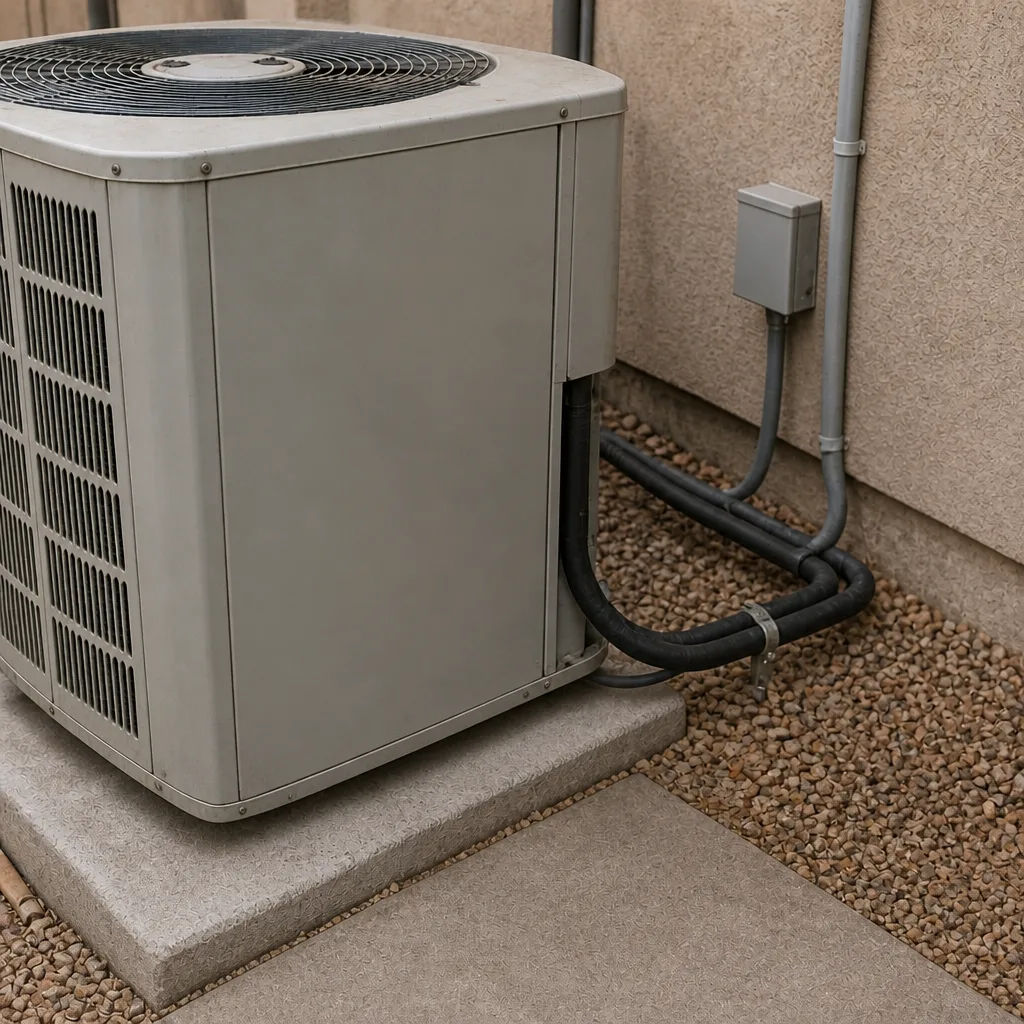
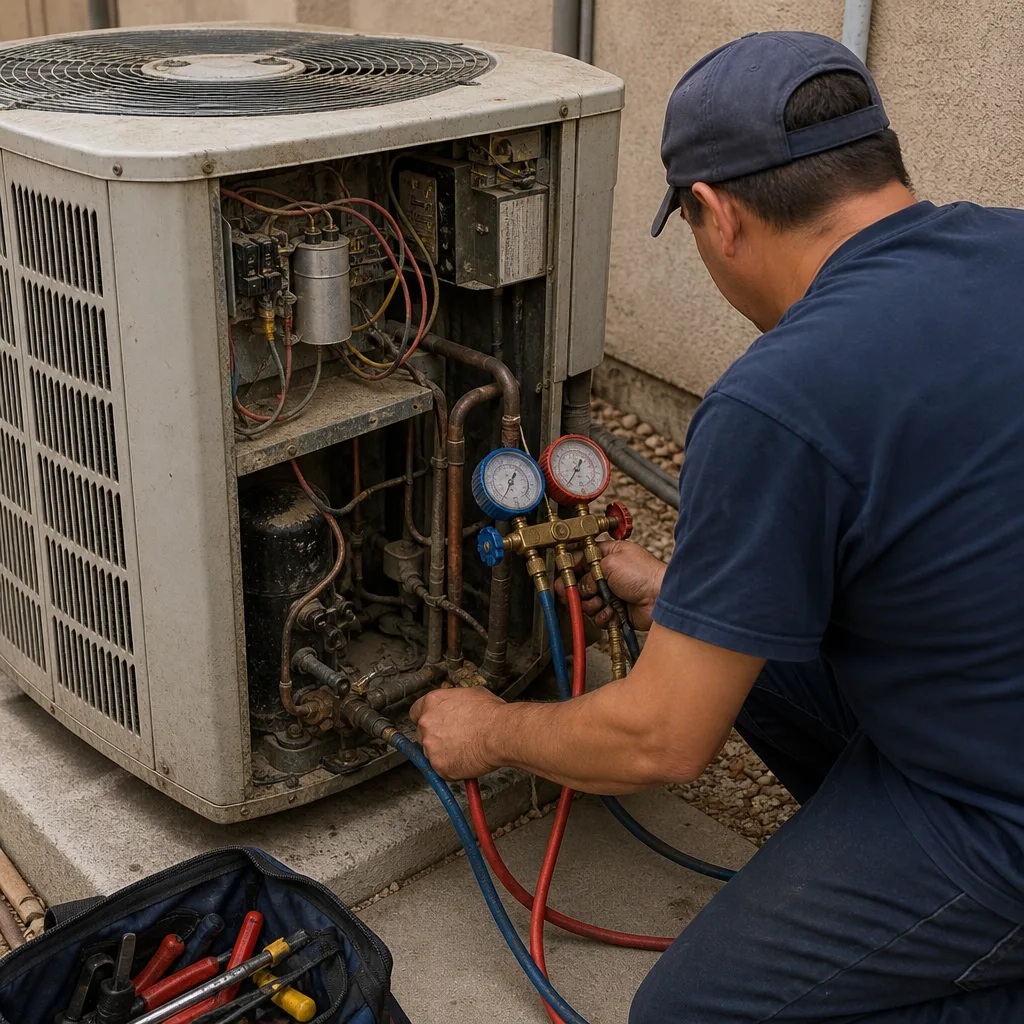 Before
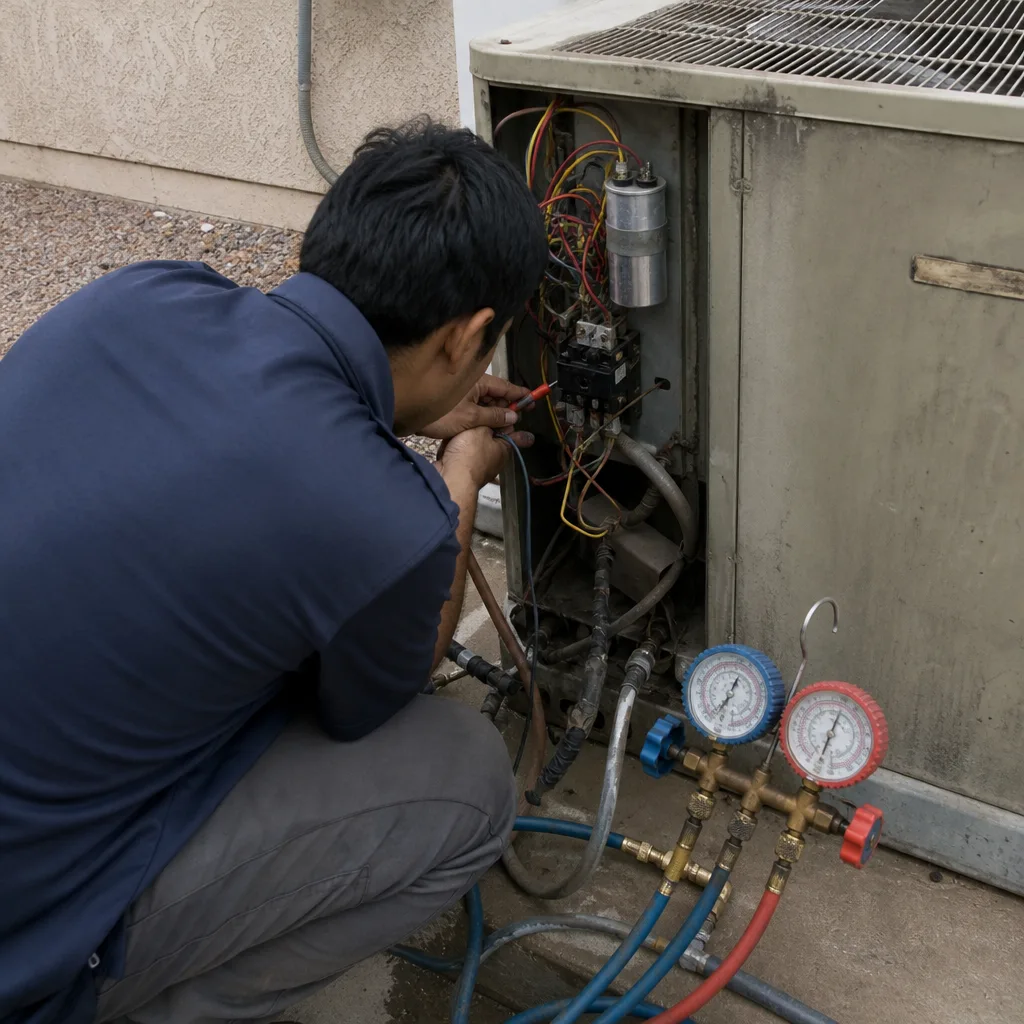
 After
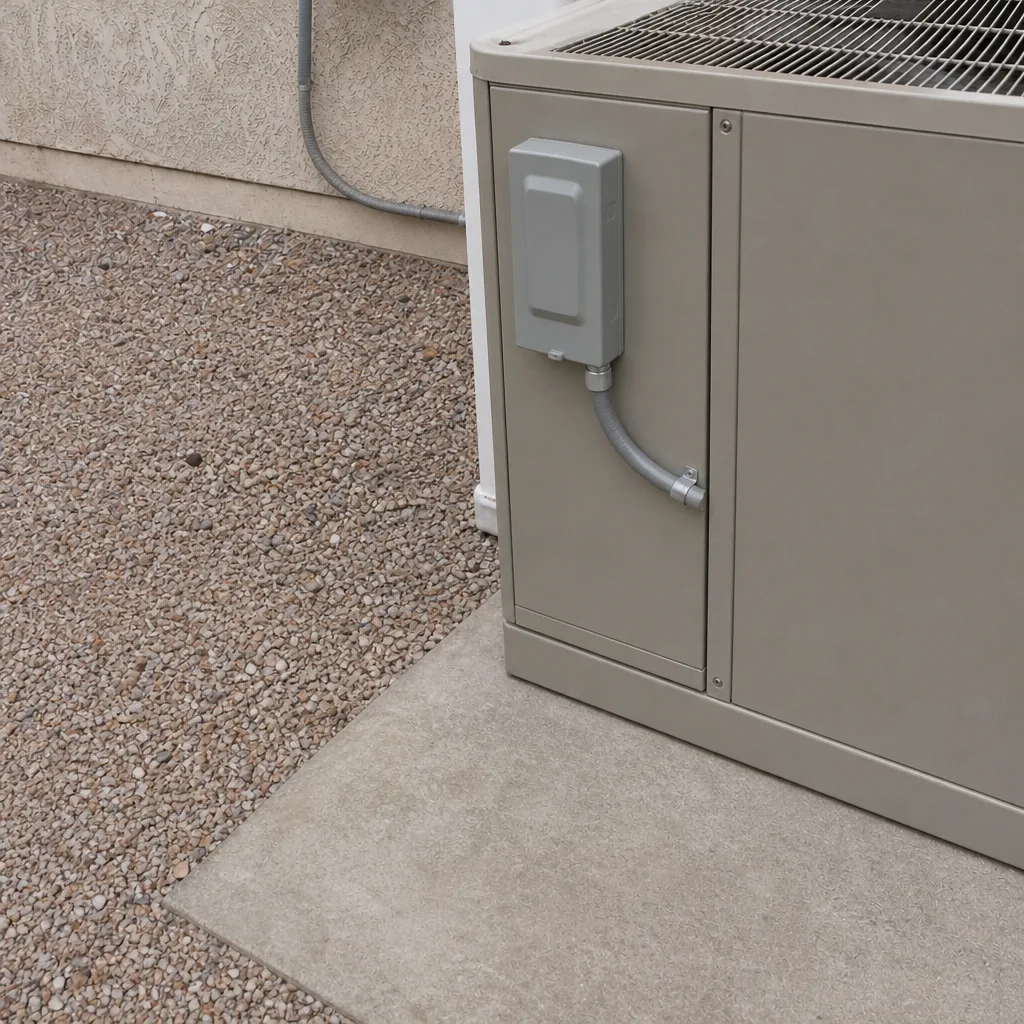
 Before
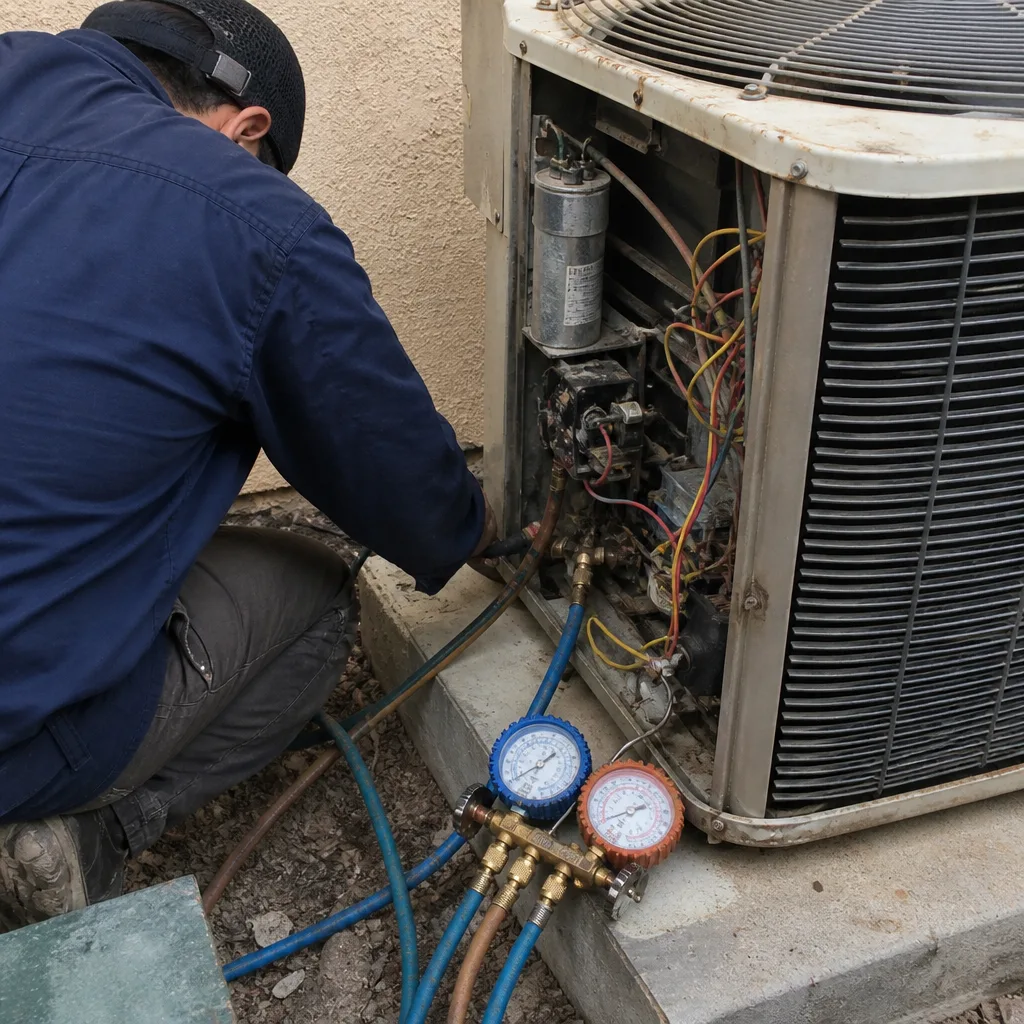
 After
 Before
 After
When to Call a Professional
Call a professional for any issue that involves refrigerant, electrical components inside the unit, a compressor, or a burning smell near the indoor unit or breaker. These are not homeowner tasks, and forcing them can create real risk. Also call for a total loss of cooling in a home with an infant or an elderly resident, and call immediately for any gas smell on the heating side. If your AC is still running but not reaching the temperature you set, get it looked at before the next heat wave rather than after a failure. Fireside Heating & Air Co. Summerlin offers free estimates in Summerlin and free second opinions on any written estimate – call (888) 325-9387. A live person answers, every hour of every day.
Frequently Asked Questions
Move everyone into one sealed interior room on the lowest floor, close sun-facing blinds, and call a company that answers with a live person. Give the dispatcher your system’s brand, age, and last service date. If anyone in the home is elderly, an infant, or medically fragile, decide now whether to leave for a refuge rather than waiting.
For a vulnerable resident, plan to leave when indoors reaches about 90°F, or lower for someone with a heart, lung, or mobility condition. Healthy adults can generally wait longer with fans and water, but the sealed room’s number is what matters. Pick the threshold in advance and don’t renegotiate it in the middle of the night.
Yes, if no one in the house is in a health-risk group and the overnight low is comfortable. Uneven cooling, a blank thermostat, or a strange but steady noise can wait. Total loss of cooling on a night above 85°F, any burning smell, visible water near electrical, or a vulnerable resident in the home should be called in immediately.
Yes. Fireside Heating & Air Co. answers every call with a live person, 24 hours a day, every day of the year, including nights, weekends, and holidays. There is no voicemail tree. Give us a call at (888) 325-9387.
Fireside technicians are trained on nine major residential brands, including Carrier, Trane, Lennox, Goodman, Rheem, York, Daikin, Bryant, and American Standard. Naming your brand when you call helps us route the right technician with the right parts for a Summerlin home.
Fireside quotes upfront pricing before any work begins, and the price quoted is the price paid – no after-hours surprises tacked onto the bill. There’s also a $50 credit on any repair over $250, and a free second opinion on any written estimate. Call (888) 325-9387 for a free estimate on a repair or a tune-up.
The Bottom Line
A Summerlin HVAC emergency is a plan problem before it is a repair problem. Write one page – the first number to call, the health list, the indoor temperature threshold, and two confirmed refuges. Photograph your system’s model plate and note its age and last service date. Learn the safe cooling steps: seal one room, block the sun, move air out, and don’t run a swamp cooler during monsoon humidity. Know which calls can wait until morning and which can’t. And vet your 24-hour company before you need one, so the call at midnight goes to a live person who treats the repair the way we’d want ours treated.
When you’re ready to build that plan, or to schedule the spring tune-up that prevents most of these calls, reach Fireside Heating & Air Co. Summerlin at (888) 325-9387 for a free estimate. We’ll be there when we say, and we stand behind it in writing for 90 days. Read more about who we are at the Fireside Heating & Air Co. Summerlin home page, and keep the number where you can find it in the dark.
Written by the team at Fireside Heating & Air Co. Summerlin.