
Top Signs You Need HVAC Service – Don’t Ignore These
A refrigerant leak that drops your system 10% below its proper charge forces the compressor to work harder, and that extra strain can shorten the compressor’s life by three to five years. The only symptom you’ll notice? The house takes a little longer to cool. Most Summerlin homeowners live with that for a full season before calling anyone. That’s the quiet cost of waiting: wasted electricity, accelerated wear, and a small repair that turns into a big one. If you’d rather not gamble on it, call (888) 325-9387 and we’ll take a look.
Which Symptoms Mean “Schedule This Week” and Which Mean “Call Today”?
Not every warning sign is an emergency, but some genuinely are. The difference matters, because a symptom you can safely watch for a few days is not the same as one that can cost you a compressor by tomorrow. Here’s how we sort them in our heads when a call comes in from Summerlin.
Shut the system off and call today:
- Any burning or electrical smell coming from a vent, the air handler, or the breaker panel. That’s a safety issue, not a comfort issue.
- Ice forming on the outdoor unit while the system is running. Running it that way can slug liquid refrigerant into the compressor.
- Water pooling around the indoor unit or a ceiling stain below it. A clogged drain line can overflow into drywall fast.
- A compressor that hums and clicks off, hums and clicks off – the tell-tale short-cycle that never finishes a cooling run.
Schedule something this week:
- Weak airflow from some vents but not others.
- A house that never quite reaches the thermostat setting in the afternoon heat.
- A subtle rattle or hum that wasn’t there last summer.
- Your NV Energy bill climbing without any rate change to explain it.
Notice what’s missing from the “schedule this week” list: anything you’d describe as “just a little off.” A system running a few degrees warm isn’t being polite about it – it’s telling you something. In Summerlin, where July afternoons push past 110, a system that’s 10% undercharged works noticeably harder, and that wear adds up over a whole season of waiting.
What Is Short-Cycling Actually Doing to Your Compressor?
Short-cycling means the system starts, runs for a few minutes, shuts off, then starts again before the house has had a chance to cool down. Homeowners often miss it because it’s easy to mistake for a thermostat doing its job. It isn’t. Every start is the hardest moment in a compressor’s life – it draws a surge of current and builds pressure from a dead stop. A compressor that’s meant to start a handful of times a day but is starting thirty times is taking years of wear in a single summer.
How to tell without standing over the unit for an hour: check your thermostat’s run history if it logs one, or simply note how often you hear the outdoor unit kick on within a half-hour window. If it’s cycling more than about three times in thirty minutes, that’s short-cycling. Common causes include a refrigerant charge that’s off, a failing capacitor, a dirty filter starving the coil, or a thermostat in a spot that reads warm air. None of those fix themselves, and the longer a compressor short-cycles, the closer you get to a replacement instead of a repair.
Why Did Your NV Energy Bill Jump 20% in Summerlin?
It isn’t always a rate increase. Three HVAC conditions reliably push a summer bill up 15-25%, and all three are repairable when caught early:
- Low refrigerant charge. A system that’s 10% low runs longer to hit the same temperature. That’s hours of extra compressor run time every week.
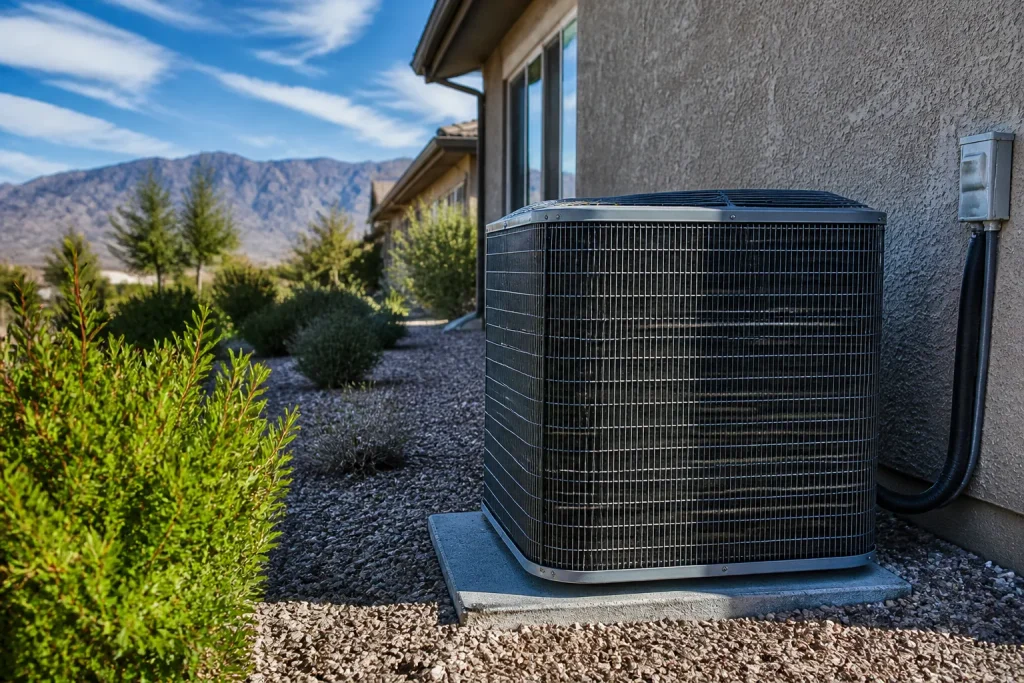
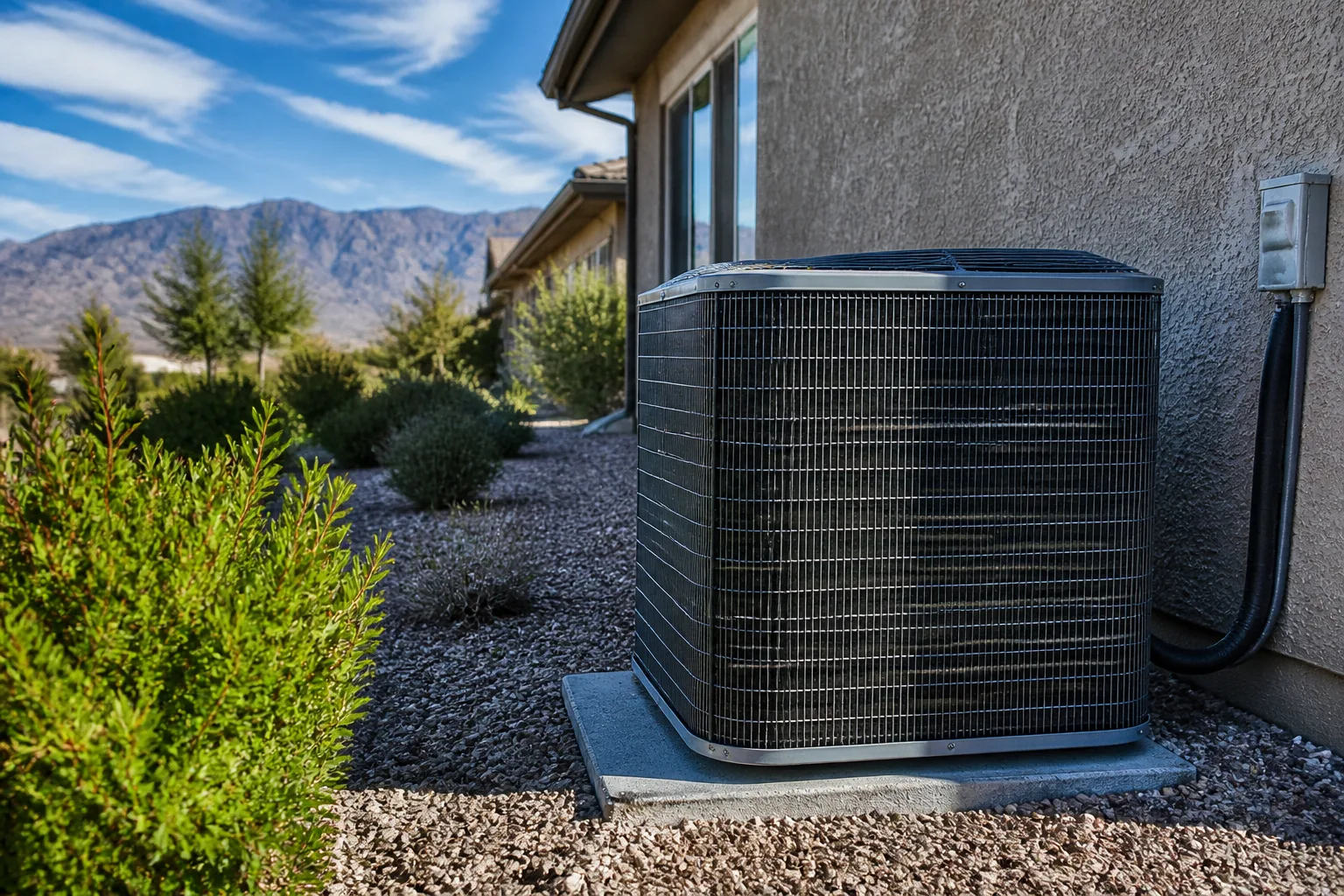
- A dirty condenser coil. Summerlin’s dust and cottonwood fluff pack into the outdoor coil, and a clogged coil can’t shed heat. The system runs hotter and longer, and the compressor absorbs the difference.
- Duct leaks in the attic. A supply duct leaking into a 140-degree attic is cooling the attic, not your living room. We see this constantly in older Summerlin homes where the original ductwork has never been sealed or tested.
Before you blame the utility, check the filter, look at the outdoor coil, and look at your last few bills side by side. If the jump is real and unexplained, that’s worth a service call. When it is addressed, it usually pays for itself in a couple of cooling seasons. That’s the honest math, and it’s why we say a small repair today beats a replacement later.
The Two Sounds Homeowners Most Often Write Off as Normal
Two sounds come up again and again, and both get dismissed as “just how it’s always sounded.” Neither is normal.
The rattle that isn’t the cabinet. A loose panel does rattle, sure. But a rattle that shows up on startup and fades after a minute is often a loose blower wheel, a failing bearing, or debris that’s worked its way into the housing. Left alone, a worn bearing can seize and take the motor with it. We had one over in The Ridges last summer where the homeowner had lived with a startup rattle for two seasons – a $40 part and a service call became a motor replacement.
The hiss that isn’t refrigerant. Homeowners hear a hiss and assume a leak. Sometimes it is. But a hiss at the indoor unit is often a restricted or clogged filter, or a duct joint that’s come loose and is whistling. Both are cheap to fix. The point is: a hiss is a signal, not a diagnosis. Get it looked at before you decide which it is. In our experience servicing Carrier and Trane systems across Summerlin, the hiss turns out to be ductwork more often than refrigerant – but only a technician with gauges can tell you for certain.
How Long Can You Safely Defer Each Symptom?
This is where waiting gets expensive. Here’s the honest timeline we give homeowners:
- Dirty filter: change it now. Costs a few dollars, prevents everything downstream.
- Slightly weak airflow: a week or two is fine. A month starts costing you efficiency.
- Bill creeping up 10-15%: schedule within a month. Every month you wait, the compressor works harder.
- Short-cycling: schedule within days. This one converts a repair into a replacement fastest.
- Ice on the coil, water leak, burning smell: today, and shut it off in the meantime.
The pattern is simple: the symptoms that cost the least to fix are the ones homeowners defer longest, and they’re the ones that quietly do the most damage. A system that’s struggling in June will be struggling harder in August. Don’t let a repair turn into a replacement because the symptom seemed minor.
When to Call a Pro in Summerlin
If you’ve checked the filter, cleaned what you can see, and the system still runs long, short-cycles, or the bill won’t come down, that’s your signal. Refrigerant work, compressor diagnosis, and duct sealing are not homeowner jobs – they need gauges, training, and in some cases a license. Our technicians bring up to 8 years of experience to every call, and every job is backed by our 90-Day Done Right Promise: done right, or we make it right, in writing. We answer the phone with a live person around the clock, and the price we quote is the price you pay.
Related services in Summerlin: if your issue turns out to be cooling, see AC Repair & Installation in Summerlin; for heating-side symptoms, Heating & Furnace in Summerlin; and for ductless or high-efficiency options, Heat Pump & Mini Split in Summerlin. You can always reach the team through Fireside Heating & Air Co. Summerlin home.
The Bottom Line
Most HVAC symptoms are cheap to fix at the start and expensive to ignore. The refrigerant leak, the short-cycle, the rattle, the bill that quietly climbed – each one is telling you what’s coming if you wait. Catch them in the “schedule this week” category and you spend a little. Let them slide into the “shut it off and call today” category and you’re pricing a compressor or a whole system.
If you’re in Summerlin and need help, Fireside Heating & Air Co. Summerlin offers free estimates – call (888) 325-9387. A live person answers, day or night, and we’ll tell you straight whether it’s a repair or a replace.
Frequently Asked Questions
The earliest signs are usually a system running longer than it used to, slightly weaker airflow, and a summer utility bill that climbs without a rate change. Any one of those is worth a look before it turns into a repair. Call (888) 325-9387 and we’ll check it out – estimates are free.
Listen for the outdoor unit kicking on more than about three times in a thirty-minute window without reaching the thermostat setting. If your thermostat logs run history, check it. Short-cycling is one of the fastest paths to compressor failure, so don’t wait on it. Call us for a same-day diagnosis.
Yes. A charge that’s 10% low forces the compressor to run longer and hotter, and that accelerated wear can take three to five years off its life. The symptom is often just a house that takes longer to cool, which is why it goes unnoticed. Call (888) 325-9387 for an exact quote – estimates are free.
Repair makes sense when the system is under about ten years old and the fix is a single failed part. Replace when the repair cost approaches half the price of a new system, or when the unit is short-cycling and the compressor is the culprit. Our techs will give you straight talk about repair versus replace, and the price quoted is the price paid.
Written by the team at Fireside Heating & Air Co. Summerlin.
Need HVAC Help?
Call Fireside Heating & Air Co. Summerlin - licensed & insured, here with fast after-hours help in Summerlin.
(888) 325-9387