
Last updated November 17, 2026
 AC repair
 Furnace & heating
 Heat pumps
 Ductless mini splits
 Carrier
 Trane
 Goodman
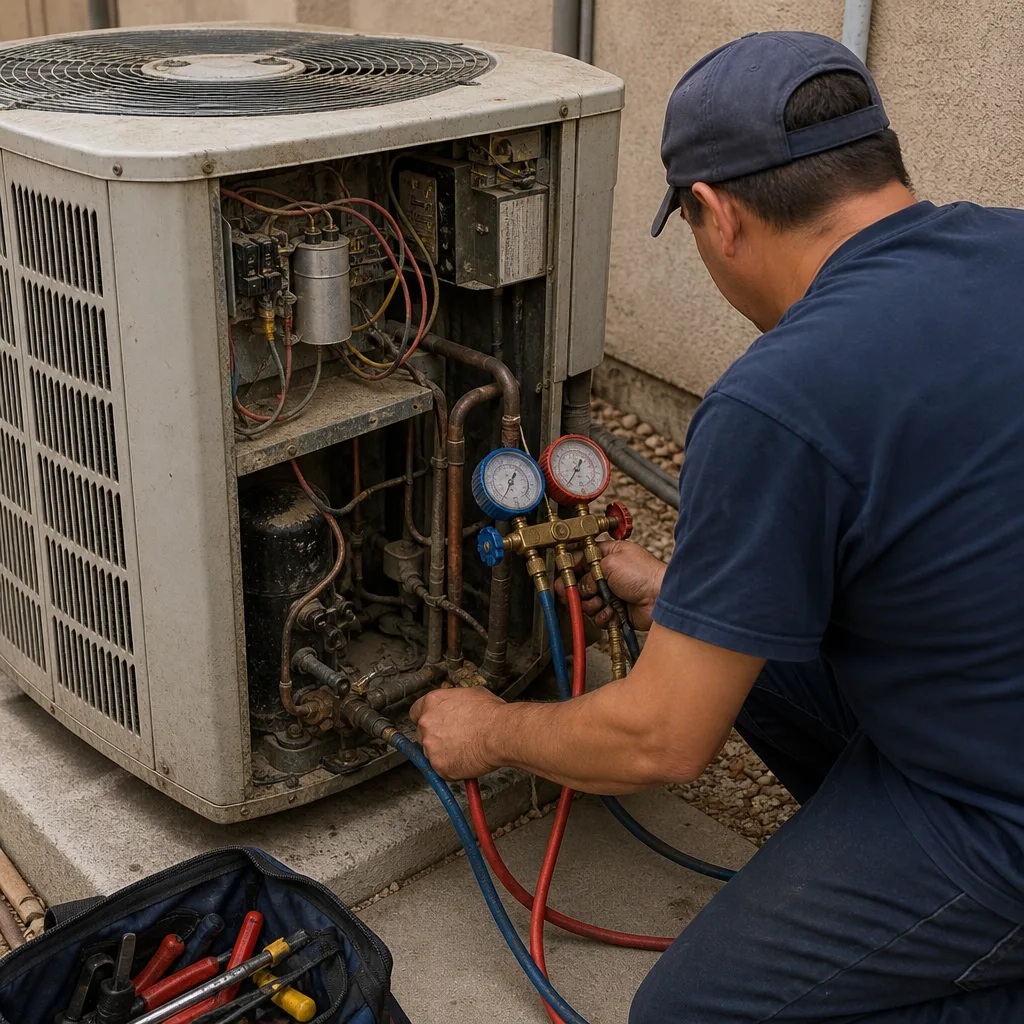
Seasonal tune-up and full diagnostic on your Carrier, Trane, or Goodman system - readings shown to you before any repair is proposed
Diagnosis first, numbers second - you approve the repair price before a single part goes in.
Get your free estimateAir Quality & Ventilation Troubleshooting: Common Problems and How to Fix Them
Before an air purifier or a UV system gets sold to a Summerlin homeowner complaining about dust, somebody should check whether the return air duct is undersized. That single condition, undersized return ductwork, is the most common cause of excessive dust circulation in homes built here between 2000 and 2015, and no purifier fixes a pressure problem. In our experience across Summerlin, most indoor air quality complaints trace back to a specific, fixable duct or equipment condition rather than a product that needs to be purchased. This guide walks you through the symptom-to-cause mapping, the diagnostic sequence, and the point where you should call in a professional.
Quick Answer
Most indoor air quality problems at home come down to a ventilation system that is out of balance. Persistent dust usually points to return-side duct leakage or an undersized return; lingering odors point to a blocked or short-circuited return path; humidity complaints and one-room-is-stuffier issues point to pressure imbalances and airflow problems, not to a missing filter or a system that needs a bolt-on gadget. A $20 hygrometer and a careful look at your returns will settle many of these questions. Duct leakage, combustion byproduct infiltration, and pressure problems need instruments and a trained technician.
Styles & brands we work with
- AC repair
- Furnace & heating
- Heat pumps
- Ductless mini splits
- Carrier
- Trane
- Goodman
Table of Contents
- Symptom-to-Cause Map: What Your House Is Telling You
- Why an Undersized Return Duct Is the Dust Problem Most People Miss
- The Duct Leakage Test and the “New Filter, Still Dusty” Puzzle
- One Room Always Stuffier or More Humid: The Pressure Sequence
- Carbon Monoxide and Combustion Byproducts from an Attached Garage
- Humidity Troubleshooting in Summerlin’s Dry Climate
- What You Can Self-Diagnose vs. What Needs Instruments
- The Maintenance Habits That Keep Ventilation Balanced
Symptom-to-Cause Map: What Your House Is Telling You
Indoor air quality troubleshooting starts with symptoms, not products. The complaint tells you where to look. Here is how we map the most common calls that come into our Summerlin line:
- Excessive dust on horizontal surfaces, dust streaks near supply registers: undersized return duct, return-side leakage pulling attic air, or a filter that is bypassing at the frame. Most often the return.
- Lingering cooking or pet odors that don’t clear: a return path that is blocked, closed, or short-circuiting, or a system running without any fresh-air introduction. Sometimes a filter that is loaded and moving almost no air.
- Humidity complaints (too dry in winter, sticky in monsoon season): envelope and equipment sizing issues, an oversized system short-cycling, or a humidifier that has failed and nobody noticed.
- One room always stuffier or damper: pressure imbalance and airflow, not air quality. Damper position, duct sizing to that room, or a door that seals the room off from its return.
- Headaches or drowsiness in rooms near the attached garage: combustion byproducts migrating through the envelope. This one warrants immediate professional attention.
- Allergy symptoms that get worse when the system runs: filter bypass, dirty duct interiors in older Summerlin homes, or moisture in the plenum or coil pan.
Notice that none of these start with “buy a purifier.” Products fix product problems. Ventilation and pressure problems are fixed with ductwork, dampers, filter frames, and airflow adjustments. That distinction saves Summerlin homeowners a lot of money if it is made before the shopping begins.
Why an Undersized Return Duct Is the Dust Problem Most People Miss
A return duct that is too small for the system is a classic “quiet” problem. The system still cools and heats, so nobody complains about temperature. What happens instead is that the blower has to work harder to pull the air it needs, and it pulls that air through every leak it can find: gaps in the return plenum, the filter slot, penetrations in the ceiling, and the attic itself. Every one of those leaks brings dust into the return stream and out your supply registers.
In Summerlin homes built between 2000 and 2015, we have seen this repeatedly. A common pattern is a single return grille sized for the original 2-ton system still feeding a 3-ton replacement, or a return chase framed into a mechanical closet with no regard for the pressure drop it creates. The homeowner notices dust and calls an air quality company. The air quality company sells a purifier. The dust comes back within a season, because the purifier is downstream of the pressure problem and the pressure problem is still pulling attic air into the house.
How to spot it without instruments:
- Check how many return grilles you have and where they are. One return for a 2,500 sq ft Summerlin home is almost always too few.
- Hold a piece of tissue or a strip of paper against the return grille with the fan running. Weak pull tells you the return path is restricted.
- Look at the filter slot. If you can see light or gaps around the filter, the system is bypassing unfiltered air.
- Listen at a closed bedroom door with the system running. If the door pulls shut or whistles, the room is starved for return air.
A technician with a static pressure gauge can confirm it in twenty minutes. Once confirmed, the fix is usually a return addition or a larger return chase, not a new air handler. For the systems this work touches, our Fireside Heating & Air Co. Summerlin home page lists the equipment and services we handle every week in the community.
The Duct Leakage Test and the “New Filter, Still Dusty” Puzzle
If a Summerlin homeowner tells us they installed a new filter last month and the dust is back with a vengeance, we nearly always point at return-side duct leakage. A new filter cannot fix air that is being pulled in after the filter. If any part of the return is in an attic, a crawl space, or a garage, any gap in that return is unfiltered air being pumped straight into the conditioned space.
Duct leakage testing is straightforward. A technician seals the supply registers, connects a calibrated fan to the return, and measures how much air escapes at a set pressure. The number tells you how leaky the system is and where. In our experience on Summerlin homes, return-side leakage in the attic and at the air handler plenum is where the highest leakage shows up. Supply-side leakage matters too, but return-side leakage is what brings attic dust, insulation fibers, and outside air into the house.
Common leak points we find:
- Gaps at the return plenum where it meets the air handler cabinet.
- Oversized filter slot openings with no gasket, bypassing air around the filter.
- Flexible return duct with poorly sealed collars or torn outer sleeves.
- Attic return chases that were never sealed to the drywall ceiling below.
Sealing the return side is usually a two to four hour job with mastic and mesh tape, and the change in dust is often noticeable within a week. For the equipment side of the equation, our AC Repair & Installation in Summerlin page covers what blowers and cabinets we work with when a plenum or cabinet seal is part of the fix.
One Room Always Stuffier or More Humid: The Pressure Sequence
The one-room complaint is not an air quality problem. It is an airflow and pressure problem. In Summerlin, this call usually comes from a bedroom over the garage, a west-facing room with more solar gain, or a bonus room that the original duct design didn’t quite serve.
Work the sequence in order:
- Confirm the supply is actually delivering air. A tissue held at the register with the fan running should move. If it barely does, the run may be undersized, crushed, or disconnected in the attic.
- Check the return path for that room. A door with a tight seal and no undercut or transfer grille means the room cannot push air back to the return. The result is a pressurized room that does not properly mix air. A simple return-air transfer grille above the door often solves it.
- Look at the balancing dampers. A contractor who adjusted dampers for one complaint can leave another room starved. Finding and resetting those dampers is a fifteen-minute job for someone who knows where they are.
- Check for envelope issues specific to that room. A bonus room over the garage with a thin ceiling and no return is a very different problem than a bedroom with a good duct layout but a leaky window.
Only after the pressure and airflow sequence has been worked should anyone talk about the moisture content of the room beyond what a hygrometer shows. If the room stays above 55% relative humidity while the rest of the house sits at 40%, the answer is not a dehumidifier in the corner. It is a supply duct, return, or envelope fix. Our Heat Pump & Mini Split in Summerlin page is worth a read if the room in question has no duct connection at all; a ductless unit solves that particular problem cleanly.
Carbon Monoxide and Combustion Byproducts from an Attached Garage
Attached garages in Summerlin homes are one of the most common and most overlooked sources of contamination. Cars, lawn equipment, water heaters, and gas dryers all off-gas into the garage, and any breach in the wall, ceiling, or door between the garage and the house lets that air migrate into living space. Symptoms are quiet and often misattributed: headaches, drowsiness, a “car-smelling” closet, a bedroom over the garage that feels stale.
The fix starts at the source, not at the symptom:
- Seal the air barrier between the garage and the house. That means the wall, the ceiling below the bonus room, and the door with proper weatherstripping and an automatic closer if the garage is below a sleeping room.
- Make sure the garage has passive or mechanical ventilation so it does not pressurize relative to the house. A garage that stays slightly negative relative to the house pulls air toward it, which is what you want.
- Do not create a return or supply serving the garage. Ever. A garage register is a contamination pathway and often a code violation.
- Verify the water heater and any gas appliance are venting properly. Back-drafting in a tight Summerlin home is a genuine risk, and it is detectable with a simple draft test.
If anyone in the house is experiencing headaches or drowsiness that clears when they leave the house, stop troubleshooting and call. This is not a “wait until spring” repair. A qualified technician should assess combustion safety before anyone sleeps in an attached-garage home. Our Heating & Furnace in Summerlin page details the combustion checks we run on every furnace visit, including draft and venting verification.
Humidity Troubleshooting in Summerlin’s Dry Climate
Summerlin’s climate is dry enough that low humidity is the more common complaint, but monsoon season and a tight 2000s-era envelope can swing the other way. Both directions are worth troubleshooting with a $20 hygrometer before you spend money on equipment.
- Winter relative humidity below 30%: normally an envelope and infiltration story, not a humidifier story. Sealing the obvious leaks and running a whole-house humidifier sized to the house (not a portable unit in one room) is the usual fix. If you already have a humidifier, verify the pad is clean, the water line is open, and the humidistat is calling.
- Summer relative humidity above 55% indoors: usually an oversized air conditioner short-cycling and not running long enough to remove moisture, or a duct system pulling humid air from outside. Fixing the air conditioning runtime or the duct leakage often solves the humidity problem without a dehumidifier.
- One room above 60% while the rest of the house sits at 45%: return the pressure question to the top of the list. A return-air transfer grille on that room is much cheaper than a stand-alone dehumidifier and solves the actual problem.
Our technicians have up to 8 years of experience measuring this stuff on Summerlin homes, and we’ve seen plenty of portable dehumidifiers sitting in rooms that simply needed a return path. A written assessment with a hygrometer reading in every room goes a long way toward fixing the right cause.
What You Can Self-Diagnose vs. What Needs Instruments
Most indoor air quality troubleshooting at home splits cleanly into two piles: what you can sort out with common sense and a hygrometer, and what needs calibrated instruments and a trained set of eyes. Here is the split we use.
Self-diagnose with a hygrometer and common sense:
- Filter condition, fit, and MERV rating. If it is loaded, gapped, or the wrong size, you can see that.
- Register airflow using a tissue or paper strip at each supply and return.
- Door whistle and door seal at bedrooms. A transfer grille is a straightforward fix a homeowner can discuss with any contractor.
- Relative humidity per room with a $20 hygrometer. Readings across a week tell you more than a one-time sample.
- Obvious gaps at the air handler plenum that you can see with a flashlight.
Needs a professional with instruments:
- Duct leakage testing. Blower door and duct blaster numbers are what distinguish a small leak from a serious one.
- Static pressure and total external pressure measurements across the air handler.
- Combustion analysis, draft testing, and CO monitoring near any gas appliance or attached garage.
- Particle counting, especially where allergy symptoms are the primary complaint and you want a baseline before and after a repair.
- Refrigerant charge, coil condition, and blower performance if humidity or air quality complaints persist after the simpler checks.
If you are going to buy one tool, buy the hygrometer. It will tell you whether to call a professional about humidity or whether to just open a window and stop worrying.
The Maintenance Habits That Keep Ventilation Balanced
Once the system is balanced, keeping it balanced is a matter of a few habits. None of them involve buying gadgets.
- Change the filter on a schedule that matches the filter. A one-inch pleated filter in a Summerlin home with pets needs replacing every 60 to 90 days. A four-inch media filter can go six months to a year.
- Write the filter size on the air handler in marker. The next owner or the next technician will find it instantly.
- Do not close off supply registers in unused rooms. That changes the pressure balance and usually makes the dust worse in the rooms you do use.
- Open and close interior doors normally. Sealing a room off with a closed door starves it of return air.
- Schedule a seasonal visit in spring and fall. A $89 seasonal tune-up covers the filter, the blower, the drain pan, and a static pressure check, and it flags the small problems before they become the dust problem. We publish what we find in a written report every time.
- Check the batteries on every CO alarm twice a year and keep one within earshot of bedrooms over garages.
None of that is expensive. All of it is cheaper than a purifier you did not need.
Common Mistakes to Avoid
- Buying a purifier before checking the return duct. Two sentences and a flashlight would have saved many Summerlin homeowners $600 or more. Fix the pressure problem first, then decide whether a purifier adds anything.
- Upgrading to a high-MERV filter in an older system. A filter the system can’t pull air through starves the blower and can freeze the coil. Match the filter to what the equipment can handle, not to the highest number on the package.
- Sealing the house tighter without verifying combustion safety. Tight Summerlin homes built for efficiency plus a natural-draft water heater is a bad combination. Get the draft test done before sealing an attic or a garage wall.
- Closing registers in the “unused” rooms. The pressure imbalance forces air through the leaky parts of the return path, and the dust problem gets worse in the rooms you actually use.
- Assuming a closed door is fine for bedrooms. A door that seals tight with no return path creates the exact one-room stuffiness problem we described above. A $40 transfer grille often fixes what a $400 dehumidifier won’t.
- Putting a fresh-air intake or a return in the garage. Never. That is a contamination pathway and often a code problem. A garage should vent to the outside, not share air with the house.
- Skipping the hygrometer and guessing at humidity. A $20 meter will tell you what a $200 consultation would have, most of the time.
See the difference
 Before
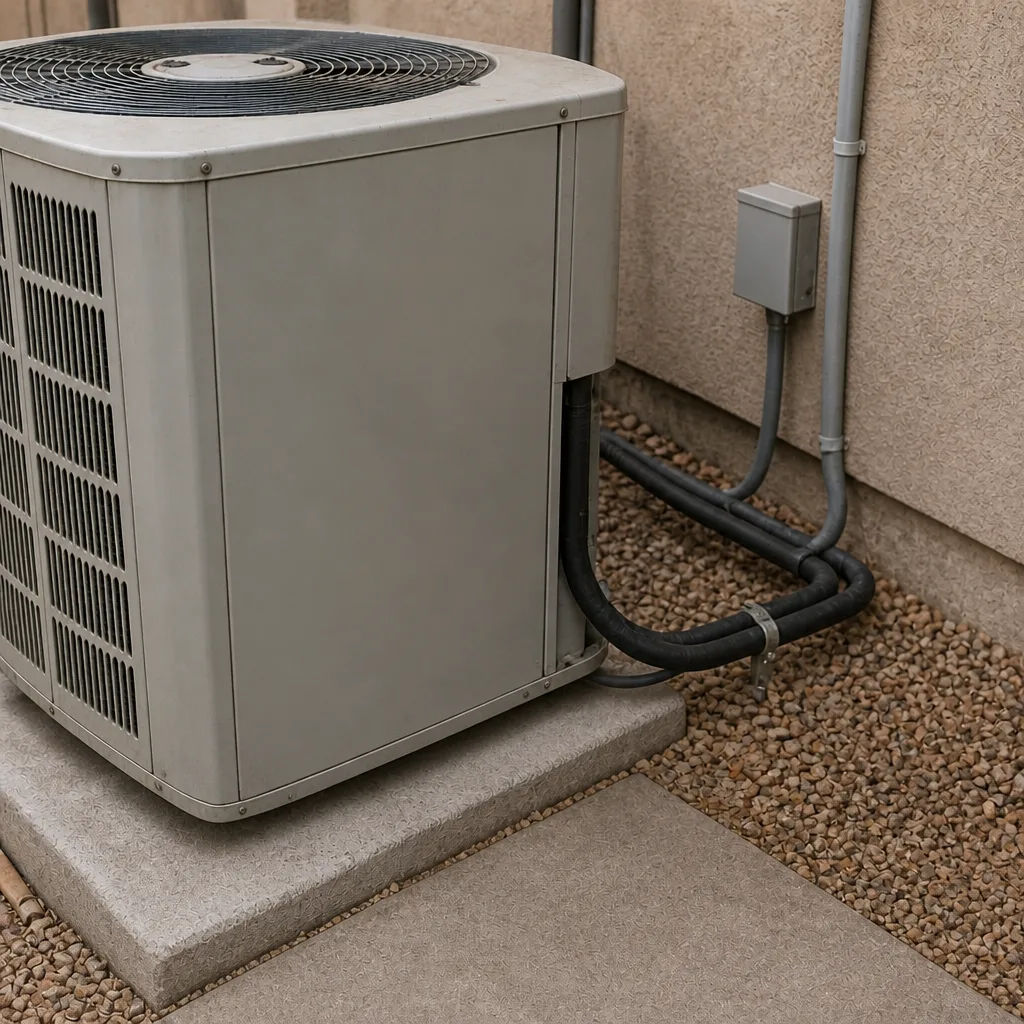 After
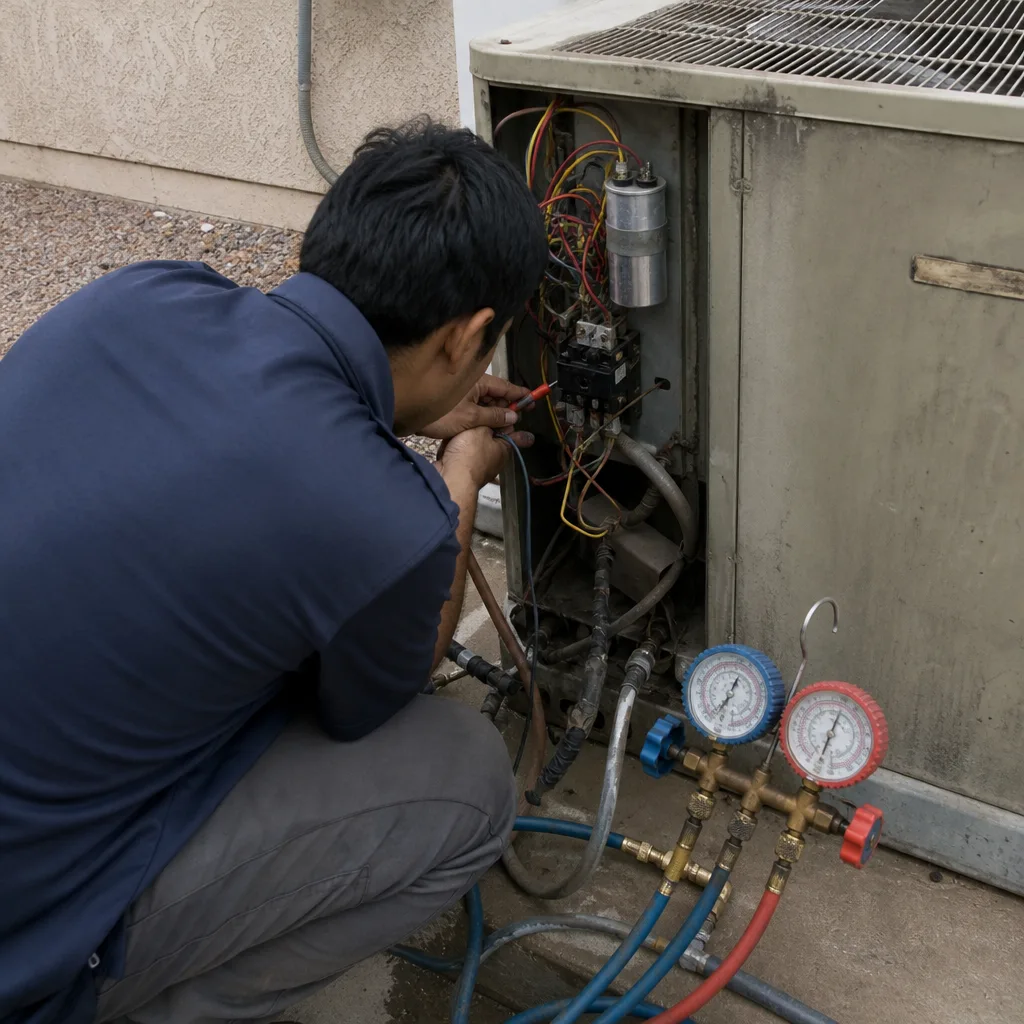 Before
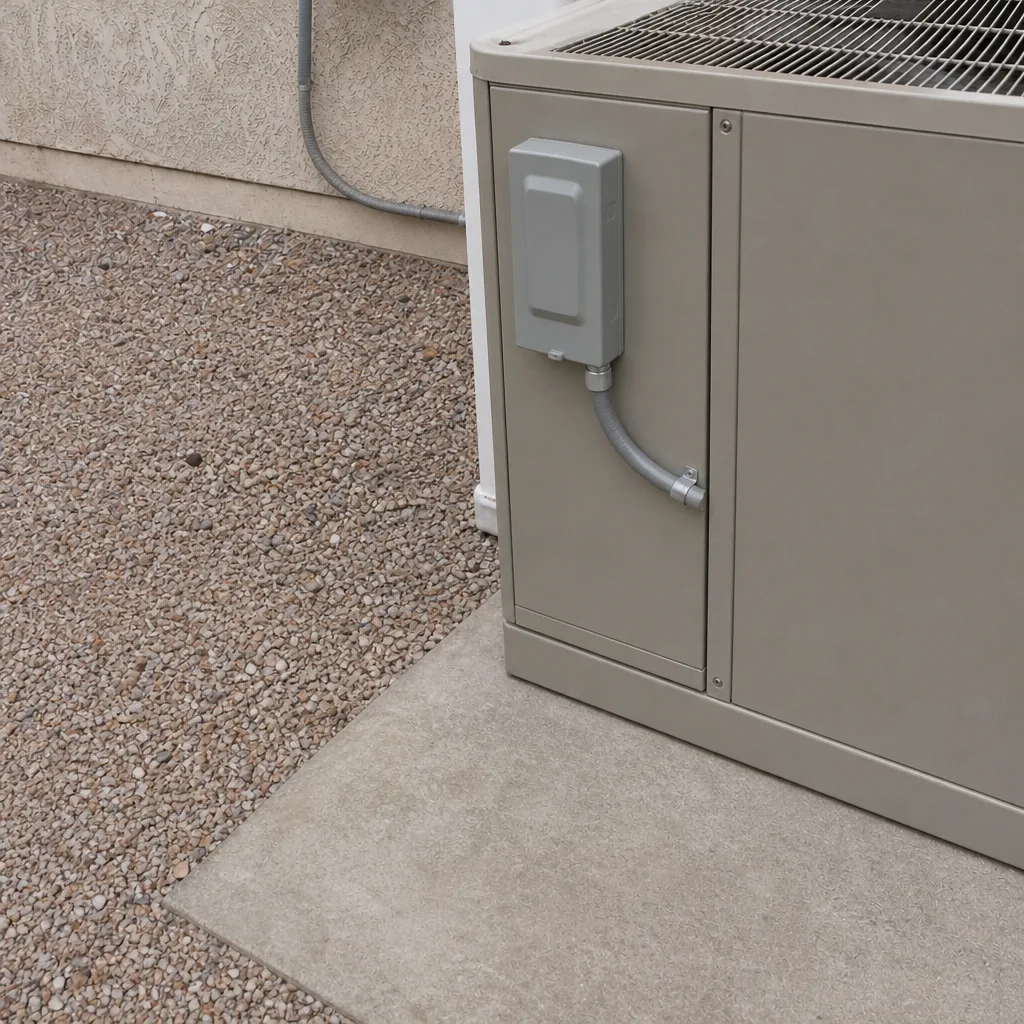 After
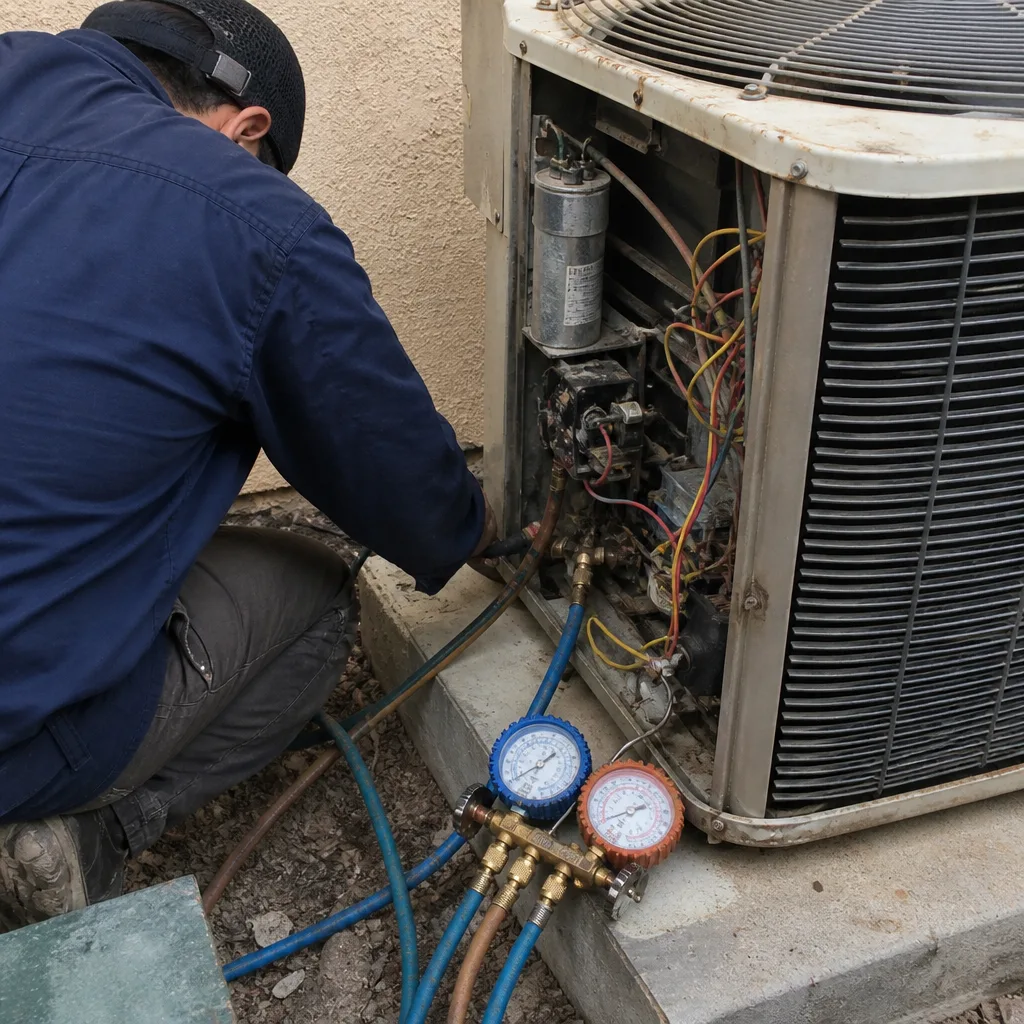 Before
 After
When to Call a Professional
Call a professional when the complaint involves combustion byproducts, when anyone in the house has symptoms that clear when they leave, when you have tried the simple return and filter checks and the dust is still back within a month, or when a room stays above 55% relative humidity while the rest of the house sits at 40%. Duct leakage testing, static pressure, combustion analysis, and refrigerant charge all require instruments and training, and the wrong guess on any of them can cost far more than the visit. If you have a system under 10 years old and no written pressure numbers on file, a professional assessment is money well spent before any product gets added to the system. Our Summerlin team offers free estimates and second opinions on any written estimate. Call (888) 325-9387 and a live person will pick up, day or night.
Frequently Asked Questions
Return-side duct leakage is the most common cause. A new filter only cleans the air that passes through it, and if the return has gaps in the attic or at the air handler plenum, unfiltered air is pulled in after the filter. Duct leakage testing confirms it in about an hour. Call (888) 325-9387 for a free estimate on sealing the return side.
Not usually, and not effectively. An air purifier downstream of a pressure problem is downstream of the cause. In Summerlin homes built between 2000 and 2015, we often find an undersized or leaky return duct as the actual source of the dust. Fix the air balance first, then decide whether a purifier adds anything. Our technicians will tell you the straight answer either way.
Almost always a pressure and airflow issue, not an air quality issue. The room probably has a supply that is underdelivering, a return path that is blocked by a tight door, or a balancing damper that got closed. A transfer grille above the door, a damper reset, or a small duct fix solves it. Call (888) 325-9387 and we’ll run the sequence with you.
Common signs are a car-like smell in a closet or room near the garage, headaches or drowsiness that clear when you leave the house, and a bedroom over the garage that feels stale. This one warrants immediate attention, not a weekend project. A technician will draft-test the gas appliances and check the air barrier between the garage and the house. Call (888) 325-9387 today if you have any of these symptoms.
Between 30% and 50% relative humidity is the comfortable range. Winter readings below 30% usually signal air infiltration that sealing will fix; summer readings above 55% usually signal an oversized system short-cycling or duct leakage. A $20 hygrometer read over a week will tell you which problem you have. Call (888) 325-9387 for a free second opinion on any written estimate.
Not always. A duct leakage test and a static pressure reading solve most return-side dust complaints. A blower door test becomes useful when envelope infiltration or whole-house pressure is part of the picture, which is more common in older Summerlin homes or after a renovation. Our background-checked technicians carry the instruments to know the difference and will not sell you a test you don’t need.
The Bottom Line
Most indoor air quality complaints in Summerlin come down to a ventilation system that is out of balance, not a missing product. Dust usually points to an undersized or leaky return, one-room stuffiness points to pressure and airflow, humidity complaints point to envelope or equipment sizing, and any garage-adjacent symptoms warrant immediate professional attention. Sort out the filter, the returns, and the doors with a hygrometer and a flashlight first. Then call a trained technician for duct leakage, static pressure, and combustion analysis. Fix the cause, and the symptom goes away without a purifier.
Fireside Heating & Air Co. Summerlin stands behind every job with our 90-Day Done Right Promise, a written guarantee with no arguing and no paperwork. The price quoted is the price paid, the phones are answered by a live person around the clock, and our technicians are trained on nine major brands including Carrier, Trane, Lennox, and American Standard. Call (888) 325-9387 for a free estimate, and we will be there when we say.
Written by the team at Fireside Heating & Air Co. Summerlin.